Umayyad Mosque
الجامع الأموي
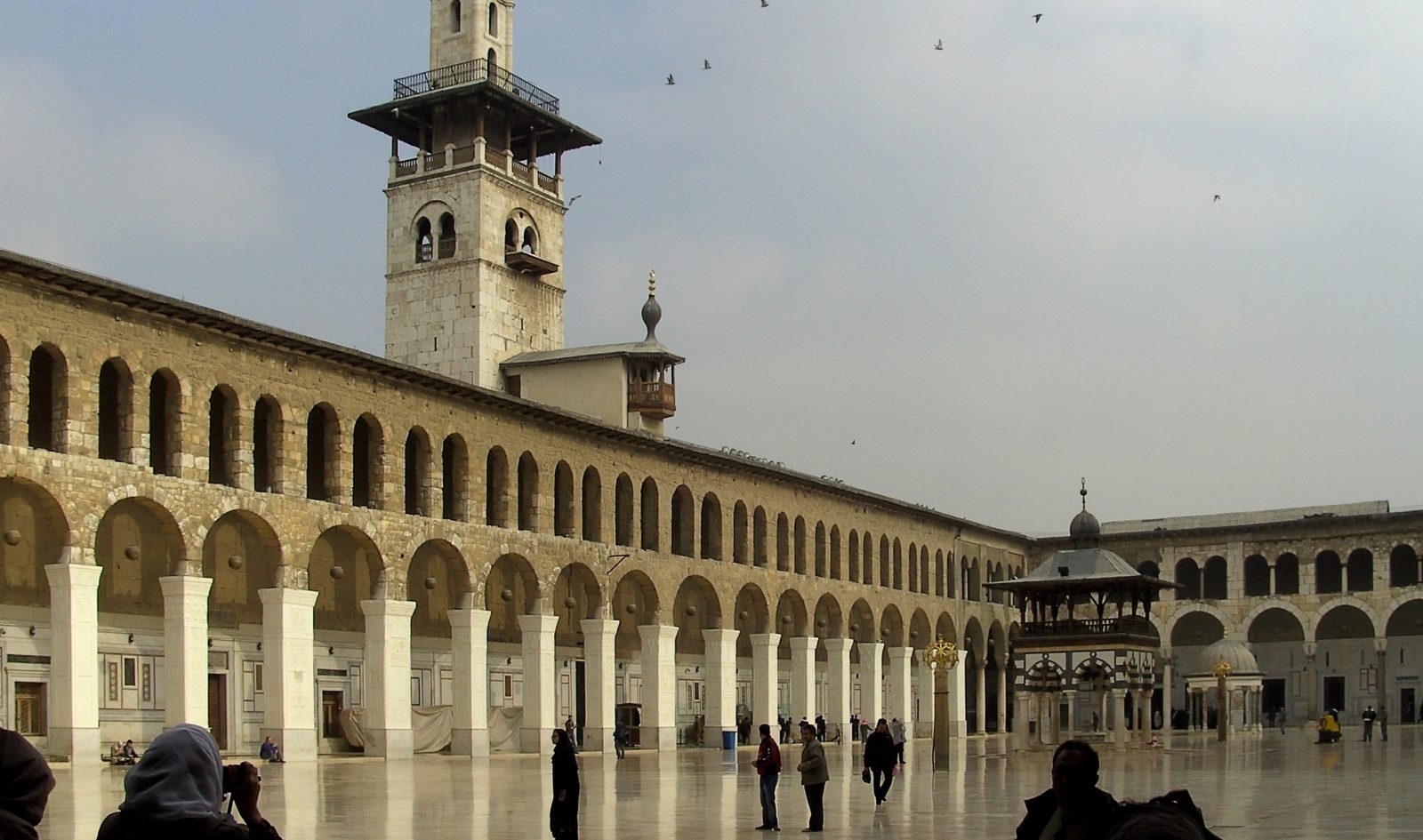
An Umayyad-era mosque built between 706 and 715 CE in the heart of Old Damascus, on a site of worship thousands of years old, and among the greatest examples of early Islamic religious architecture.
The Umayyad Mosque (also known as the Great Mosque of Damascus) is a historic mosque in the heart of the Old City of Damascus, built between 706 and 715 CE under the Umayyad Caliph al-Walid I. It is considered one of the oldest and grandest surviving examples of Islamic religious architecture.
The site had been used for worship for thousands of years before the mosque was built: it held an Aramaean temple to the storm god Hadad, then a Roman temple to Jupiter, then a Byzantine cathedral dedicated to St. John the Baptist. The mosque today houses a shrine venerated by both Muslims and Christians, traditionally believed to hold the head of John the Baptist.
Al-Walid I resolved in 706 to build the mosque on the cathedral's site, after Khalid ibn al-Walid took Damascus in 634 and a prayer room for Muslims in the south-east of the cathedral could no longer hold their growing numbers. It was built over nine years by thousands of labourers and artisans from across the Islamic and Byzantine worlds, funded by the booty of Umayyad conquests and taxes on Damascus's Arab troops. Unlike the simpler mosques of the time it had a large basilical plan with three parallel aisles and a perpendicular central nave from the entrance to the second concave mihrab in Islam. Its gold mosaics covered some 4,000 square metres, likely the largest in the world. Under the Abbasids the Dome of the Treasury and the Minaret of the Bride were added; the Mamluks restored it extensively and added the Minaret of Qaitbay.
The mosque is renowned for its extensive gold mosaics depicting a paradisiacal riverside city, among the finest surviving examples of Umayyad art. The building suffered damage and fires several times through its history, notably during Timur's sack of Damascus in 1401 and a major fire in 1893, after which large parts of it were restored.
The Old City of Damascus, including the Umayyad Mosque, was inscribed as a UNESCO World Heritage Site in 1979 and added to the List of World Heritage in Danger in 2013.
Through the ages
Roman: The site held a Roman temple to Jupiter before the mosque was built
Byzantine: The site became a Byzantine cathedral dedicated to St. John the Baptist
Umayyad: The present mosque was built between 706 and 715 CE under Caliph al-Walid I
For the visitor
Location: 33.5114, 36.3067 · Open on the map
Photos
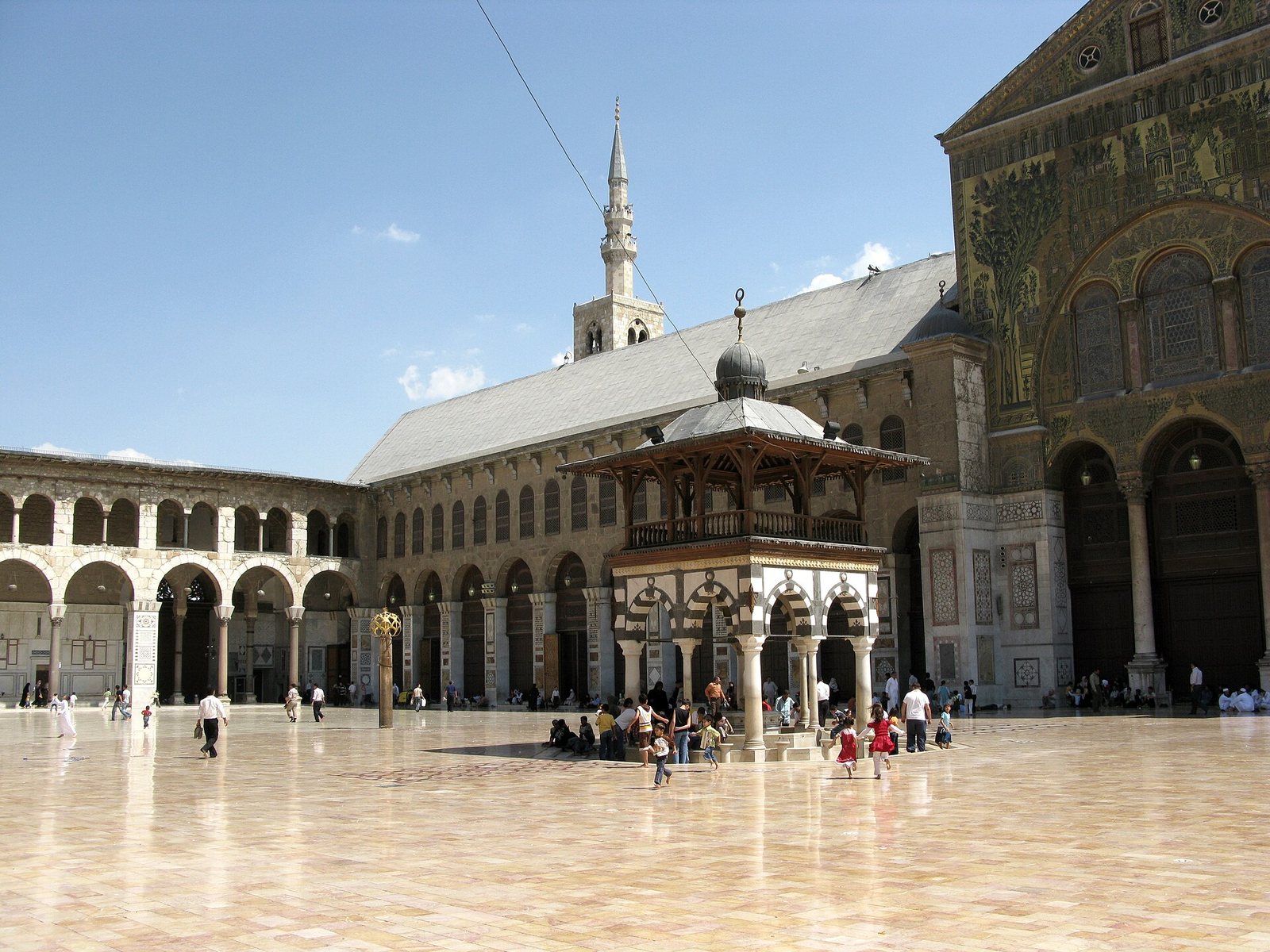
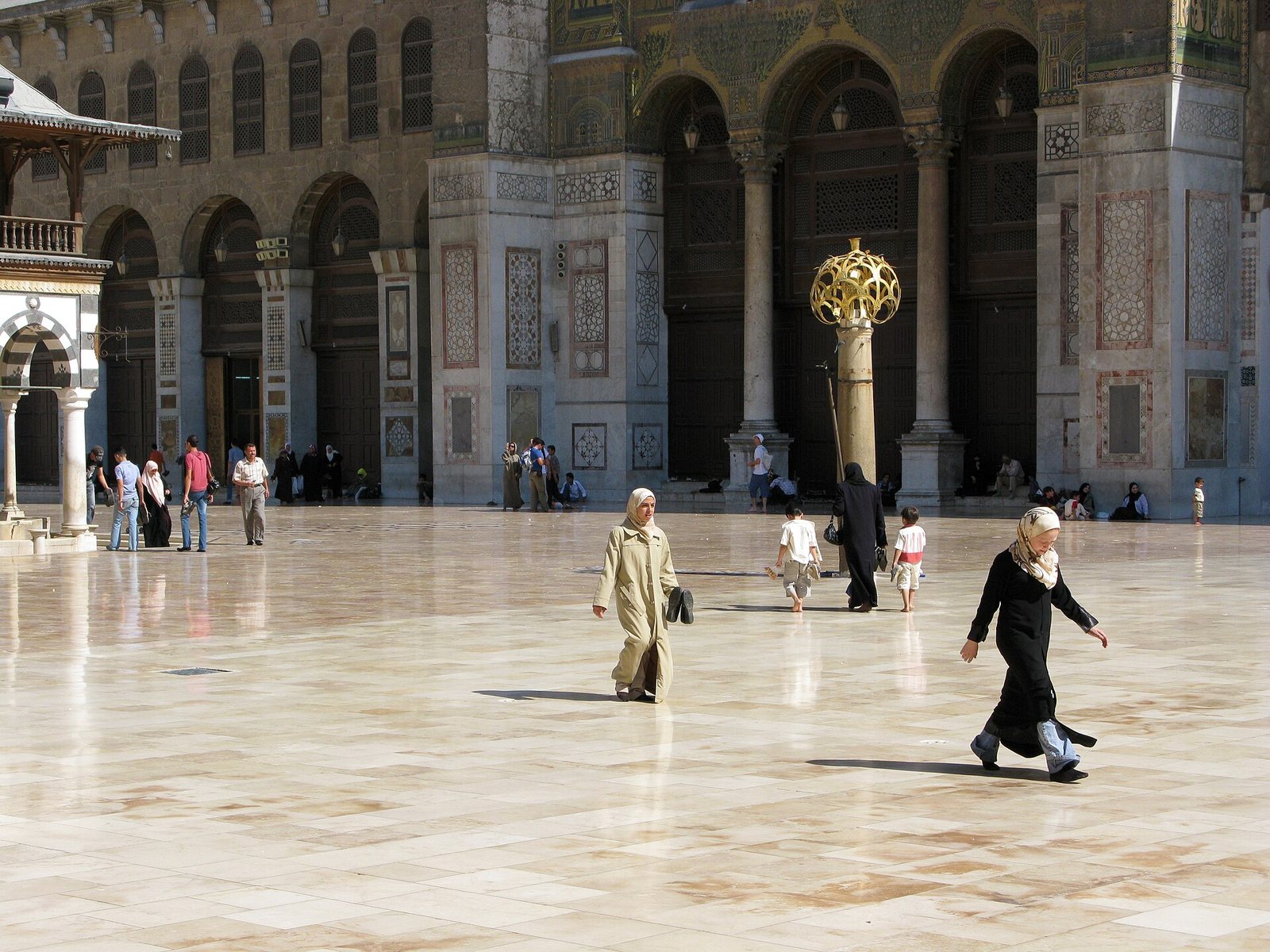
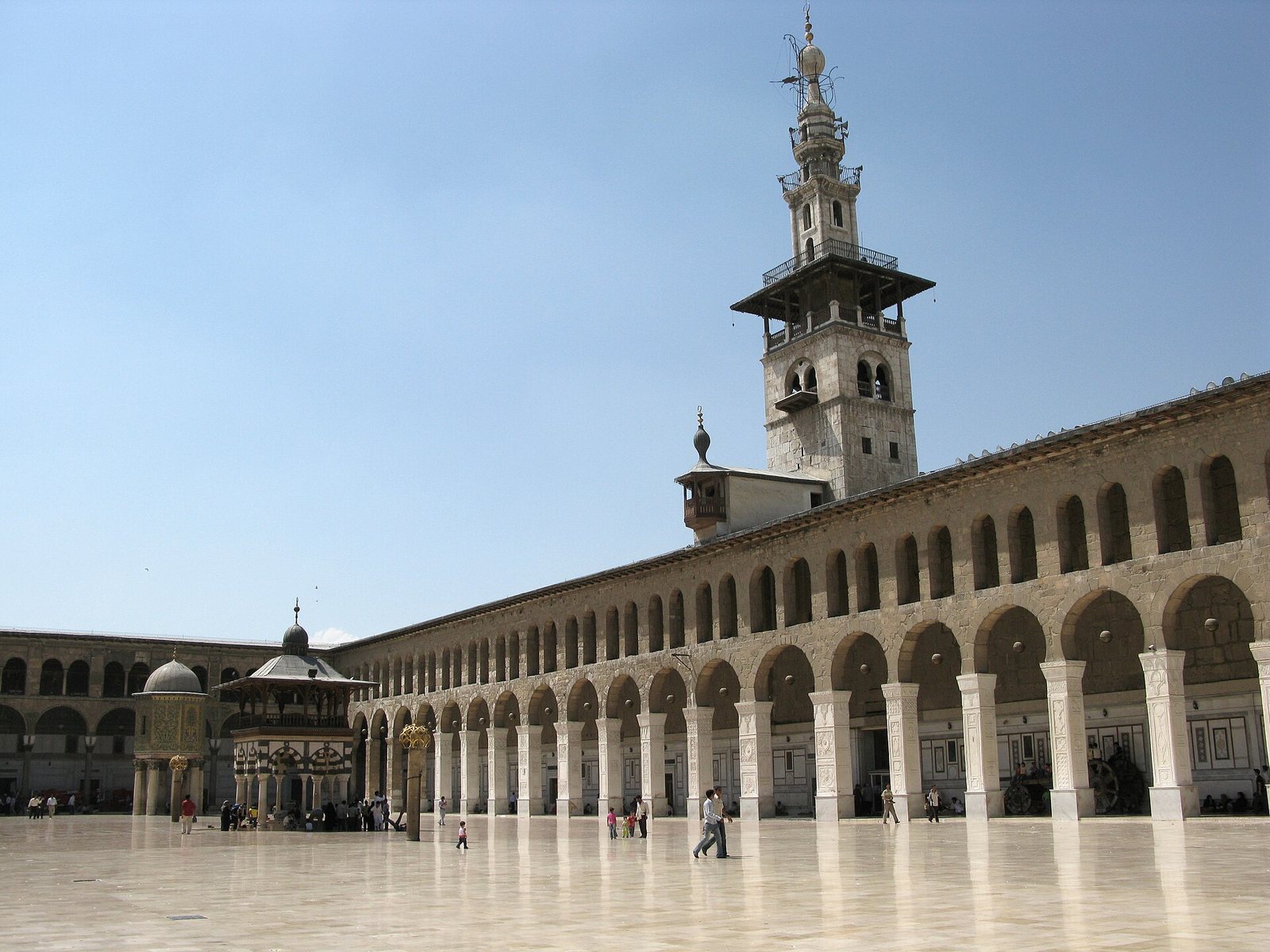
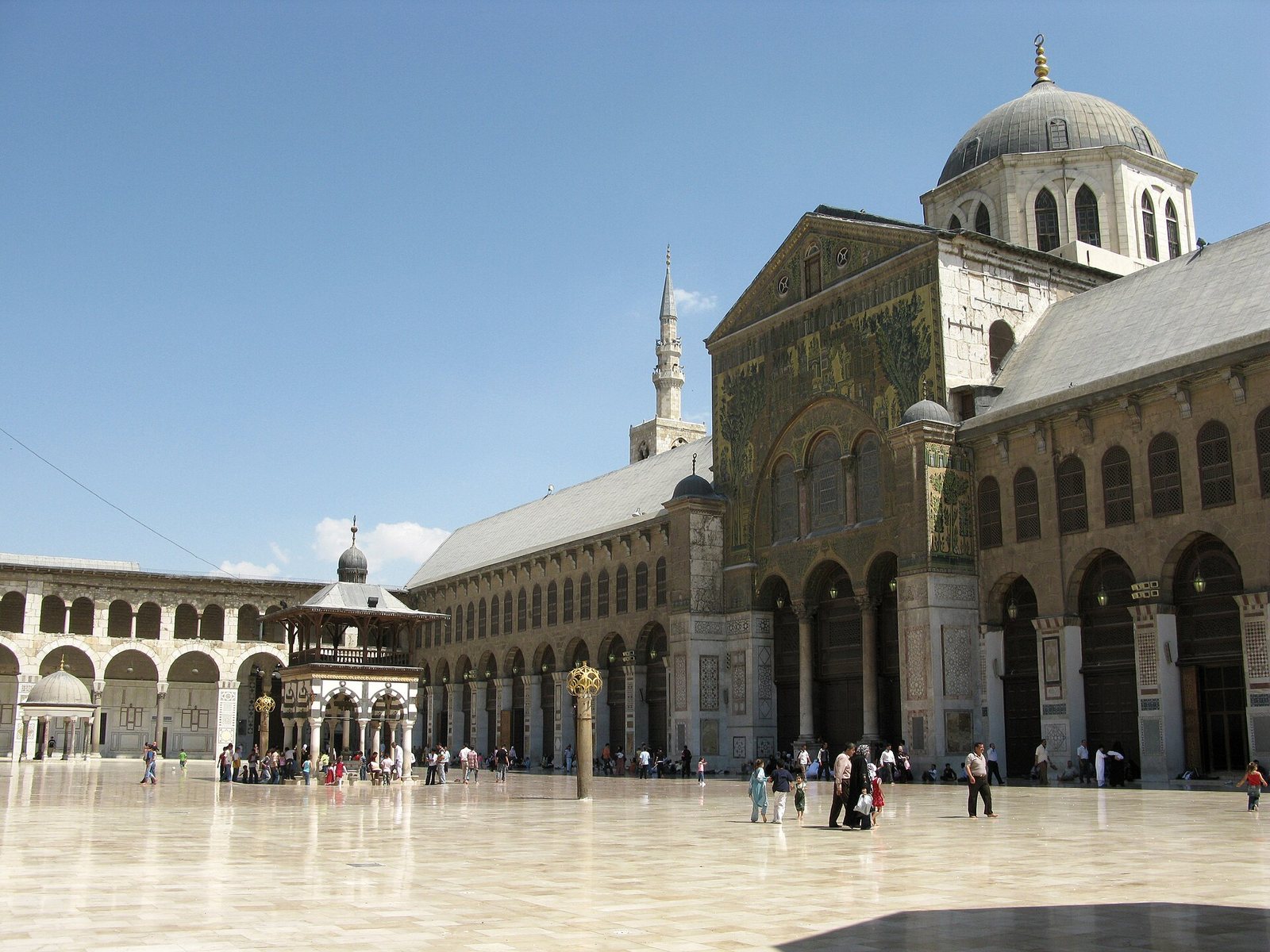
Photos: High Contrast — via Wikimedia Commons (CC BY) · Vyacheslav Argenberg — via Wikimedia Commons (CC BY)
Syria Trails — An interactive geographic and heritage atlas of Syria: a map that walks down from the country to the district, landmarks with their story and era, curated trails and a passport for your visits.