Temple of Zeus Megistos, Qanawat
معبد زيوس الأعظم في قنوات
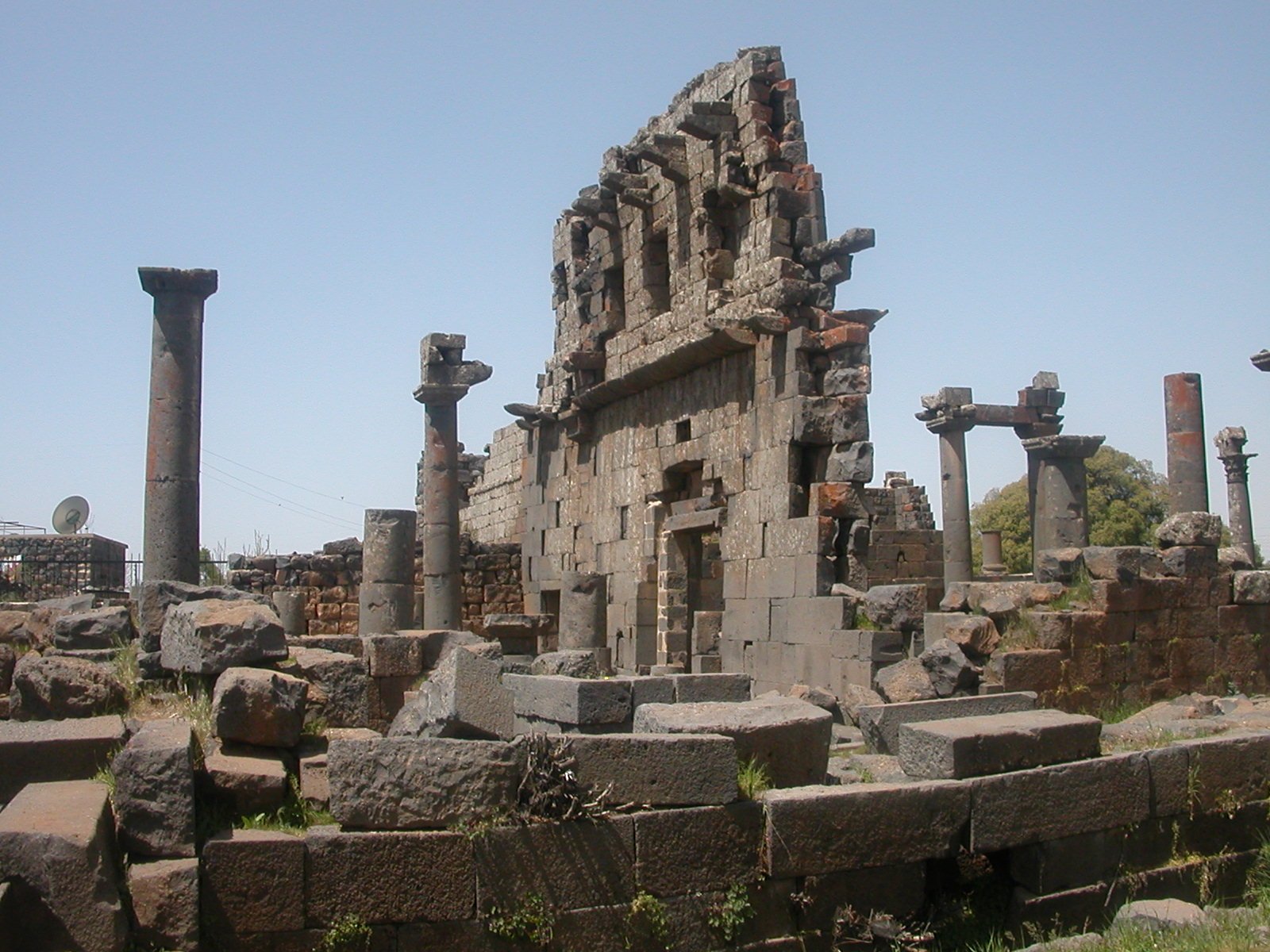
Roman temple in Qanawat, an ancient Decapolis city north of Suwayda, set among oaks and basalt.
In Qanawat, northeast of Suwayda on the western slopes of Jabal al-Arab, lie the ruins of ancient Canatha, one of the Decapolis cities of the Roman period. Among its landmarks is the Temple of Zeus Megistos.
The temple, from around the 2nd century AD, stands on a raised podium ringed by columns, with walls and steps, all in the black basalt of Jabal al-Arab. Qanawat's setting among oaks, springs and a small valley gives its ruins a romantic character.
Qanawat lies at about 1,200 metres beside a river and among woods; one of the earliest cities in Bashan and Hauran, it is probably the Kenath of the Hebrew Bible. Canatha is first mentioned under Herod the Great, when Nabataean forces defeated a Jewish army; it was a Decapolis city from Pompey to Trajan, was annexed to the Roman province of Syria in the 1st century, and in the 2nd century Septimius Severus renamed it Septimia Canatha, made it a Roman colony and moved it to the province of Arabia.
The town also has a small rock-cut theatre (odeon), a nymphaeum and the Seraya complex later turned into churches. A prosperous Roman city, it later became a Byzantine bishopric.
Note: photos may not reflect the site's current condition.
For the visitor
Location: 32.7556, 36.6167 · Open on the map
Photos
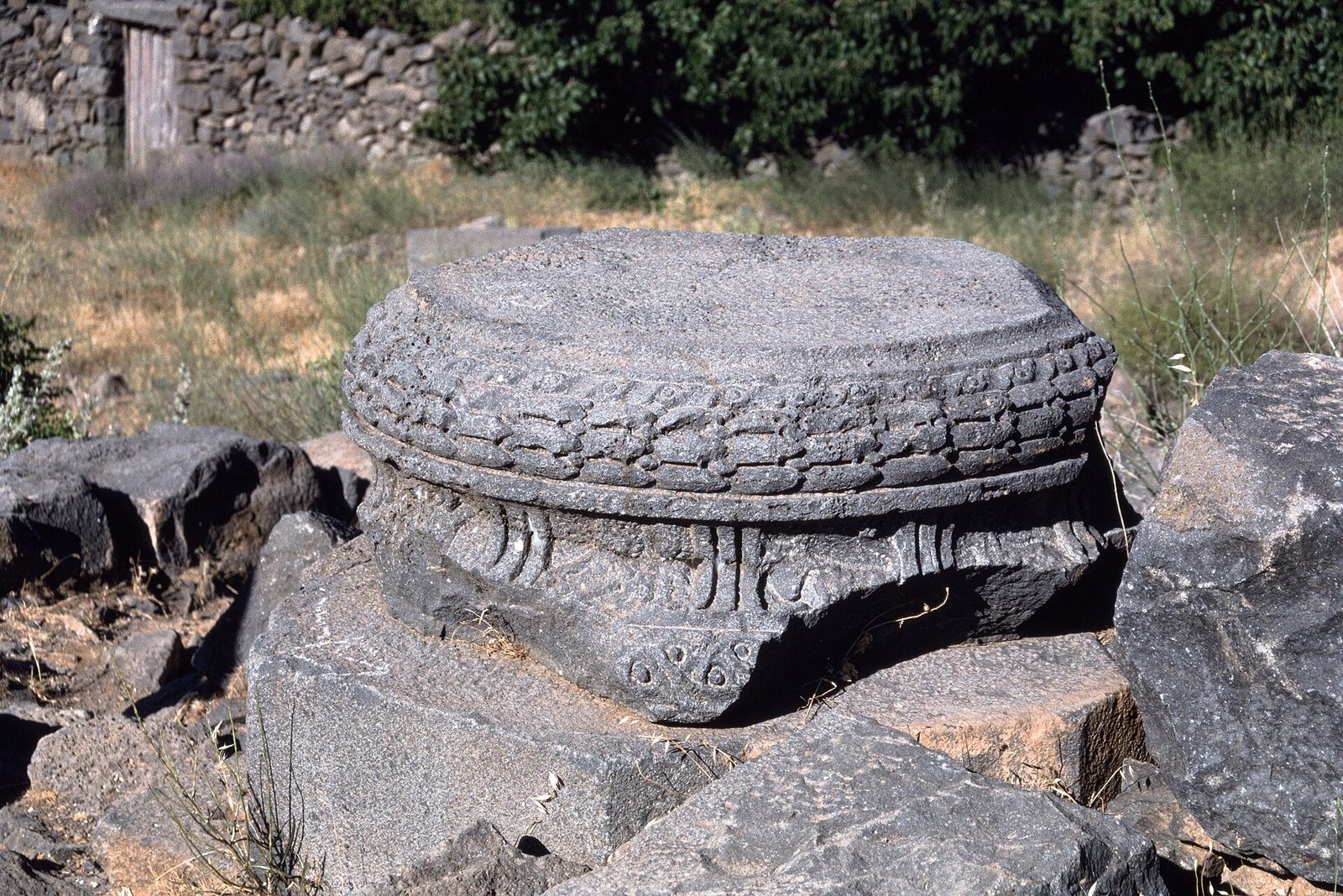
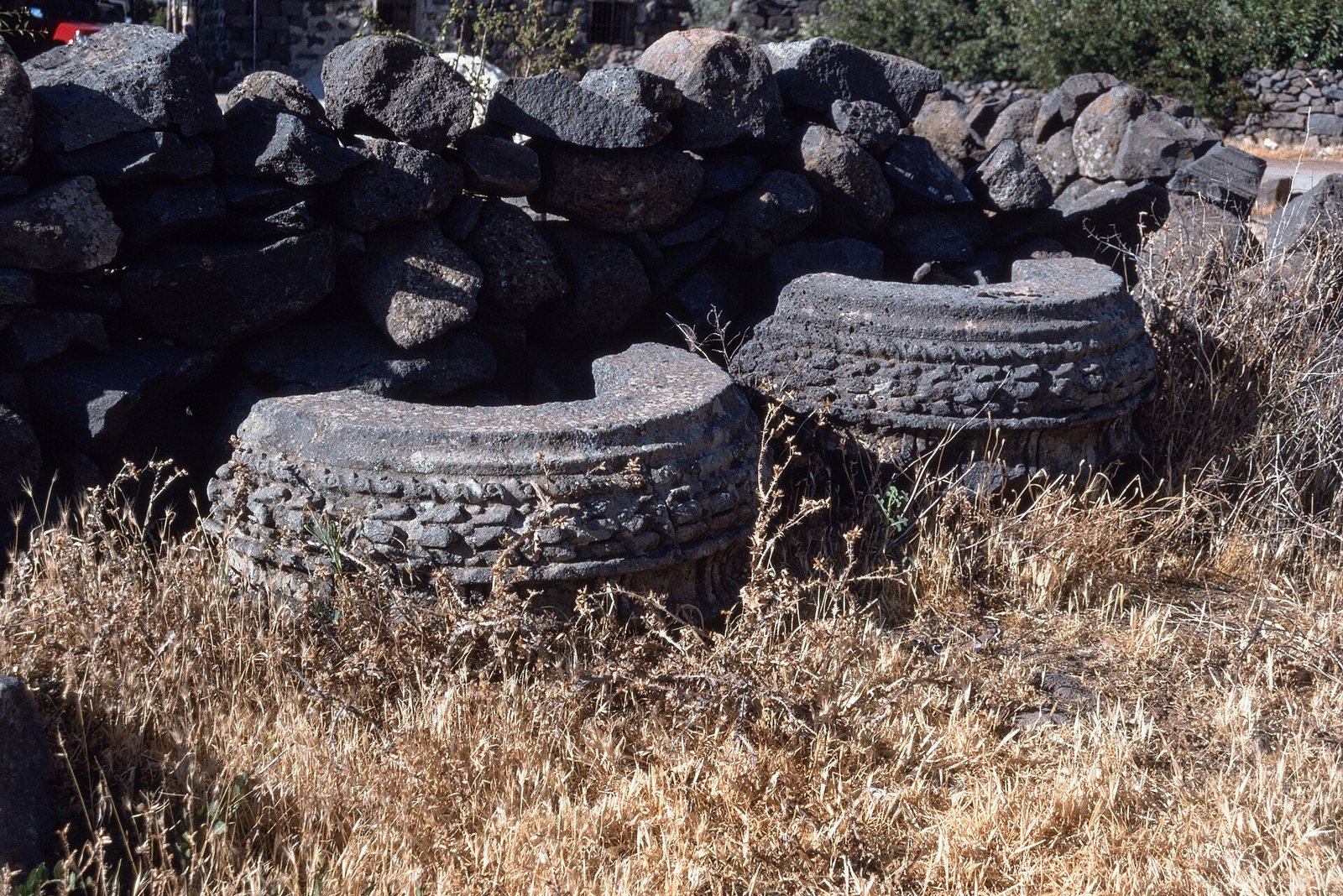
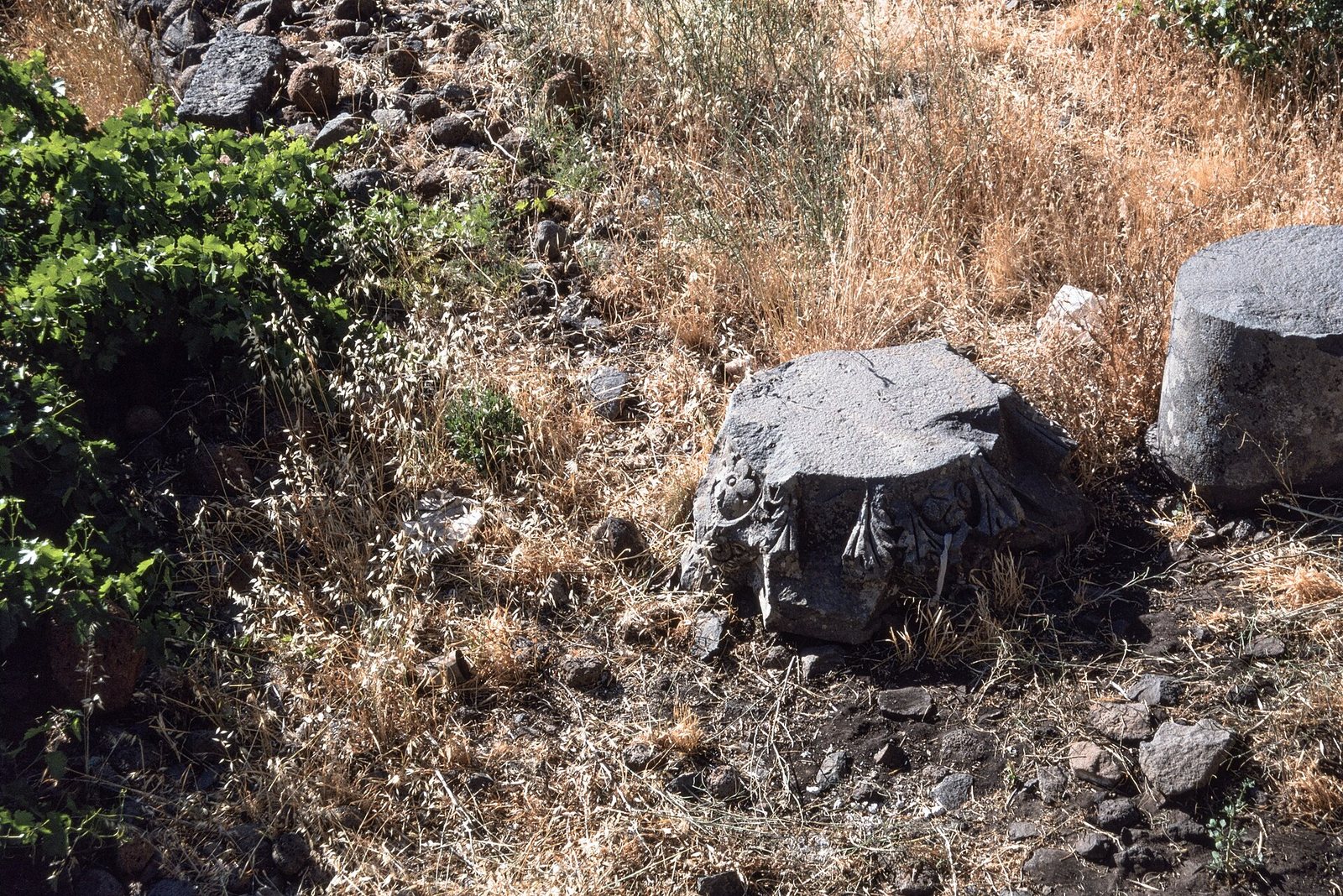
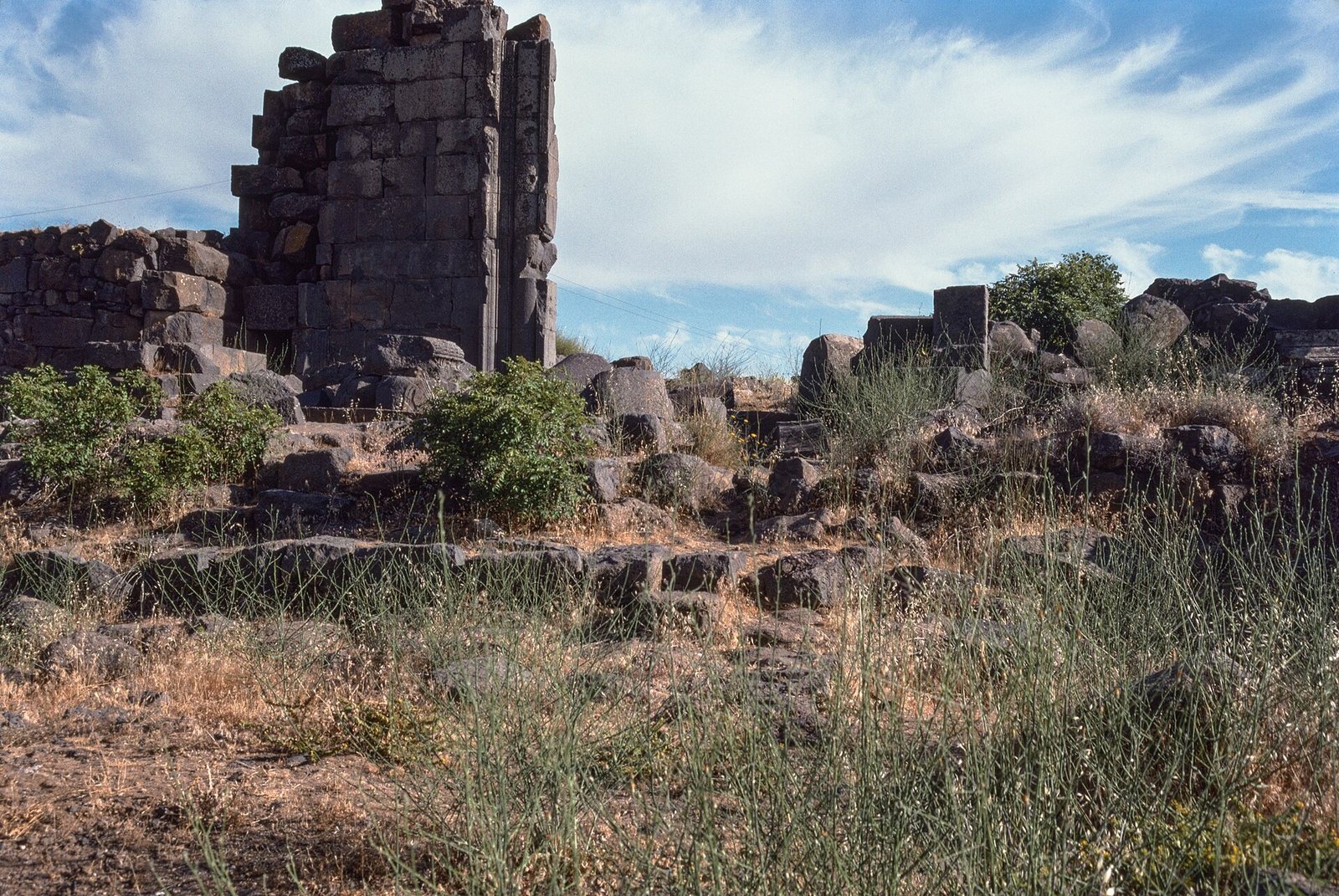
Photos: Odilia — via Wikimedia Commons (CC BY-SA) · Frank Kidner — via Wikimedia Commons (CC BY-SA)
Syria Trails — An interactive geographic and heritage atlas of Syria: a map that walks down from the country to the district, landmarks with their story and era, curated trails and a passport for your visits.