Temple of Baalshamin
معبد بعل شمين
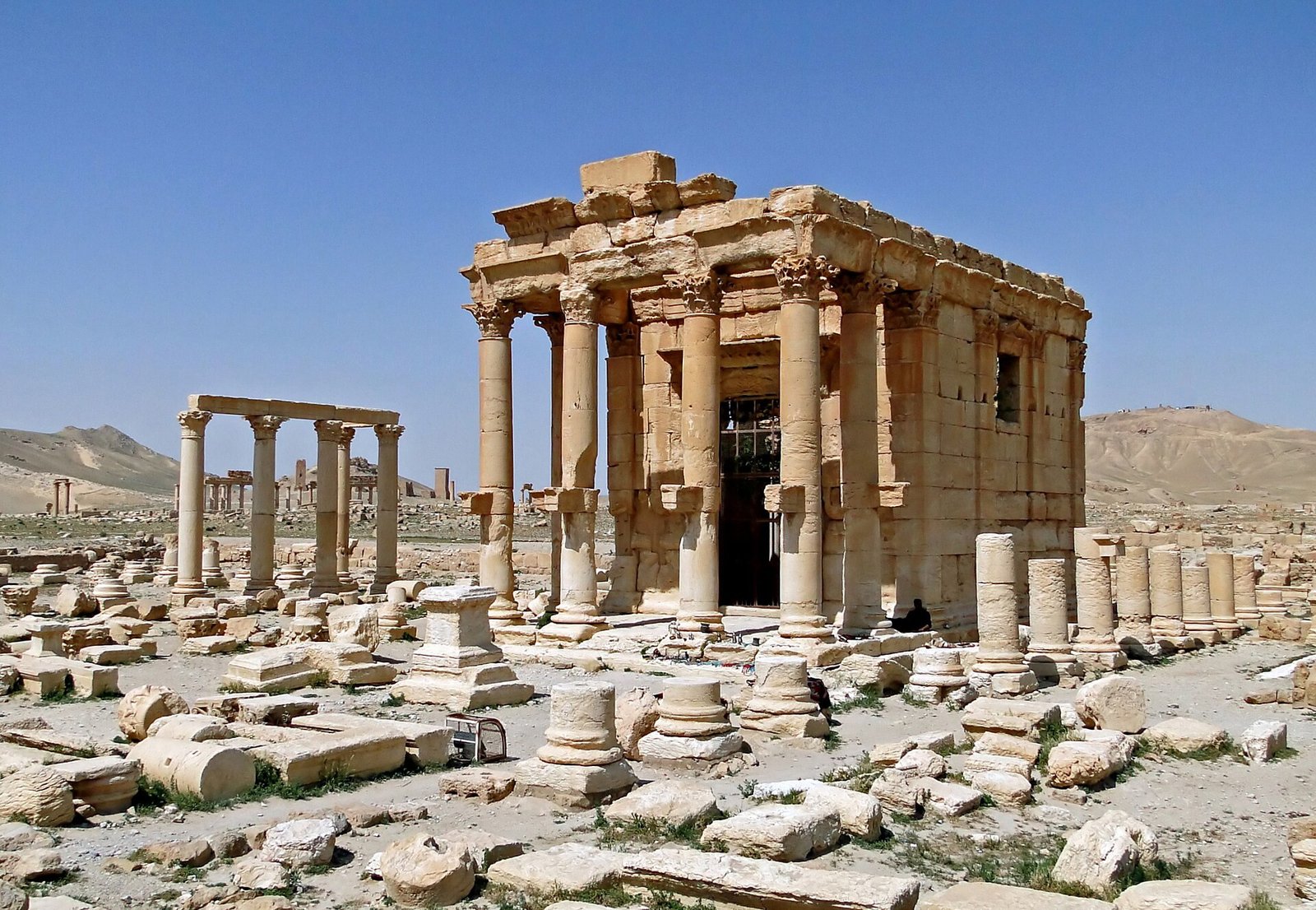
An elegant small temple in Palmyra dedicated to the sky god Baalshamin in the 2nd century AD; destroyed by ISIS in 2015.
In northern Palmyra stood the Temple of Baalshamin, one of the city's most beautiful and best-preserved temples until its destruction. It honoured Baalshamin, the Semitic lord of the sky, rain and fertility, worshipped across the Levant.
Its final form dates to the 2nd century AD; inscriptions record its rebuilding in the reign of Hadrian, who visited Palmyra, funded by a wealthy local notable. Small but harmonious, it had a portico of six Corinthian columns and brackets for statues of benefactors, a Palmyrene custom.
The temple's earliest phase dates to the late 2nd century BC, its altar was built in AD 115, and it was largely rebuilt in AD 131. It stood in a precinct of three courtyards and fused ancient Syrian and Roman architecture: its proportions and column capitals were Roman, while the elements above the architrave and the side windows followed the Syrian tradition. The French naval officer and photographer Louis Vignes was the first to photograph it, in 1864.
Converted into a church in Byzantine times, it survived nearly complete until August 2015, when it was almost entirely destroyed. Photographs, studies and digital models preserve its memory. Part of the Palmyra World Heritage site.
Note: photos may not reflect the site's current condition.
For the visitor
Location: 34.5533, 38.2705 · Open on the map
Photos
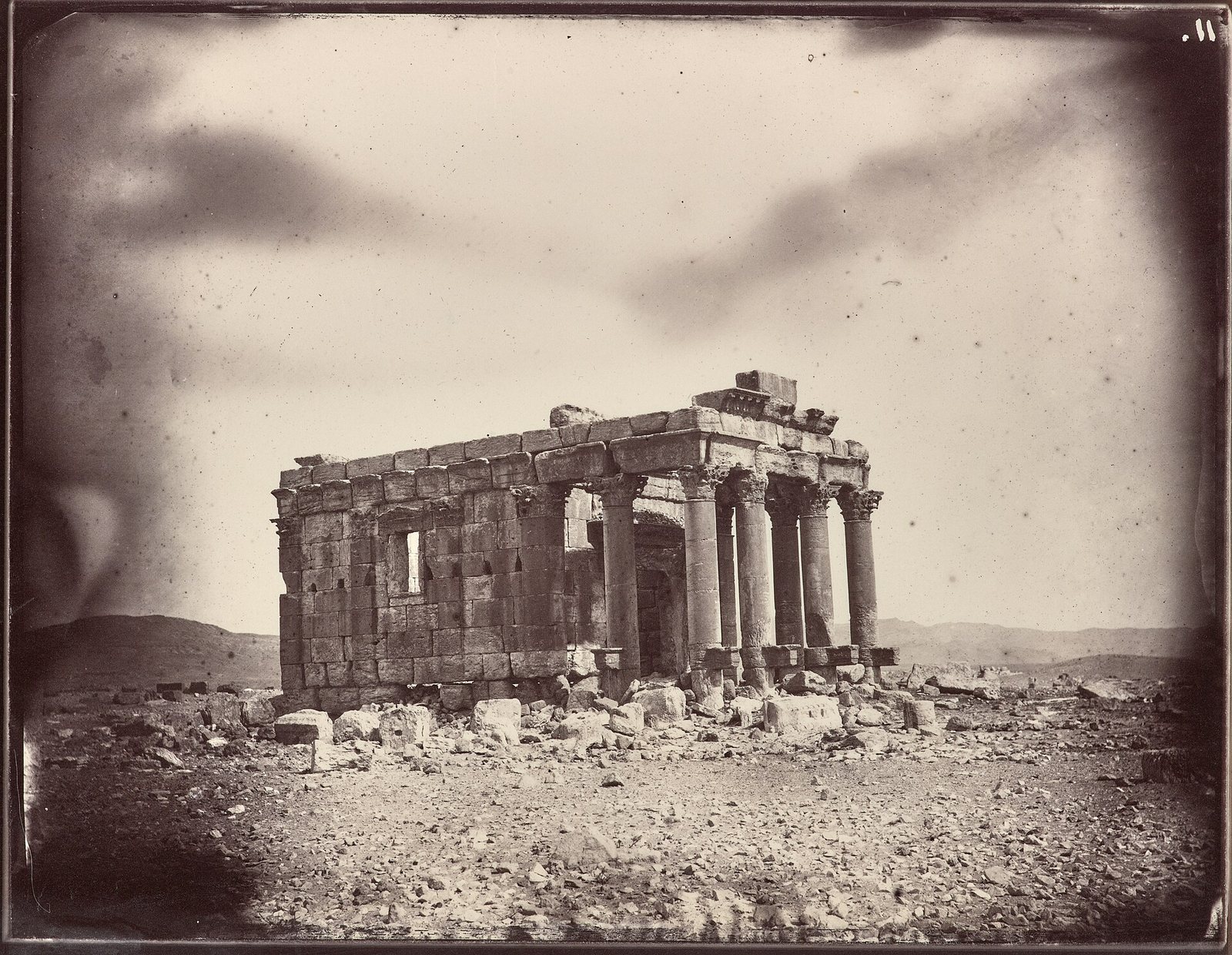
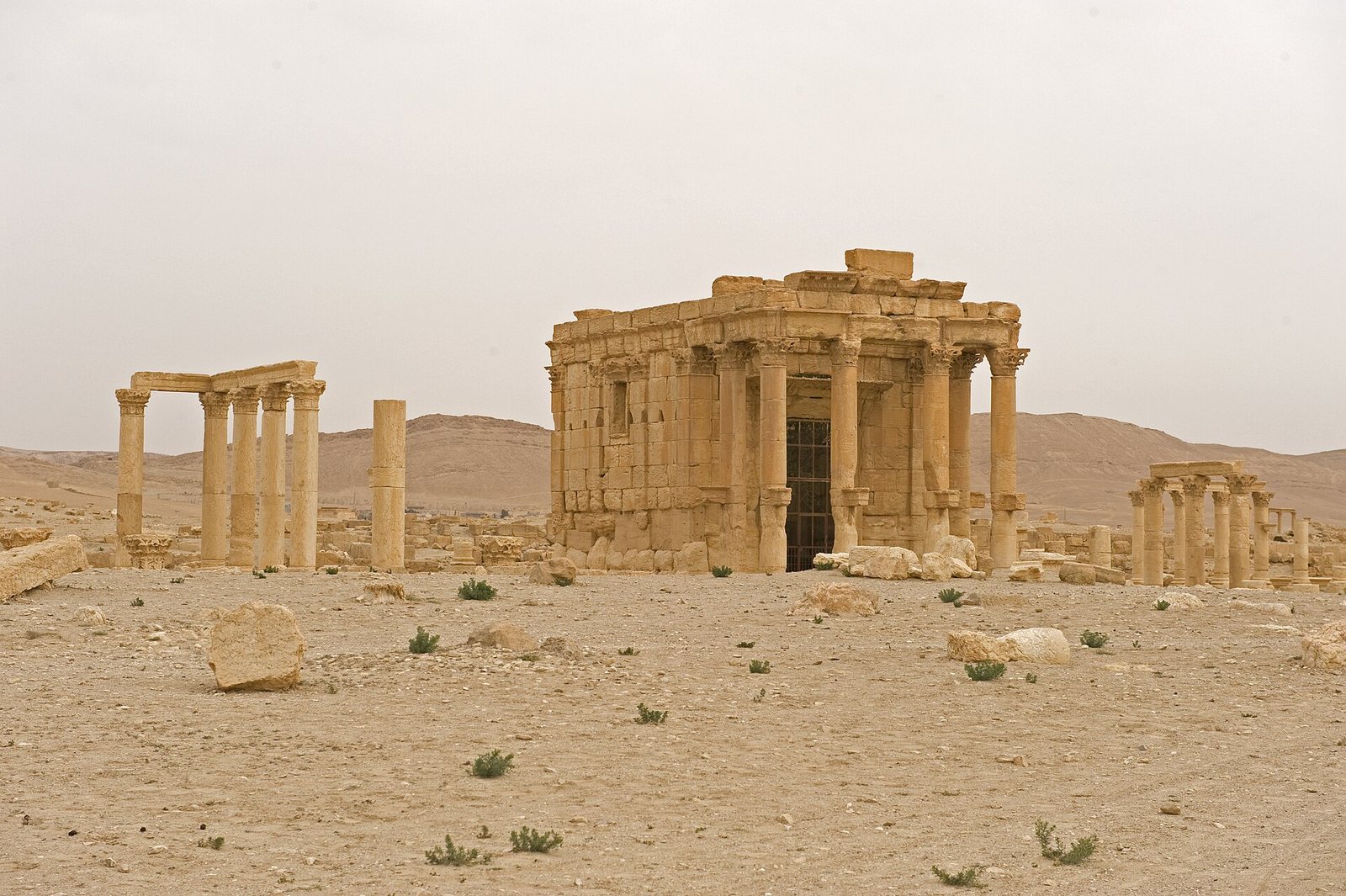
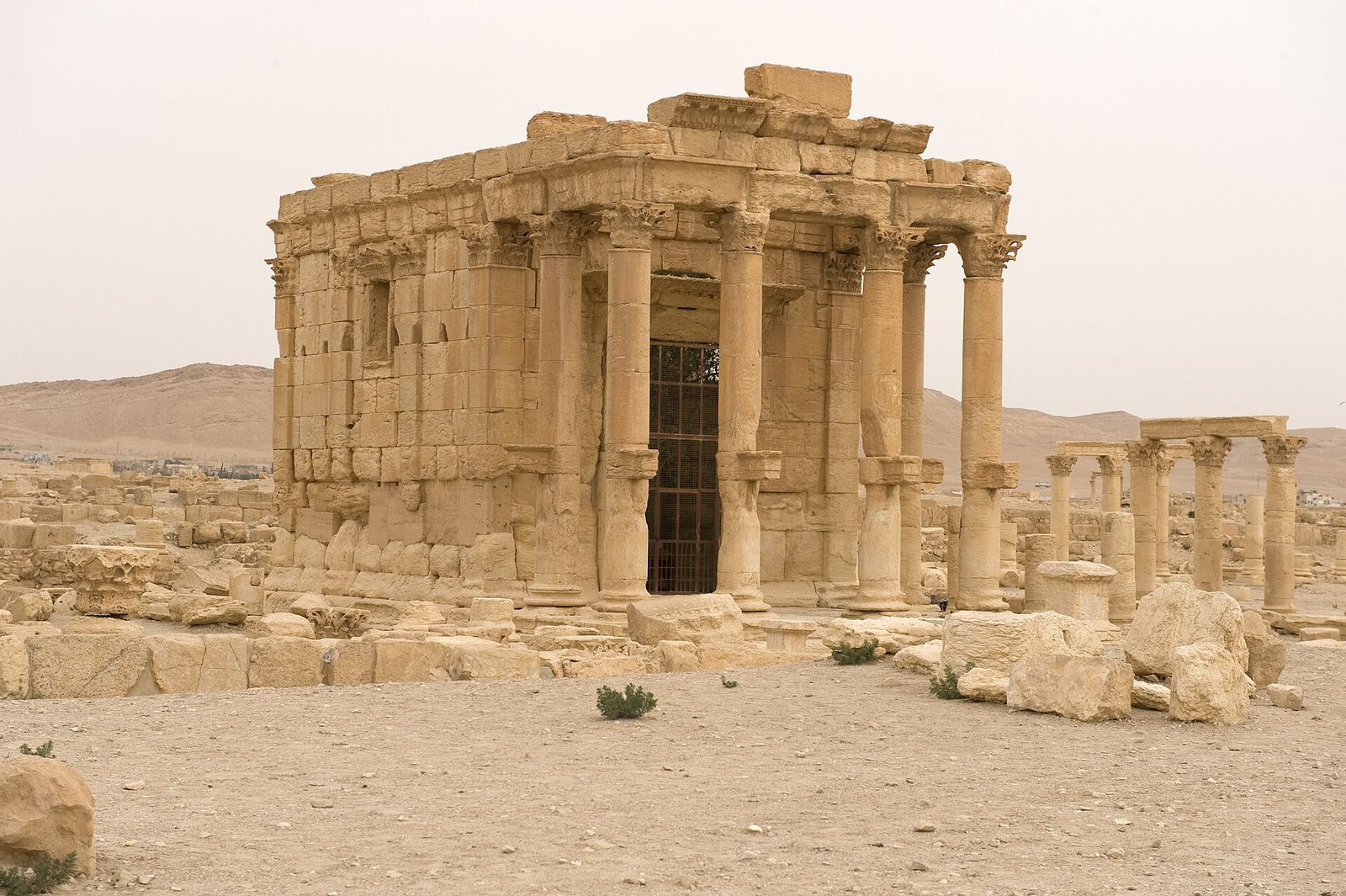
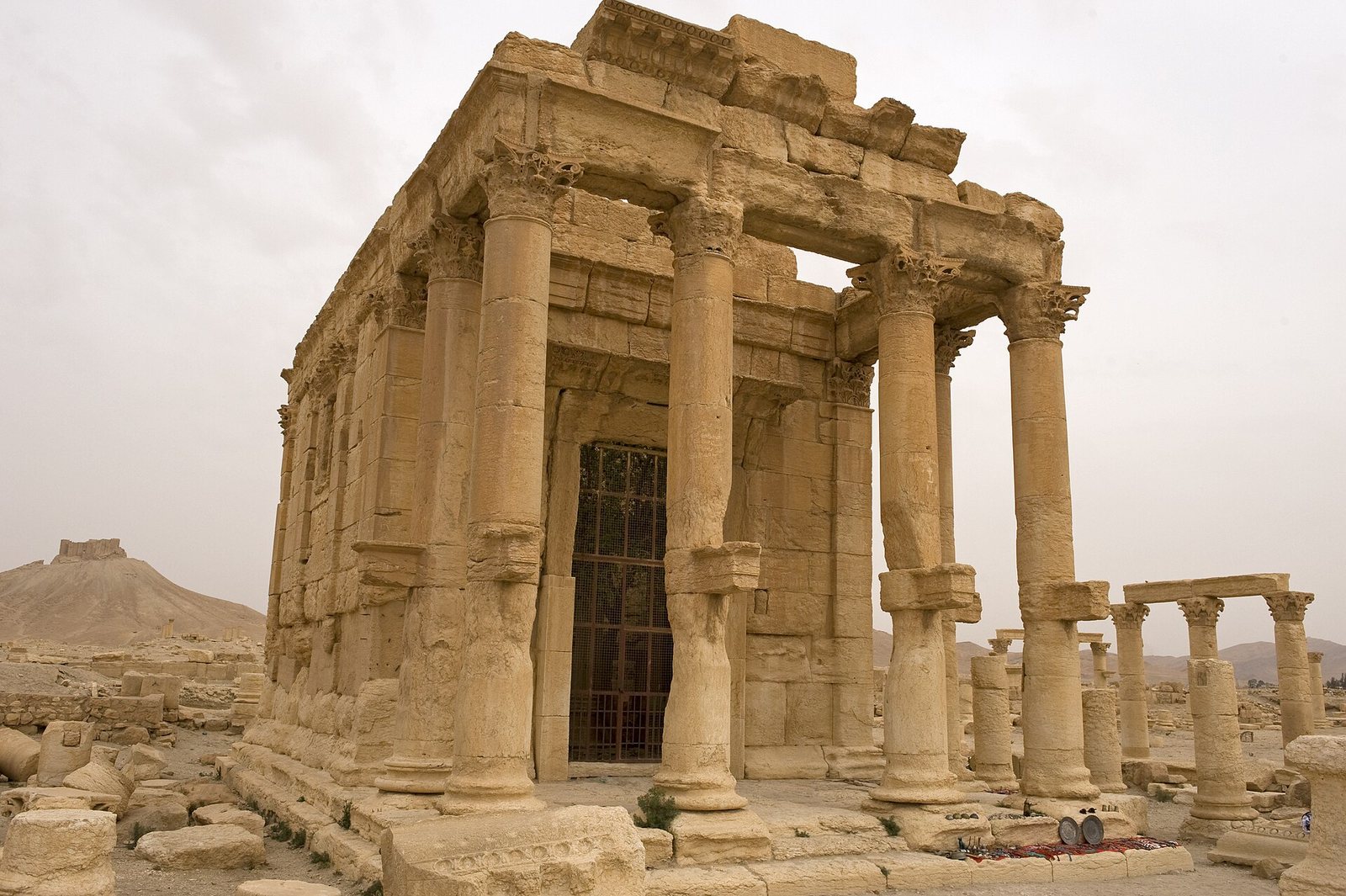
Photos: Bernard Gagnon — via Wikimedia Commons (CC BY-SA) · Getty Research Institute — via Wikimedia Commons (CC BY) · Dosseman — via Wikimedia Commons (CC BY-SA)
Syria Trails — An interactive geographic and heritage atlas of Syria: a map that walks down from the country to the district, landmarks with their story and era, curated trails and a passport for your visits.