Roman Theatre of Palmyra
مسرح تدمر الروماني
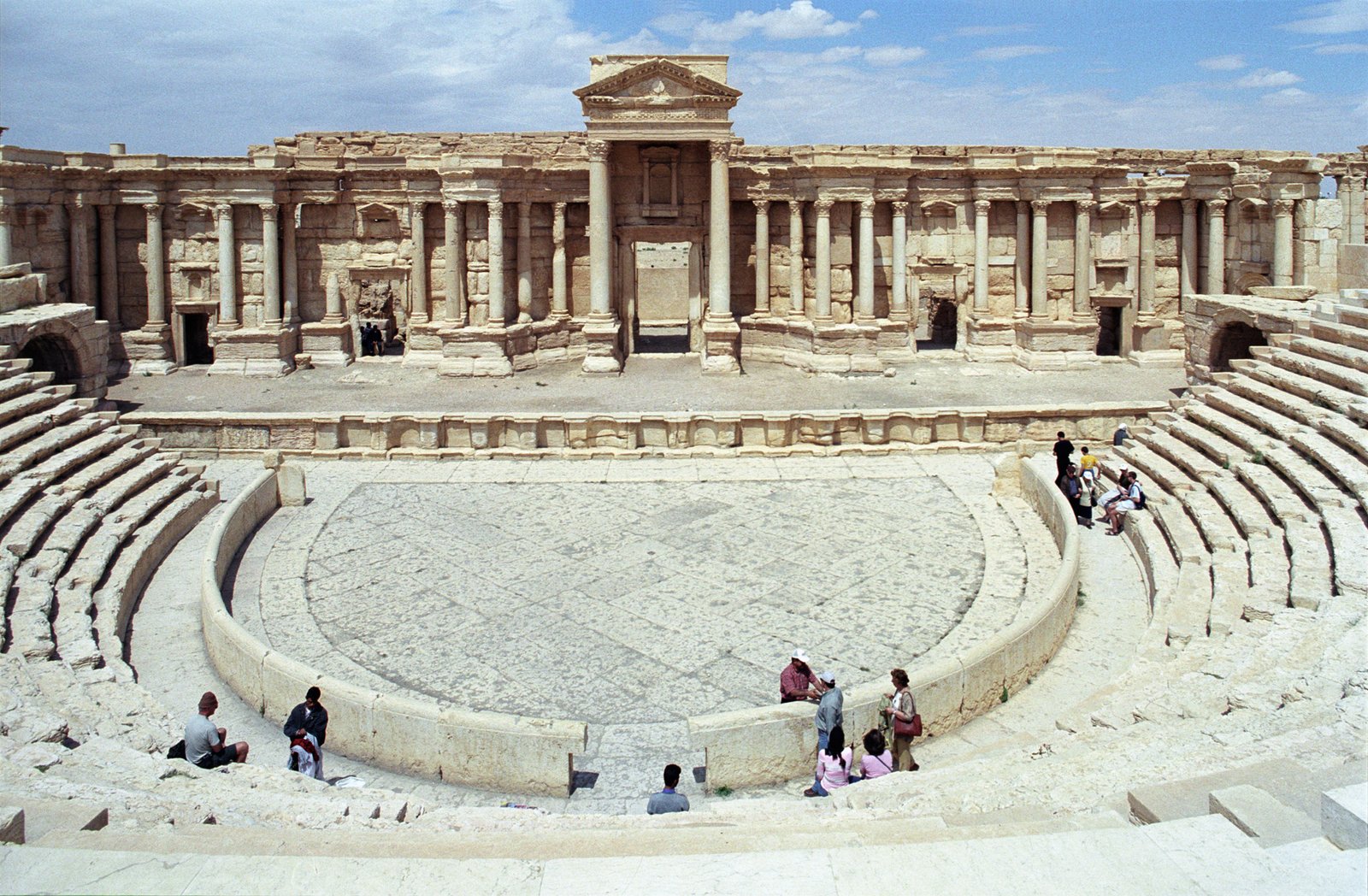
2nd-century Roman theatre at the heart of Palmyra, known for its ornate stage façade, part of which was destroyed in 2017.
Palmyra's Roman theatre sits at the centre of the ancient city beside the great colonnaded street, built in the 2nd century AD. Many visitors call it the "Theatre of Zenobia", though it predates the famous queen — a popular name reflecting how the whole city is tied to her.
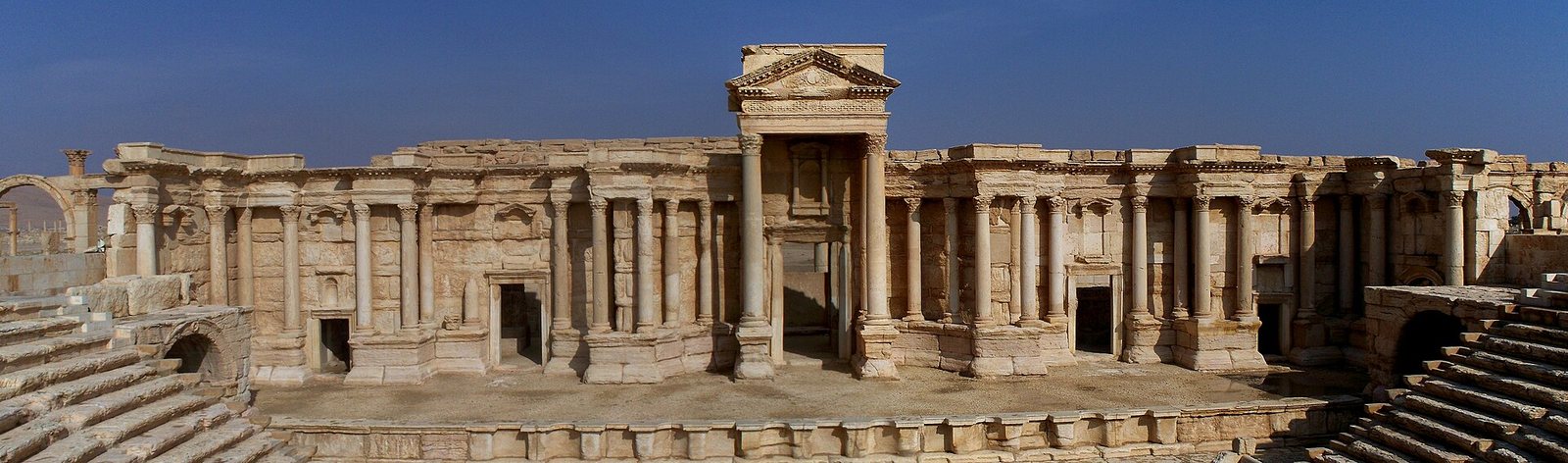
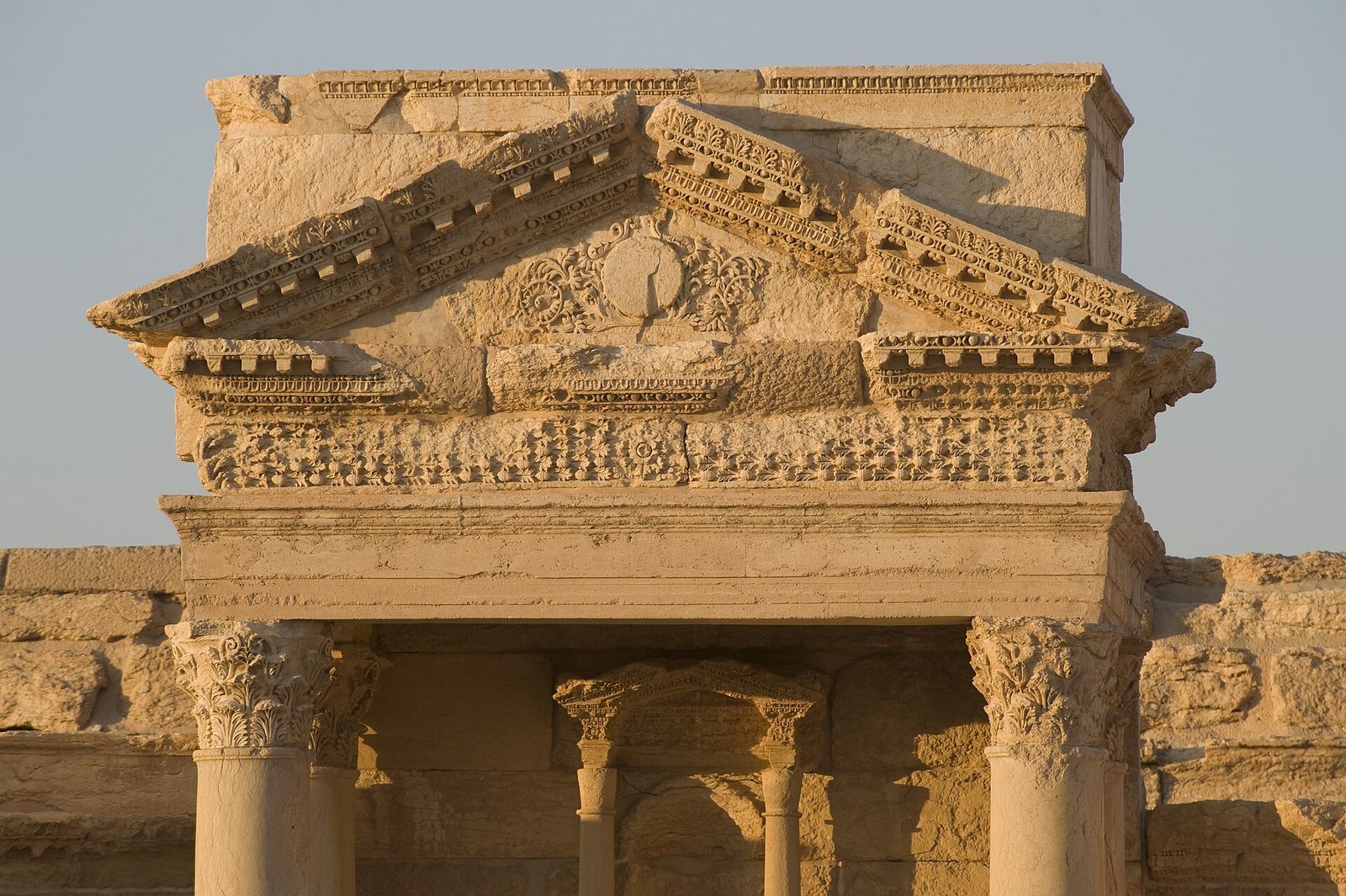
Semicircular tiers of stone seats face a stage backed by an ornate architectural façade, the scaenae frons, with doorways, niches, columns and finely carved capitals. It may never have reached its full planned height, but it was among the most beautiful theatres in the Roman East.
The theatre is thought to have been built in the first half of the 2nd century and rebuilt after 273. It lay buried under sand until 1950, and excavation and restoration followed in 1952. Its seating has 13 rows of limestone, each 37 cm high and 60 cm deep, around an orchestra with three gates.
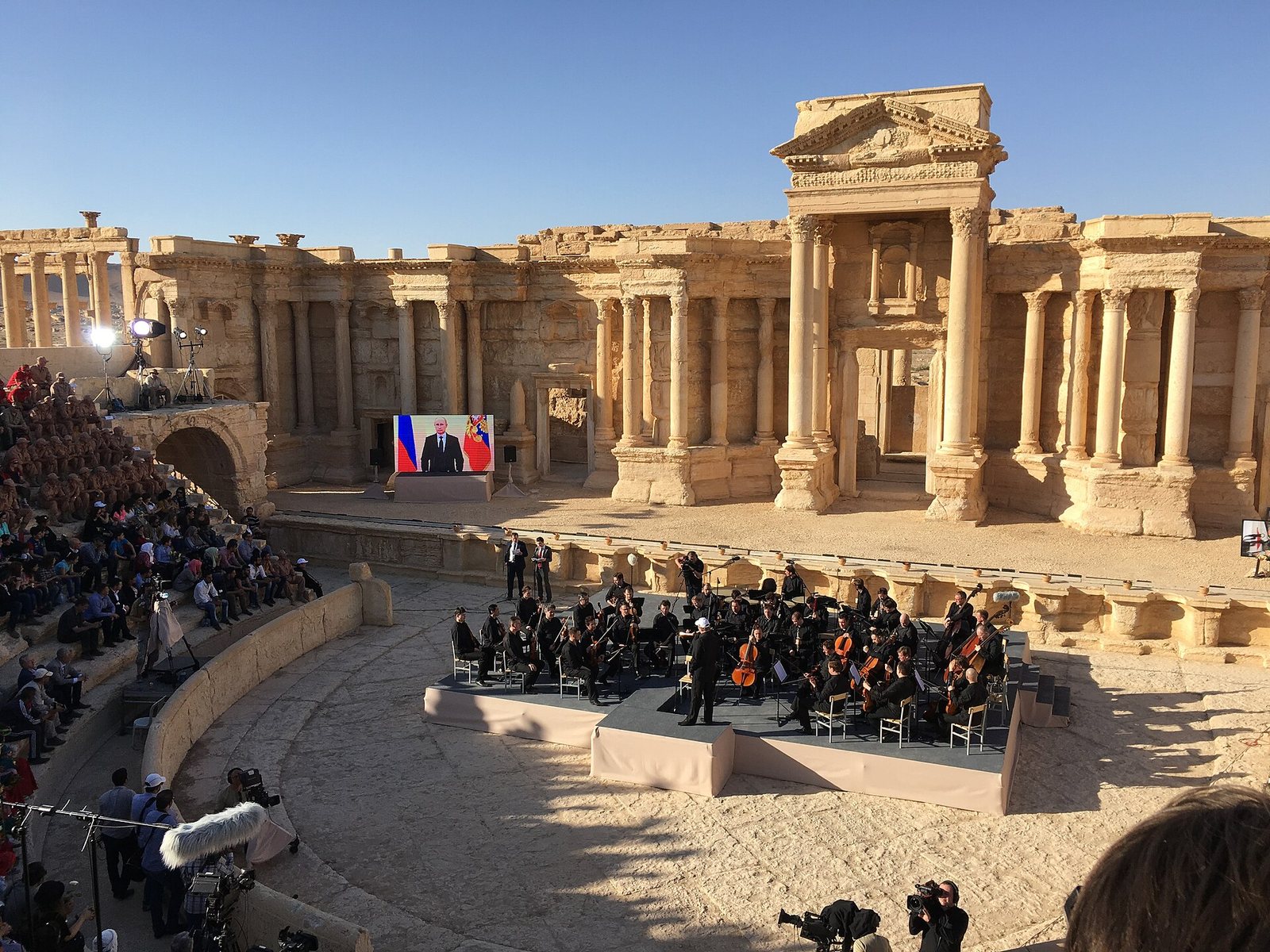
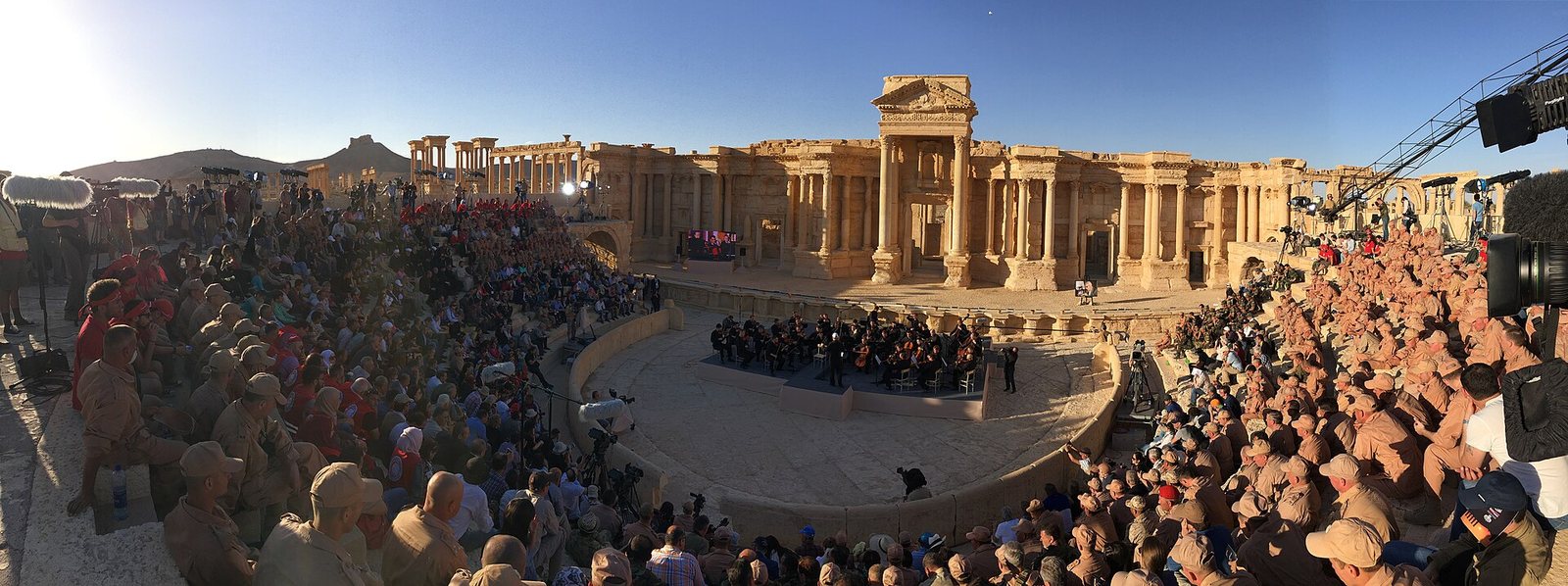
Excavated and restored in the 20th century, it hosted the annual Palmyra Festival for decades. Part of the stage façade was damaged in early 2017. The seating largely survives. Part of the Palmyra World Heritage site.
Note: photos may not reflect the site's current condition.
For the visitor
Location: 34.5505, 38.2687 · Open on the map
Photos
Photos: Jerzy Strzelecki — via Wikimedia Commons (CC BY-SA) · High Contrast — via Wikimedia Commons (CC BY) · L-BBE — via Wikimedia Commons (CC BY) · Dosseman — via Wikimedia Commons (CC BY-SA)
Syria Trails — An interactive geographic and heritage atlas of Syria: a map that walks down from the country to the district, landmarks with their story and era, curated trails and a passport for your visits.