Norias of Hama
نواعير حماة
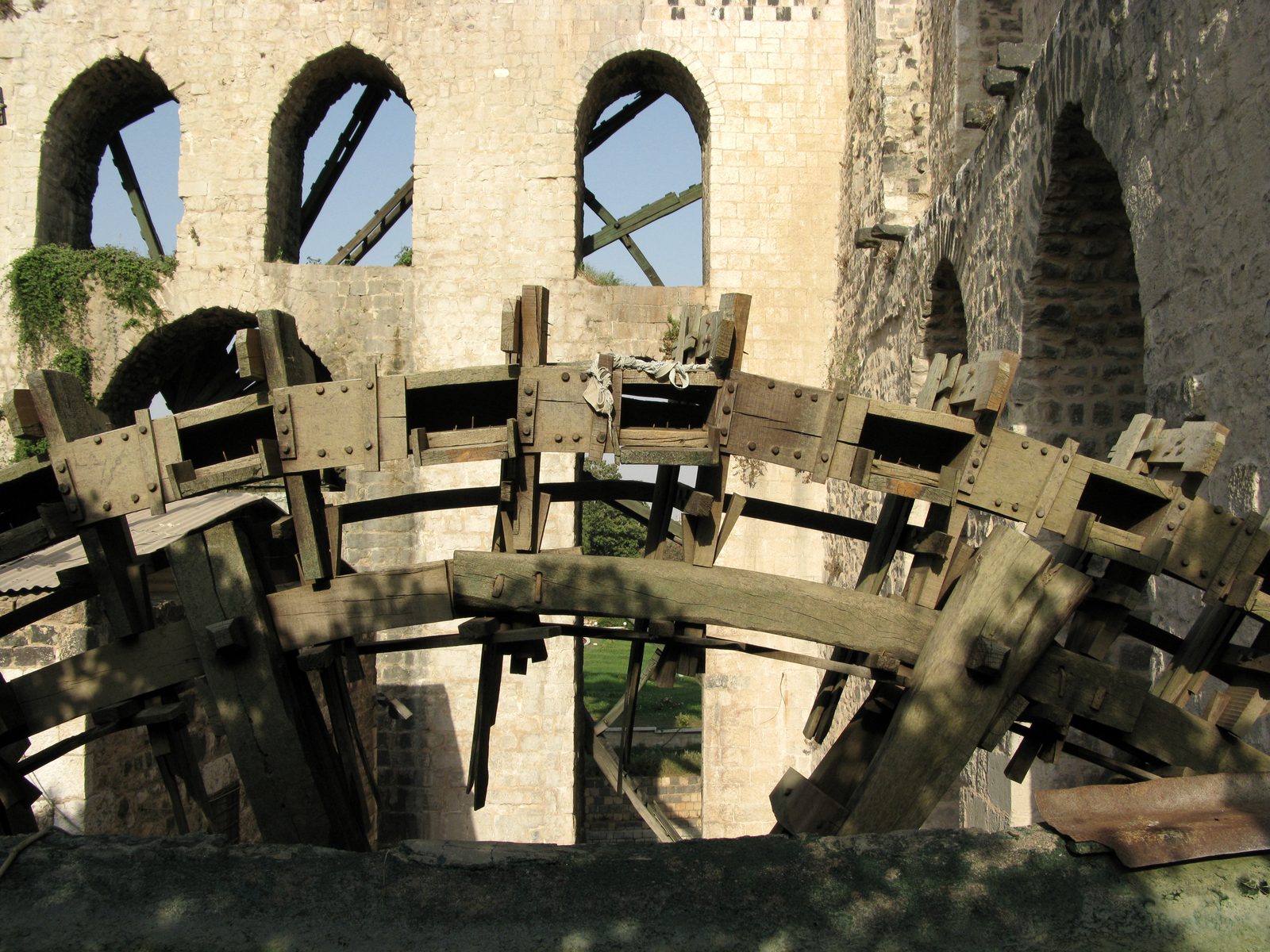
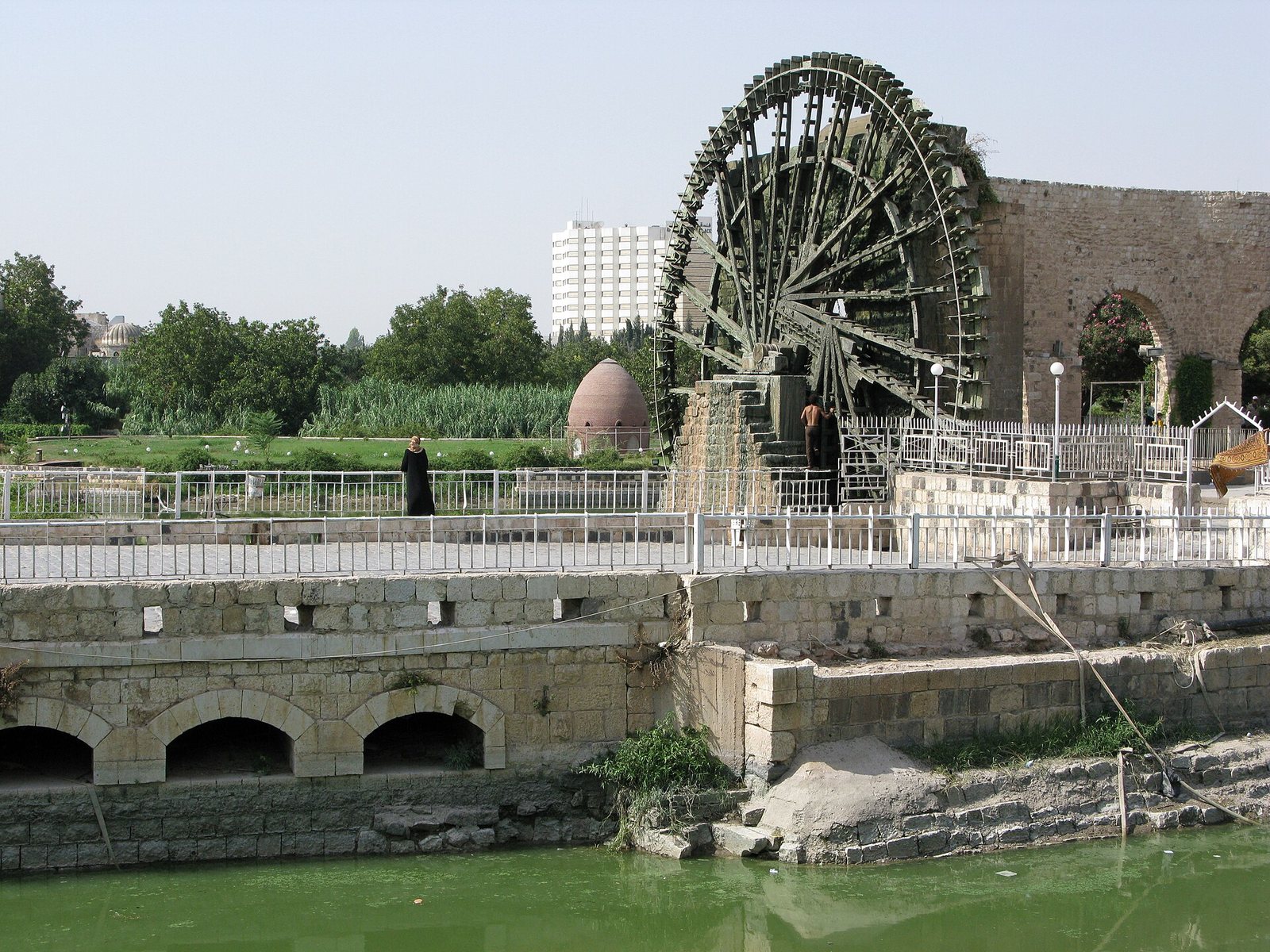
Massive wooden waterwheels on the Orontes River in Hama, historically used to lift water for irrigation, with their large-scale development dating mainly to the Ayyubid and Mamluk periods.
The Norias of Hama are massive wooden waterwheels set along the banks of the Orontes River in the city of Hama, historically used to lift water from the river into elevated stone aqueducts that carried it to fields, gardens, and public baths. The technique was likely in use in the region before Islam, but the large-scale development of the norias — including the biggest wheels still standing — dates mainly to the Ayyubid and Mamluk periods, between the 12th and 14th centuries.
At their peak, Hama had around thirty norias; about seventeen survive today. The largest and best known, the al-Mohammadiya noria, was built in 1361 and measures roughly 20 meters across — one of the biggest in the city. As they rotate, the wooden wheels produce a distinctive creaking sound from wood grinding on wood, which locals often describe as the norias' "moan" or "song."
The norias work by the river's flow pushing box-like compartments set around the rim under water; they fill, are carried to the top and empty into an aqueduct that carries the water to buildings, gardens and farmland. They are notable for their medieval origins, their large number and the enormous size of two of them, for nearly 500 years the tallest waterwheels in the world: the Noria al-Muhammadiya (1361) and the Noria al-Ma'muriyya (1453), dated by their inscriptions. There are strong grounds for believing that many norias were working in Hama by the late 12th century, and perhaps some centuries earlier. In 2006 the American Society of Mechanical Engineers designated the Noria al-Muhammadiya a Historic Mechanical Engineering Landmark, marking a major step forward in technology internationally.
Through the ages
Ayyubid: The norias saw major development during the Ayyubid period
Mamluk: The largest surviving norias, such as the al-Mohammadiya built in 1361 CE, date to the Mamluk period
For the visitor
Location: 35.1353, 36.7531 · Open on the map
Photos
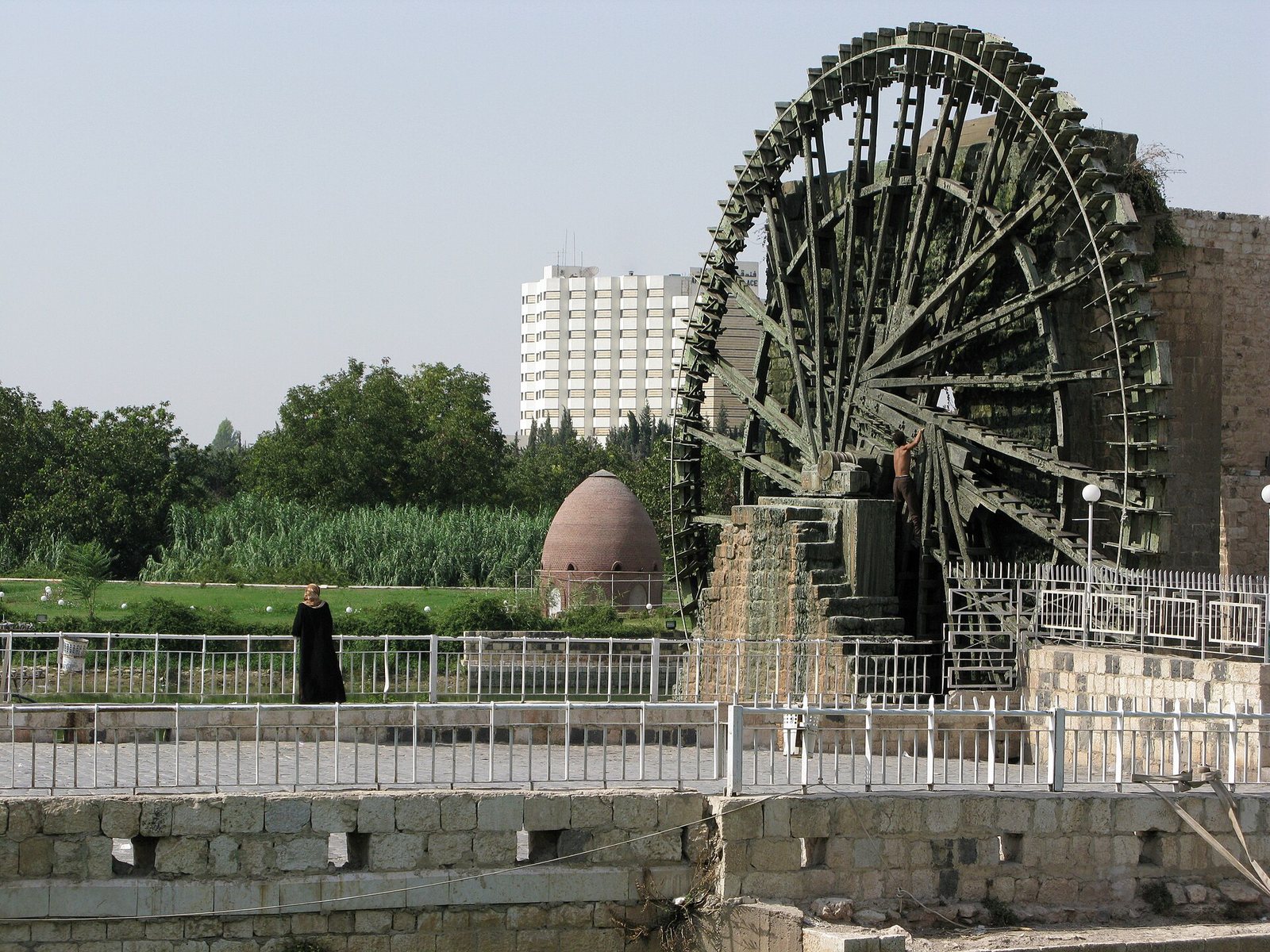
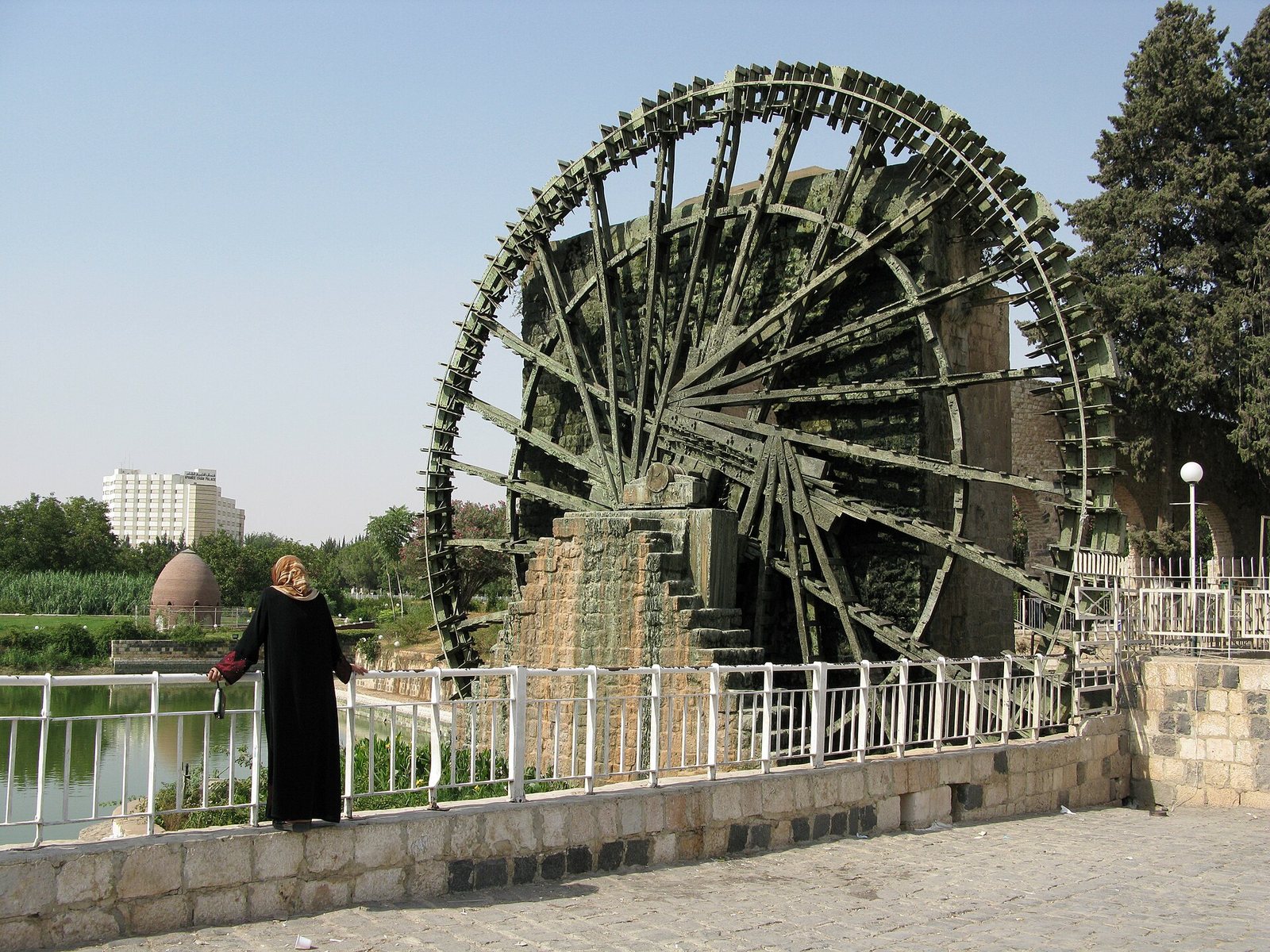
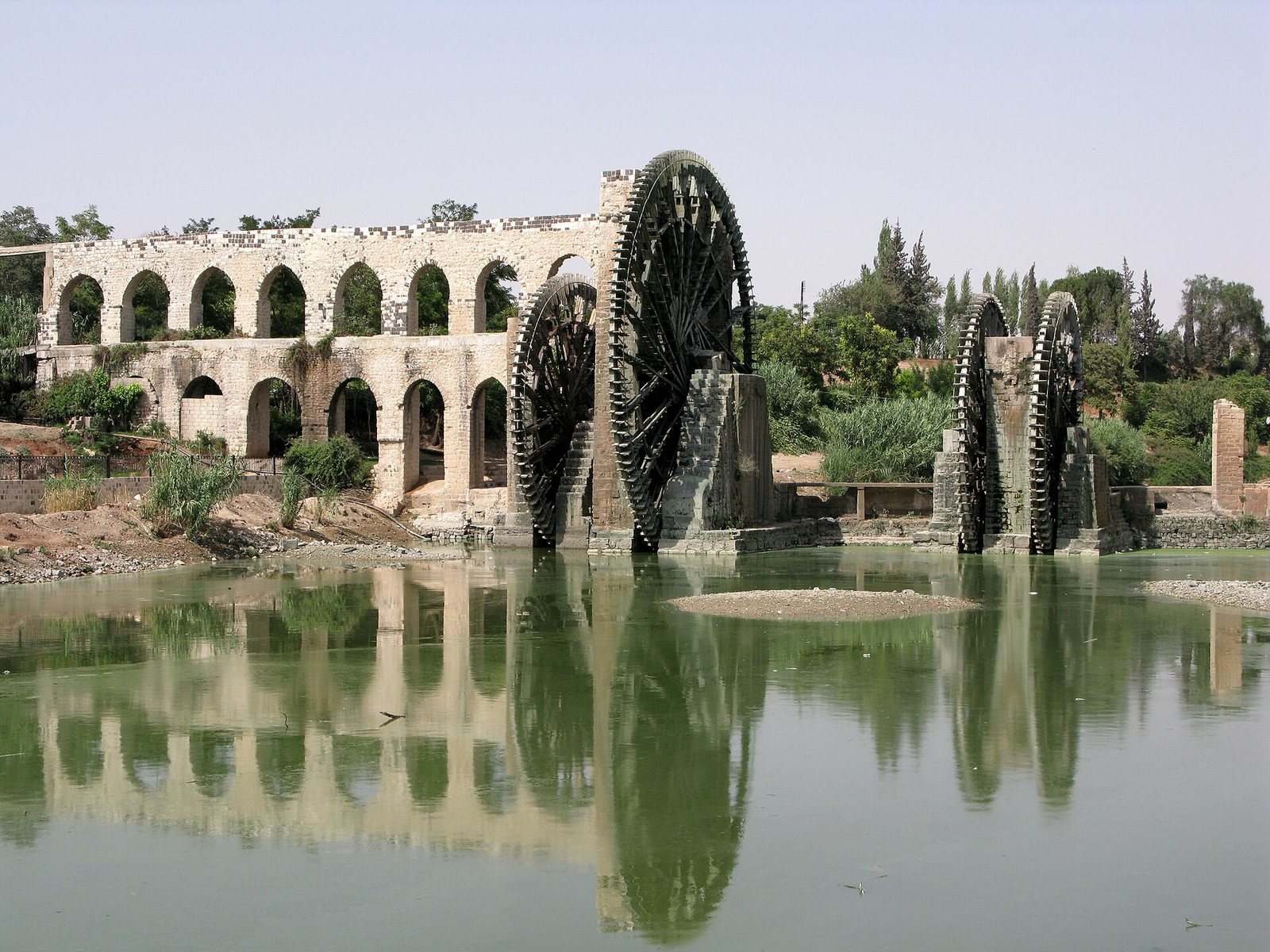
Photos: Vyacheslav Argenberg — via Wikimedia Commons (CC BY)
Syria Trails — An interactive geographic and heritage atlas of Syria: a map that walks down from the country to the district, landmarks with their story and era, curated trails and a passport for your visits.