Ma'arrat al-Nu'man Museum (Khan Murad Pasha)
متحف معرة النعمان (خان مراد باشا)
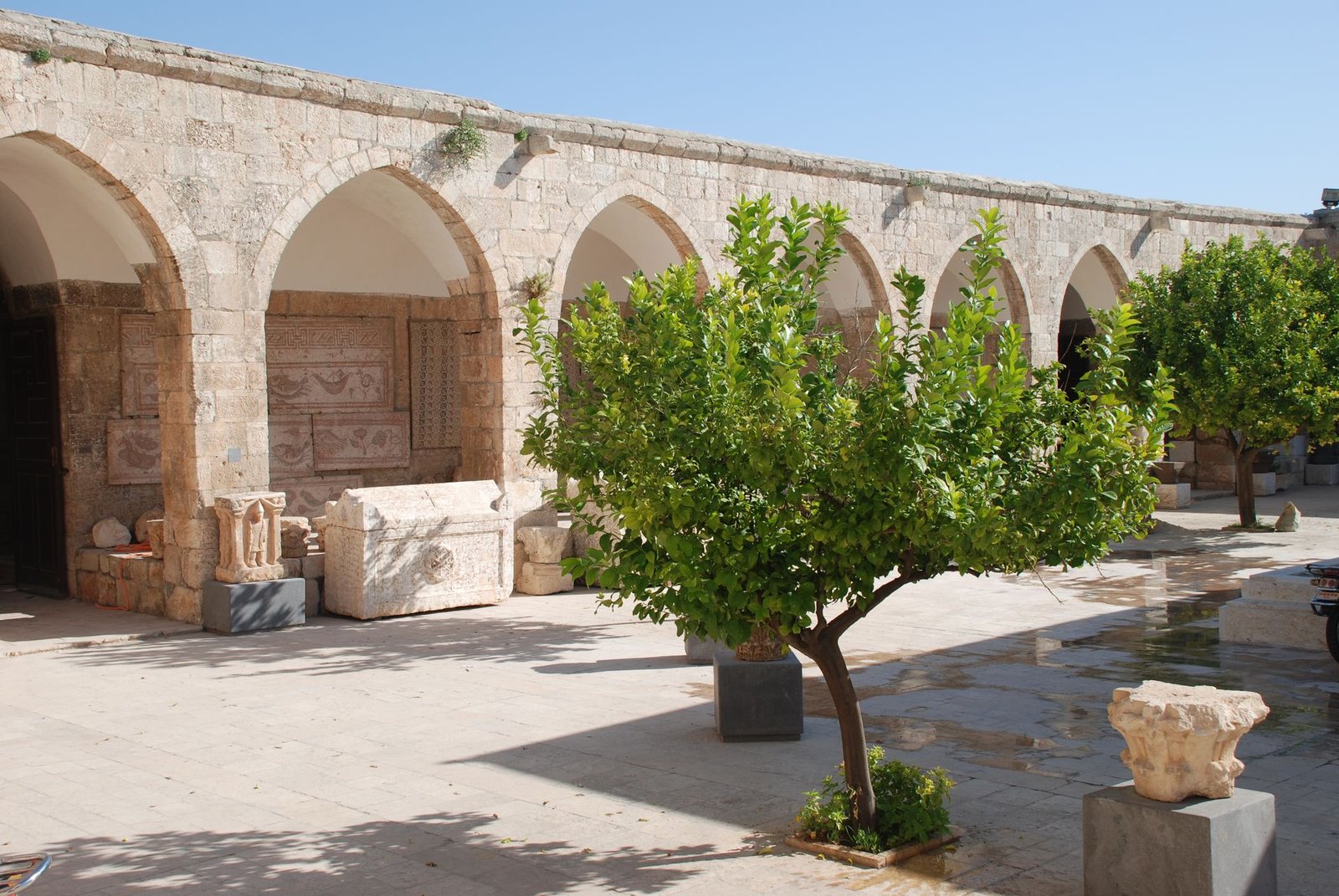
A large Ottoman caravanserai in Ma'arrat al-Nu'man turned into a museum holding one of Syria's richest mosaic collections; damaged in the war.
In Ma'arrat al-Nu'man, south Idlib, on the historic Aleppo–Hama road, stands Khan Murad Pasha, one of the largest Ottoman caravanserais in Syria, built in the late 16th century for trade and pilgrim caravans, with a vast courtyard, arcades, domed halls and a massive gateway.
Turned into a museum in the 1980s, it became famous for its collection of Roman and Byzantine mosaics gathered from the Dead Cities and nearby sites — scenes of daily life, myths, animals and ornament — among the most important in the Middle East, alongside pottery, tools and inscriptions.
The khan was built by Murad Celebi, keeper of the sultan's treasuries, in 1595 (974 AH) soon after the Ottomans entered Syria, as a rest house, inn and soup kitchen for travellers, according to the endowment inscription above its main gate. It has four cross-vaulted wings, and its founder endowed it with orchards, water mills, waterwheels, a farm and another khan on the Hama–Aleppo road.
Note: photos may not reflect the site's current condition.
For the visitor
Location: 35.6433, 36.6683 · Open on the map
Photos: Bertramz — via Wikimedia Commons (CC BY)
Syria Trails — An interactive geographic and heritage atlas of Syria: a map that walks down from the country to the district, landmarks with their story and era, curated trails and a passport for your visits.