Krak des Chevaliers
قلعة الحصن
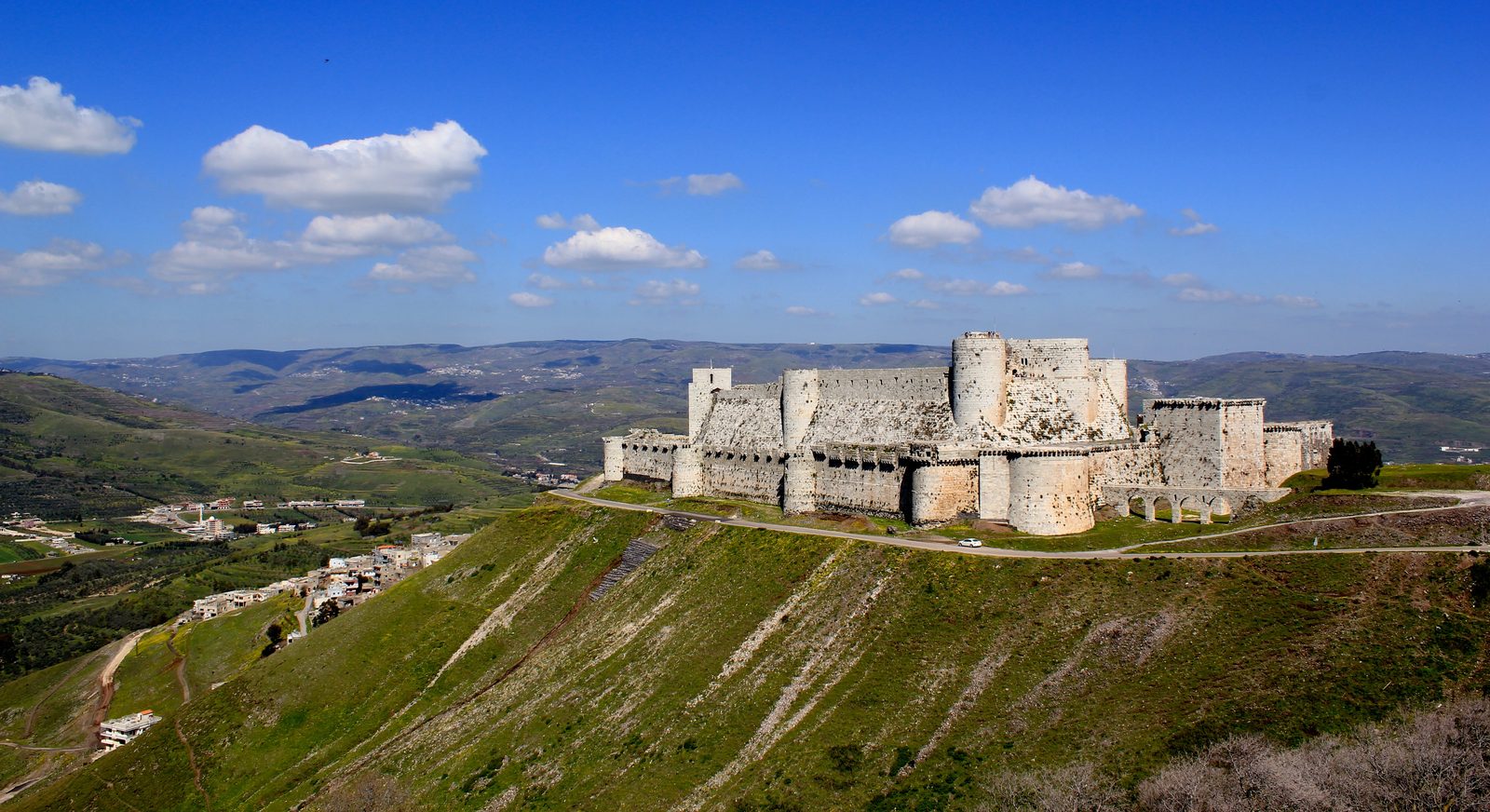
One of the best-preserved Crusader castles in the world, built by the Knights Hospitaller overlooking the Homs Gap. A UNESCO World Heritage Site.
Krak des Chevaliers is one of the best-preserved Crusader castles in the world, perched on a hilltop overlooking the Homs Gap — the strategic corridor linking Syria's coast to its interior. Originally a small fortress built in 1031 for the Emir of Aleppo and known as Hisn al-Akrad ("Fortress of the Kurds"), it was handed to the Knights Hospitaller in 1142 by Raymond II, Count of Tripoli. The Hospitallers rebuilt it over decades into a concentric double-walled fortress able to garrison roughly 2,000 soldiers, with stables, a chapel, and granaries built to withstand long sieges.
The castle repelled attacks from Nur ad-Din and Saladin before finally falling to the Mamluk Sultan Baybars on 8 April 1271. T. E. Lawrence, who visited in 1909, called it "the finest castle in the world." UNESCO listed it as a World Heritage Site in 2006. It suffered damage during the recent conflict and has since undergone restoration.
Through the ages
Crusader: Most of the present castle was built during the Crusader period by the Knights Hospitaller
Mamluk: Used as a military barracks after falling to the Mamluks in 1271
For the visitor
Location: 34.7569, 36.2947 · Open on the map
Photos
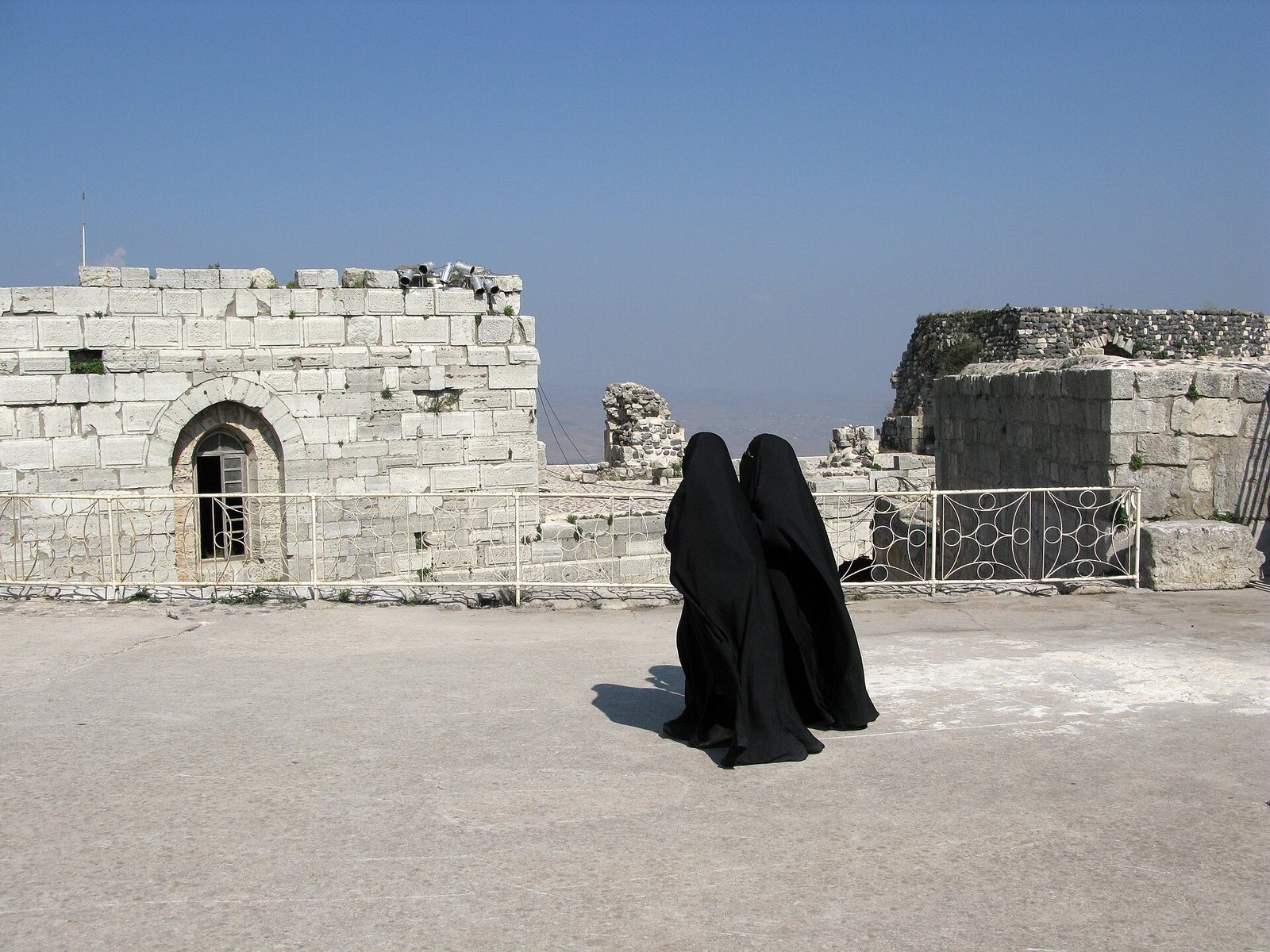
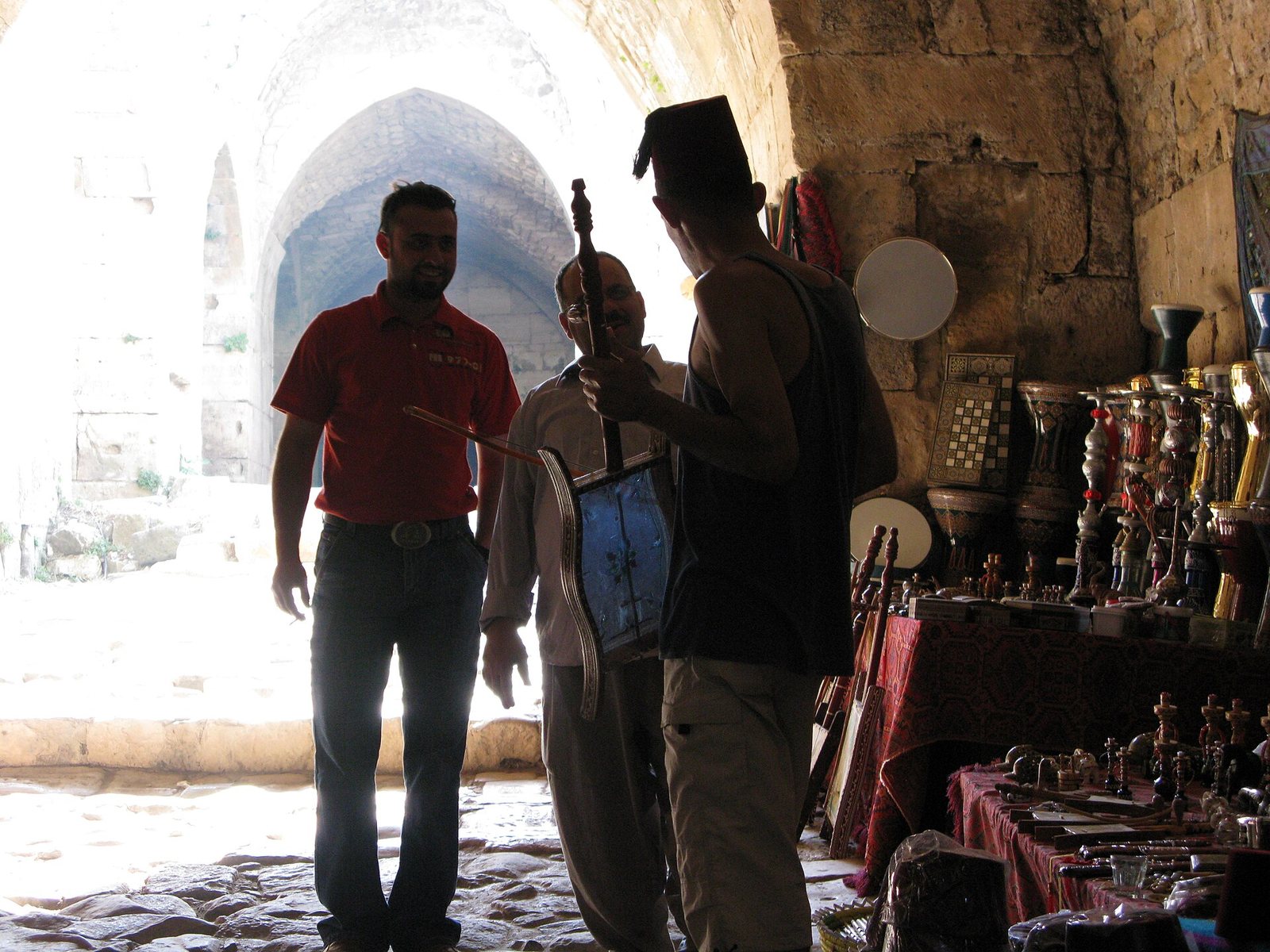
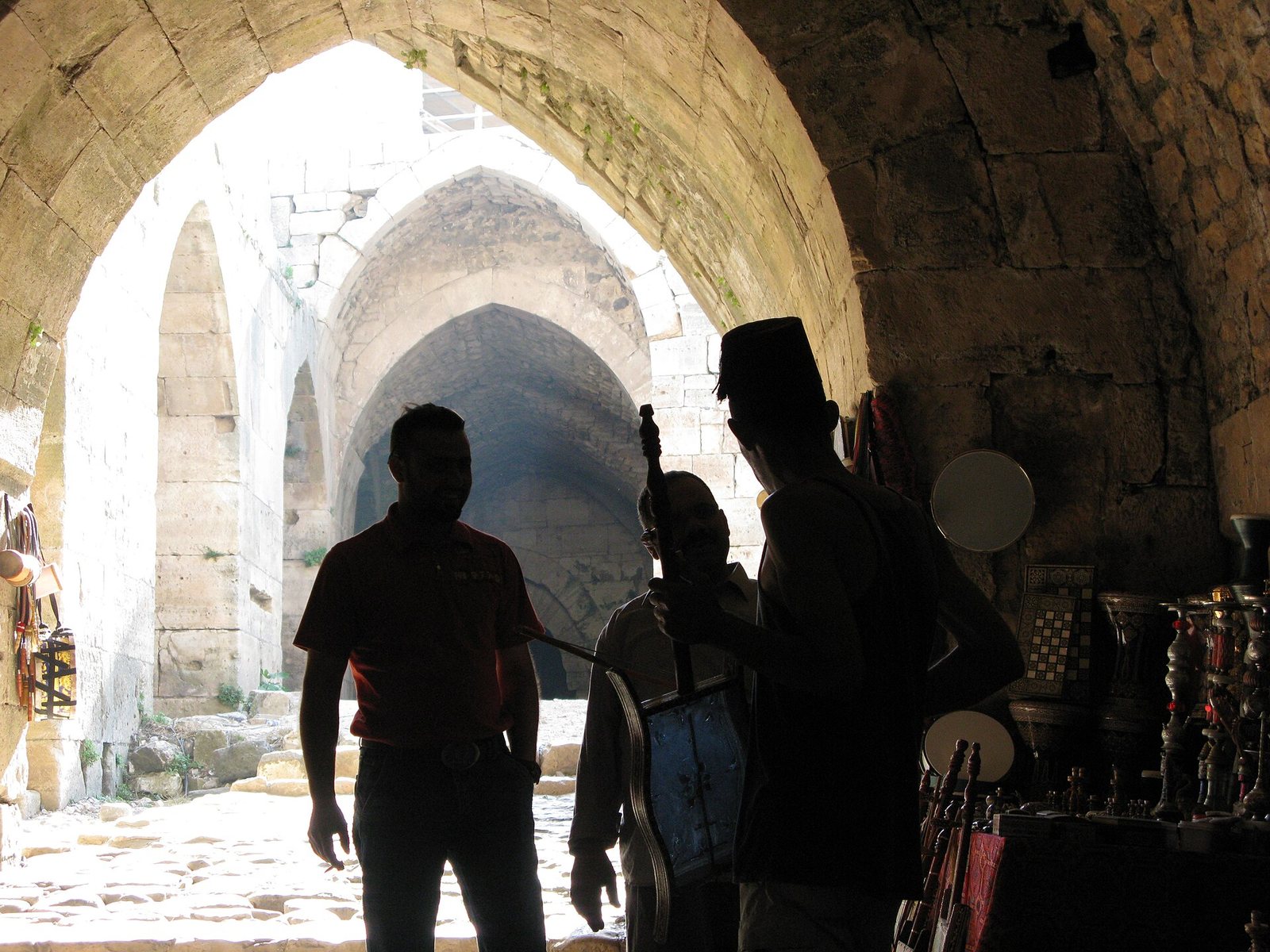
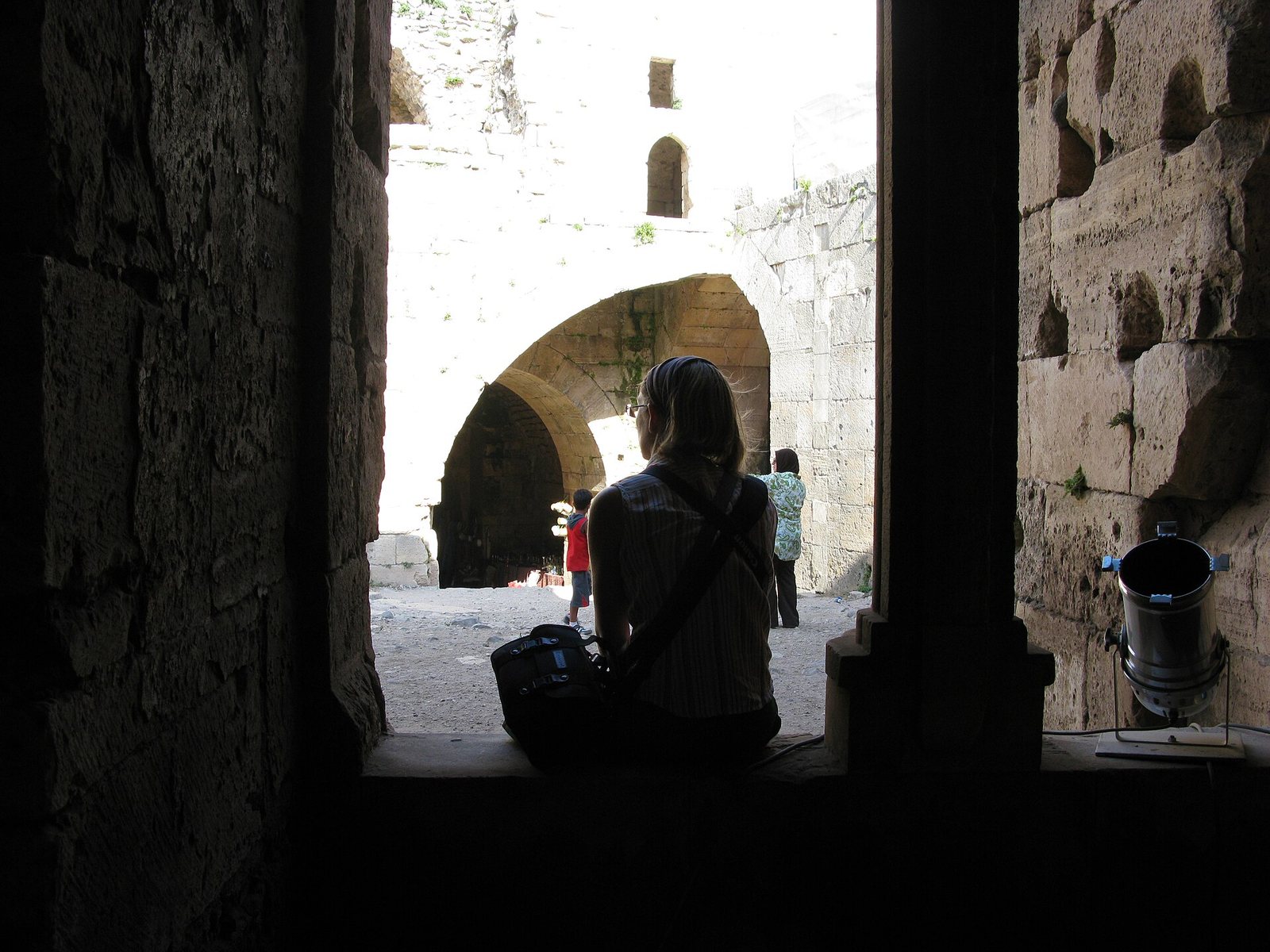
Photos: Ergo (original photo), cropped by Nev1 — Wikimedia Commons (CC BY) · Vyacheslav Argenberg — via Wikimedia Commons (CC BY)
Syria Trails — An interactive geographic and heritage atlas of Syria: a map that walks down from the country to the district, landmarks with their story and era, curated trails and a passport for your visits.