Great Mosque of Hama
الجامع الكبير في حماة
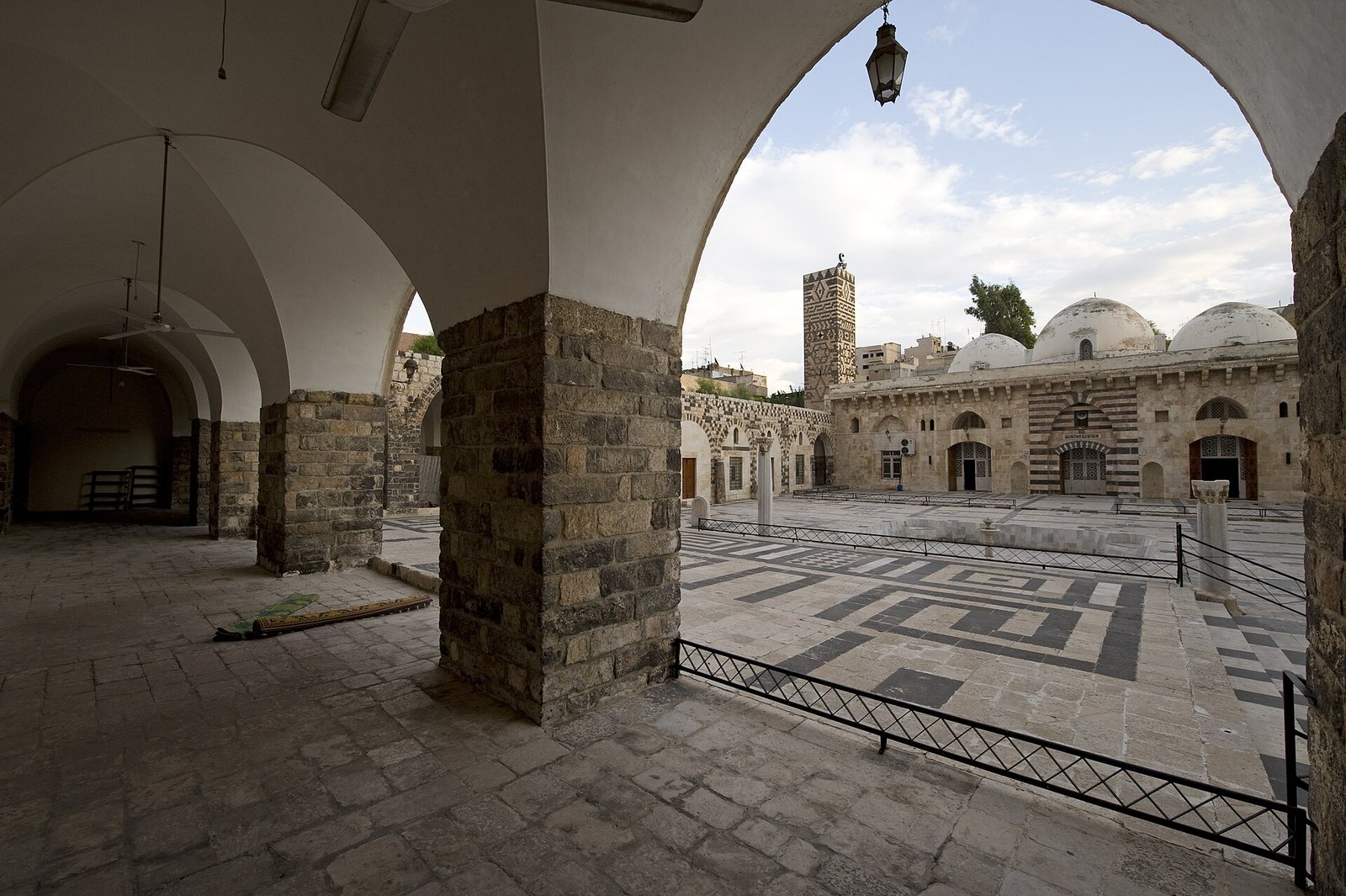
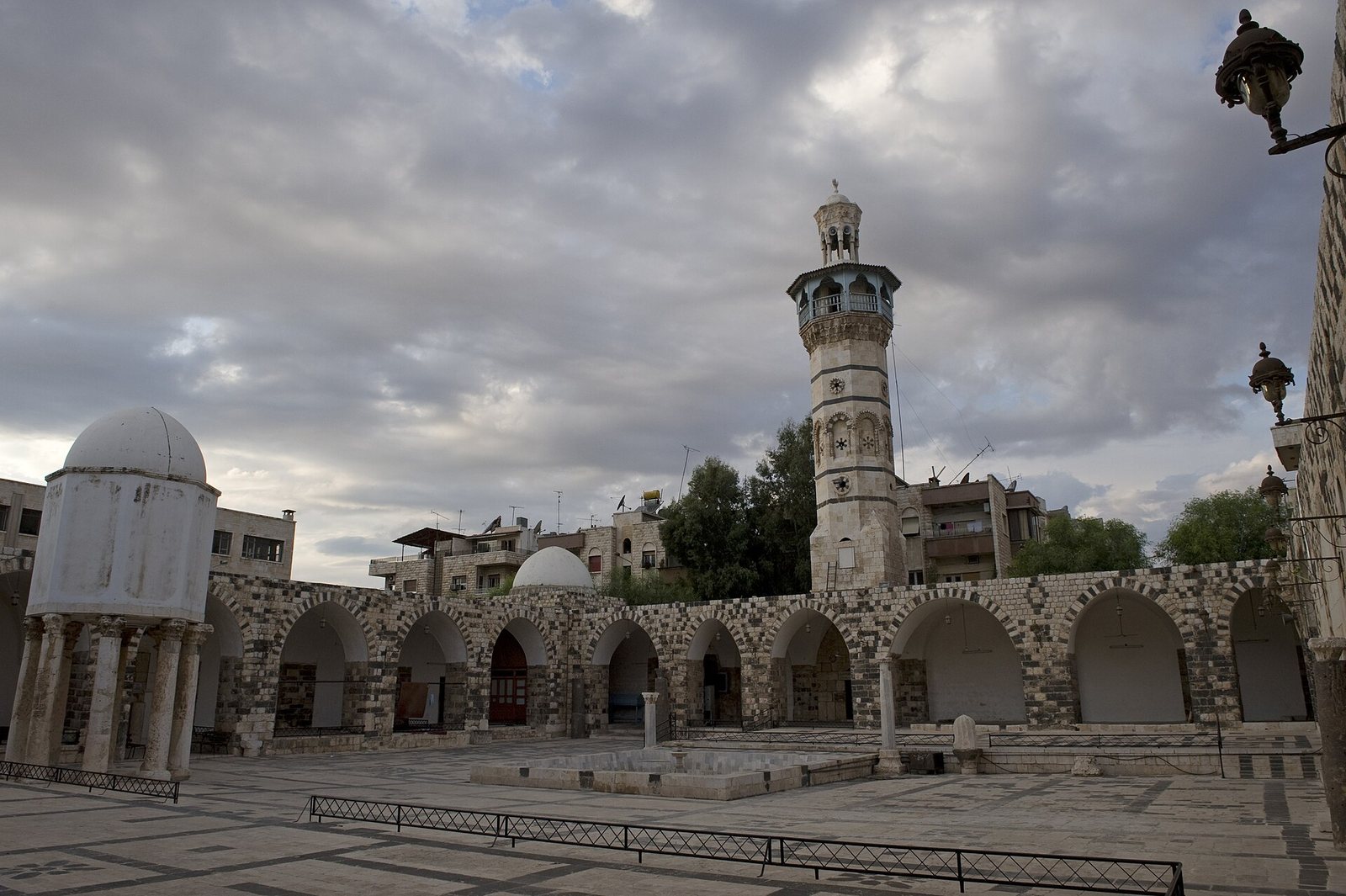
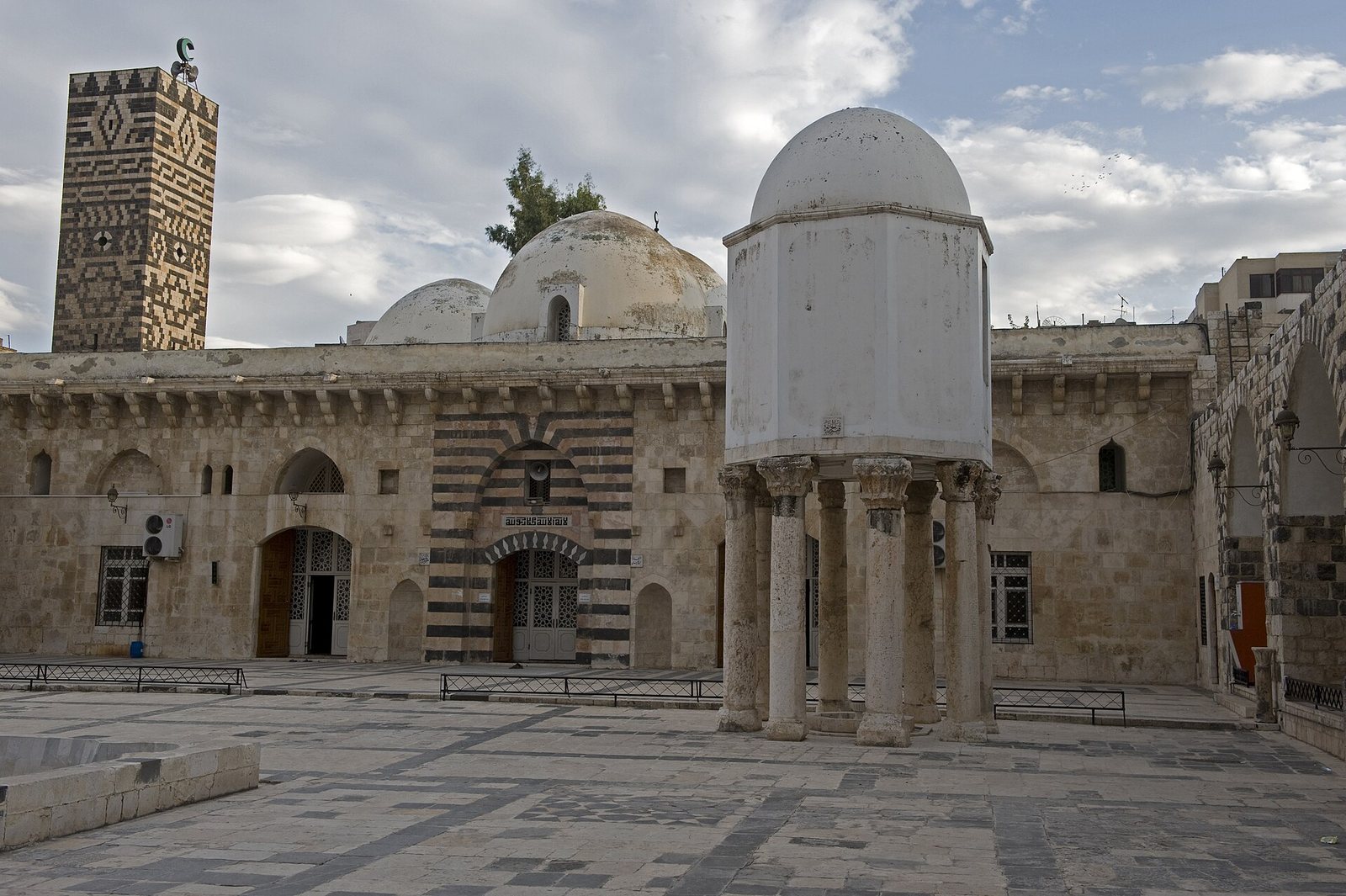
Hama's Great Mosque, on the site of a Roman temple and then a church, with a treasury dome on columns; destroyed in 1982 and rebuilt.
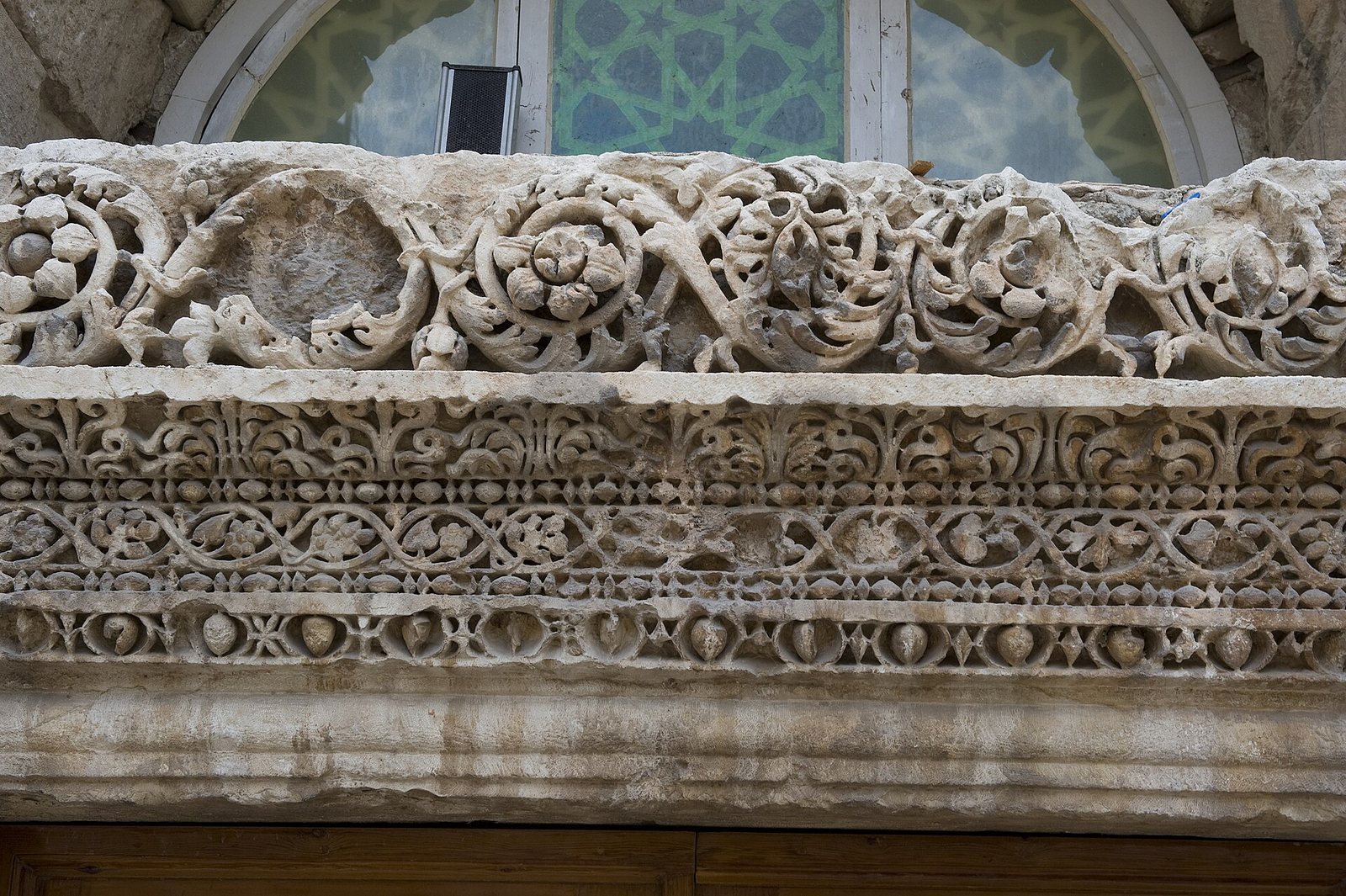
In the heart of old Hama, near the Orontes and its norias, stands the Great Mosque, one of the oldest in Syria. Like the Umayyad Mosque of Damascus, the site held a Roman temple that became a Byzantine church and then a mosque after the Islamic conquest in the 7th century.
It was rebuilt and renewed under the Umayyads, Ayyubids and Mamluks, tied to Hama's rulers, including the Ayyubid historian-prince Abu al-Fida.
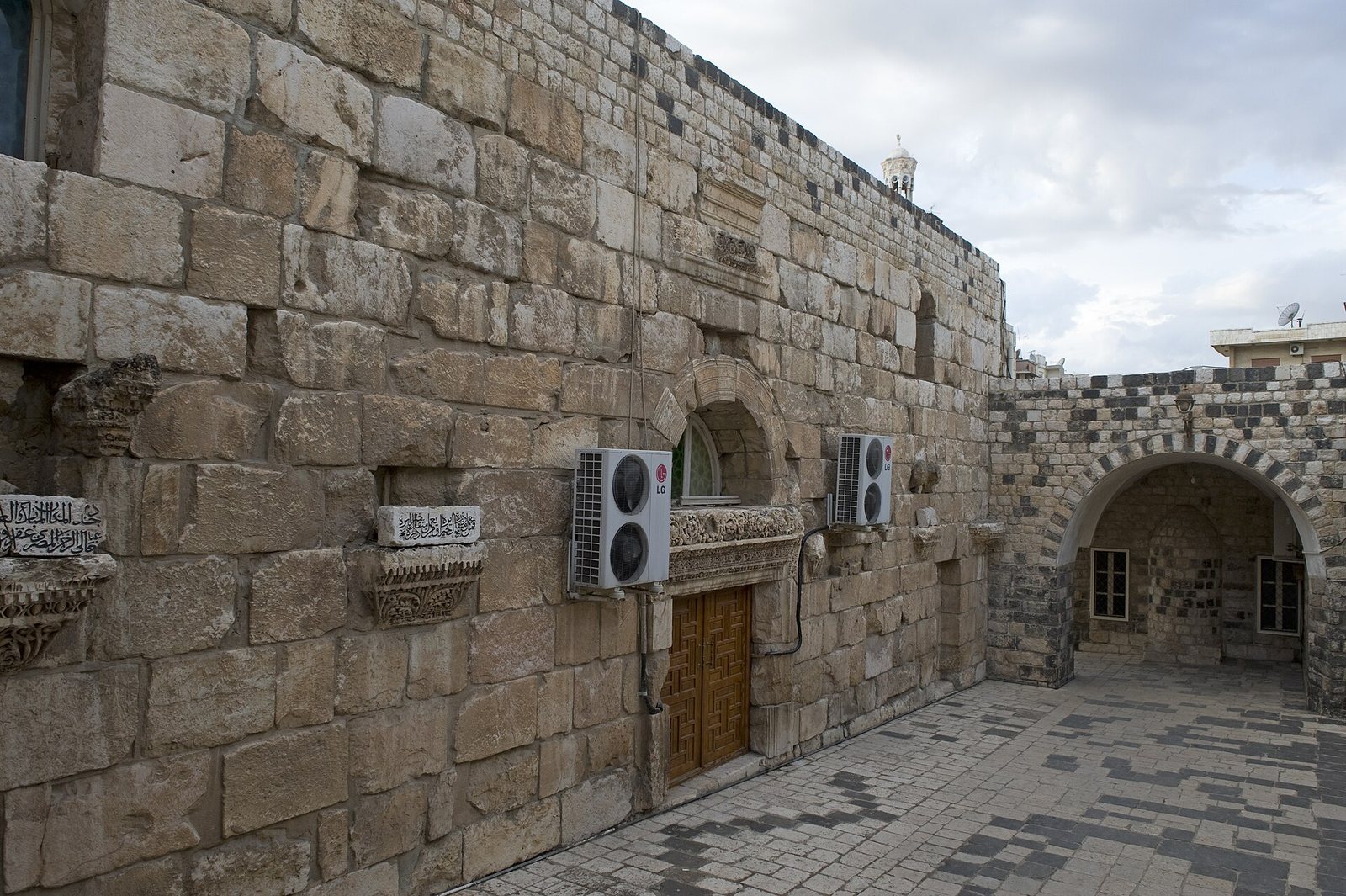
The mosque stands about 400 metres west of the citadel. Its site was a Roman temple of the 3rd century AD, converted into a Byzantine church probably in the 6th century and then into a mosque in the early Islamic era; scholars debate the details and dating of that conversion. It has two minarets: a square-based tower dated by an inscription to 1124, and an octagonal one built by the Mamluks in 1427. In a smaller courtyard at its side are the tombs of two 13th-century Ayyubid kings.
Its large courtyard holds a treasury dome raised on ancient columns, similar to the one in Damascus, with two minarets of different periods and a columned prayer hall. Severely damaged in 1982, it was rebuilt in its old form using surviving elements. It is near Hama's Azm Palace and the Muhammadiyya noria that once supplied it with water.
Note: photos may not reflect the site's current condition.
For the visitor
Location: 35.1342, 36.7453 · Open on the map
Photos
Photos: Dosseman — via Wikimedia Commons (CC BY-SA)
Syria Trails — An interactive geographic and heritage atlas of Syria: a map that walks down from the country to the district, landmarks with their story and era, curated trails and a passport for your visits.