Great Colonnade of Palmyra
الشارع المستقيم المعمد في تدمر
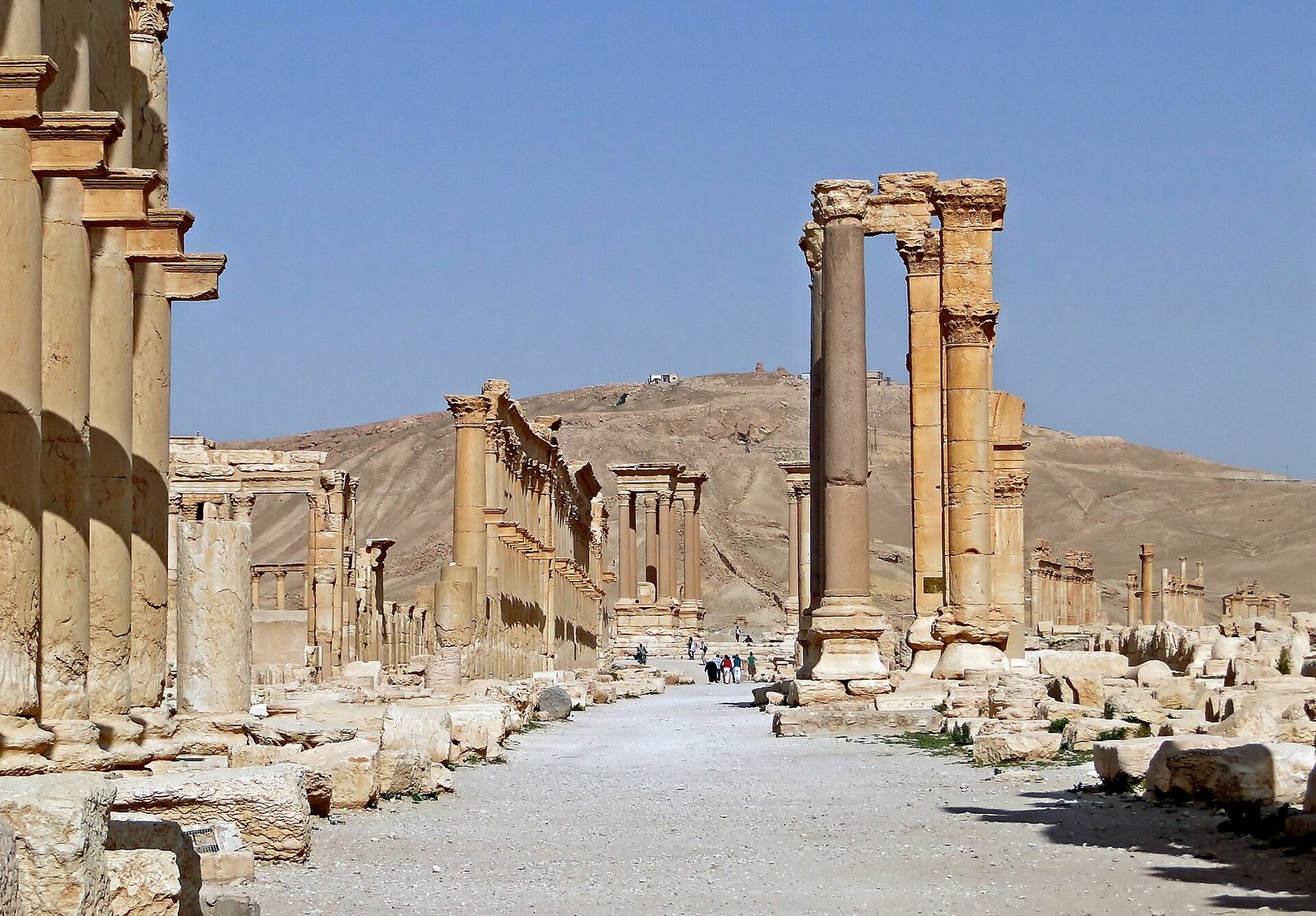
Palmyra's main street, about a kilometre long, lined with columns bearing brackets for statues of the city's notables.
The Great Colonnade is the backbone of ancient Palmyra, running about a kilometre from the Temple of Bel area in the east to the Funerary Temple in the west, lined with rows of golden stone columns — the city's most iconic image.
Built in stages in the 2nd and 3rd centuries AD, at the height of Palmyra's caravan wealth, it had covered porticoes with shops and public buildings. Its columns carry a distinctive Palmyrene feature: brackets halfway up that held statues of notables and merchants, with Palmyrene and Greek inscriptions.
The street links the Monumental Arch, Tetrapylon, theatre, baths, agora and Temple of Nabu. Part of the Palmyra World Heritage site.
At a junction on the street stood the Tetrapylon (Greek for "four gates"), a monument of about the 3rd century AD: four square platforms each bearing four columns of pink granite imported from Egypt, with a statue base at the centre of each. Only one original column survived into the 20th century, so the monument was rebuilt in the 1960s with concrete columns; most of it was destroyed in early 2017.
Note: photos may not reflect the site's current condition.
For the visitor
Location: 34.5499, 38.2710 · Open on the map
Photos
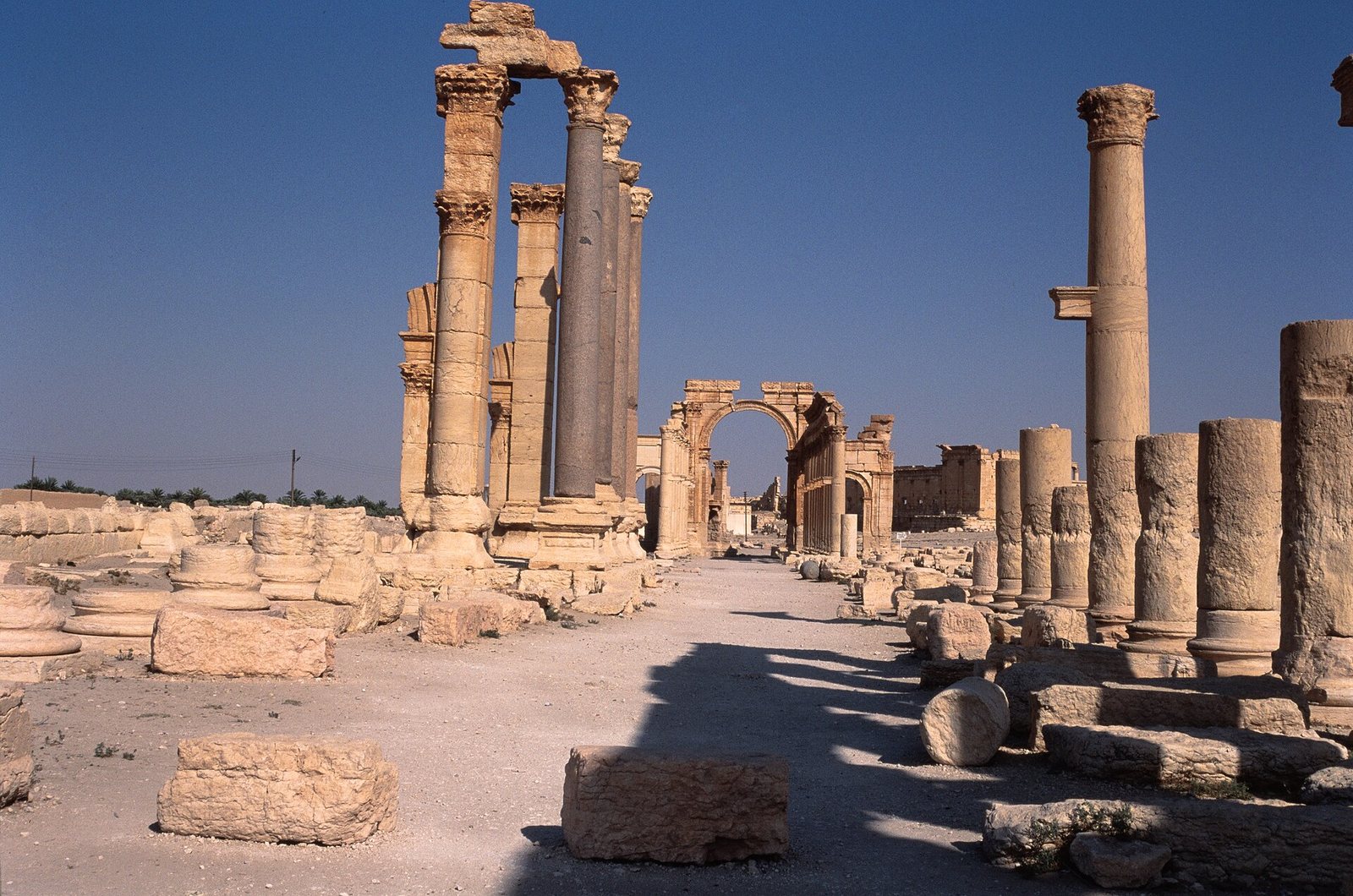
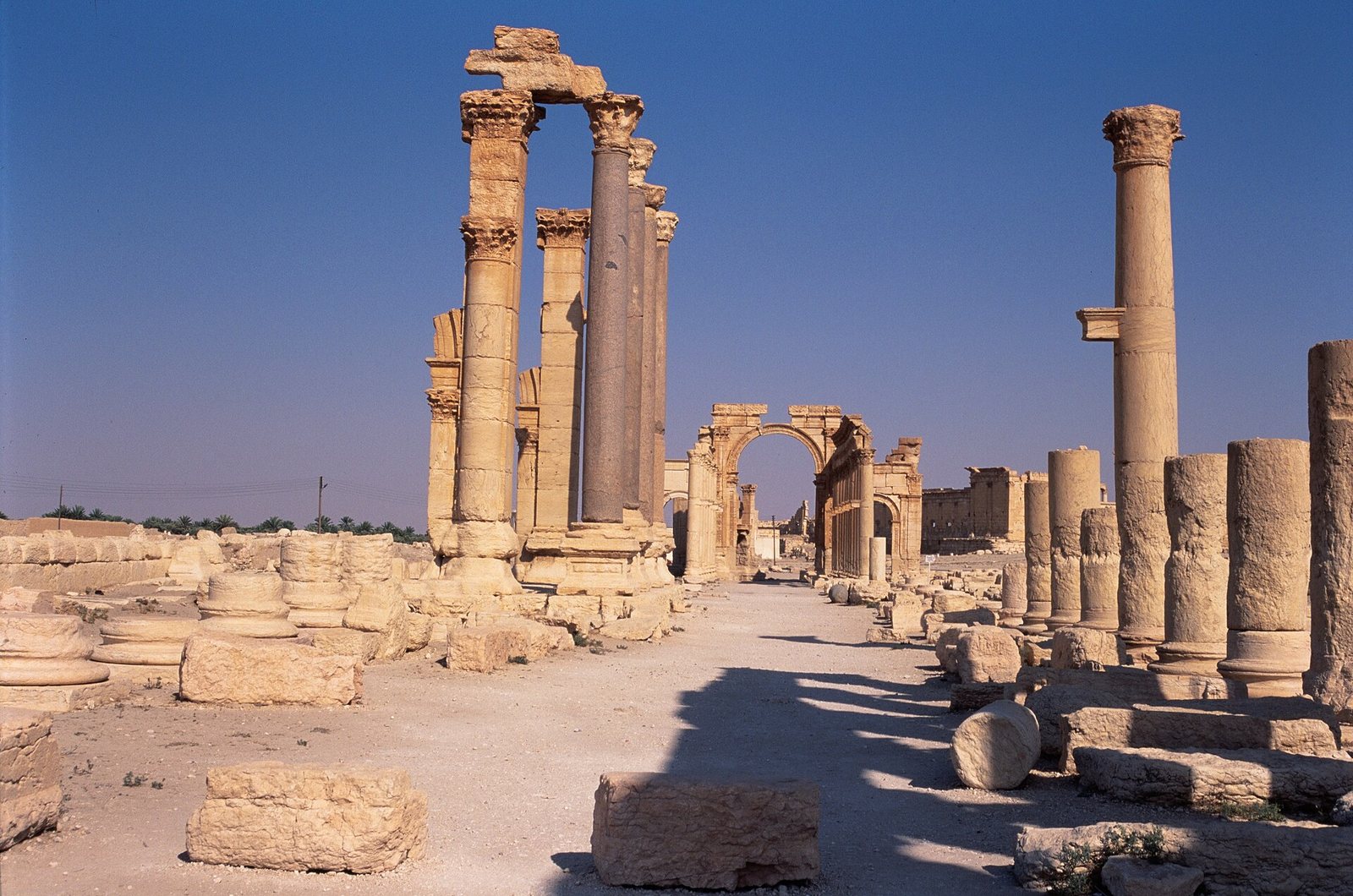
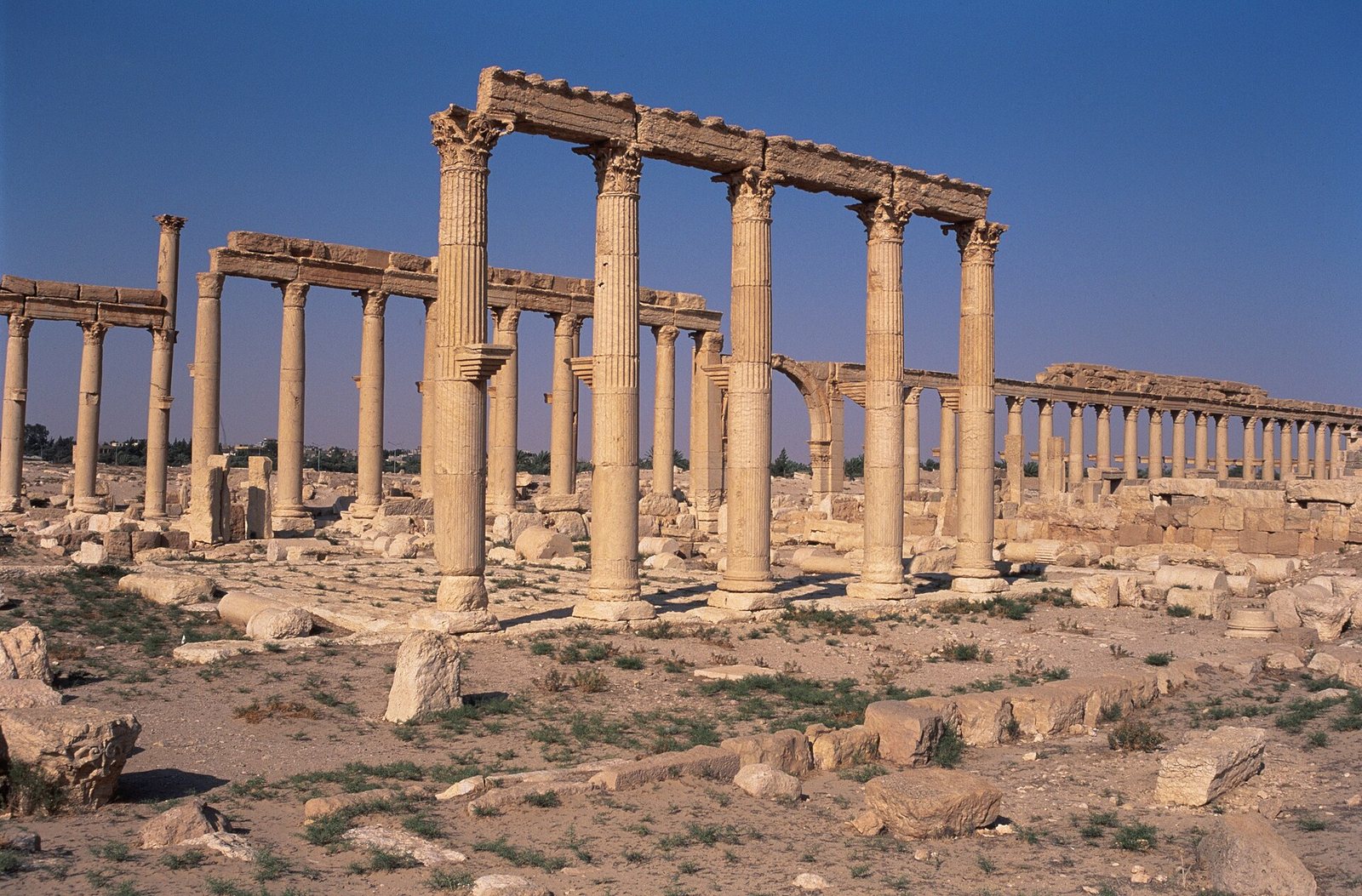
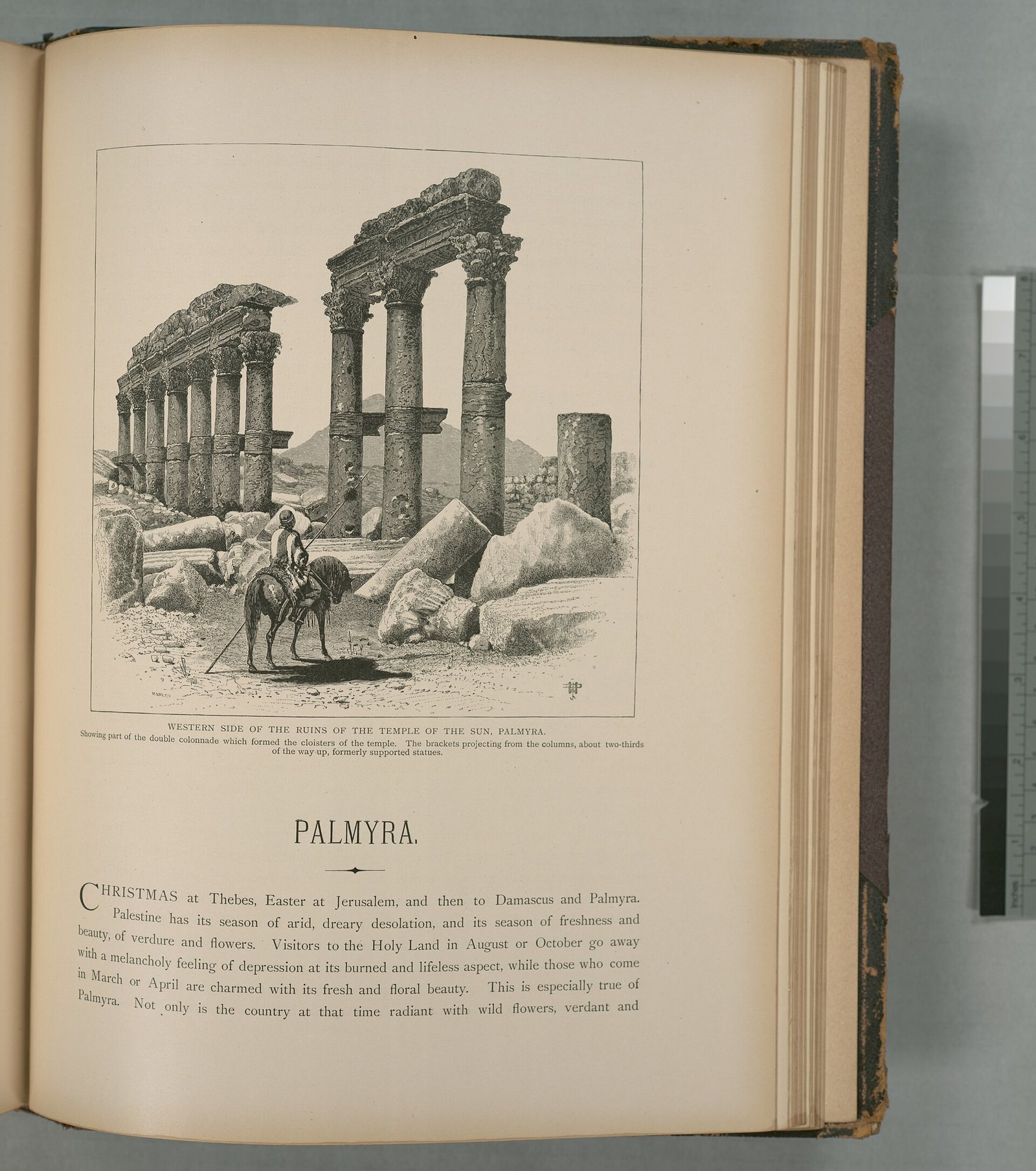
Photos: Bernard Gagnon — via Wikimedia Commons (CC BY-SA) · Frank Kidner — via Wikimedia Commons (CC BY-SA) · Scan by NYPL — via Wikimedia Commons (Public domain)
Syria Trails — An interactive geographic and heritage atlas of Syria: a map that walks down from the country to the district, landmarks with their story and era, curated trails and a passport for your visits.