Deir Mar Musa al-Habashi
دير مار موسى الحبشي
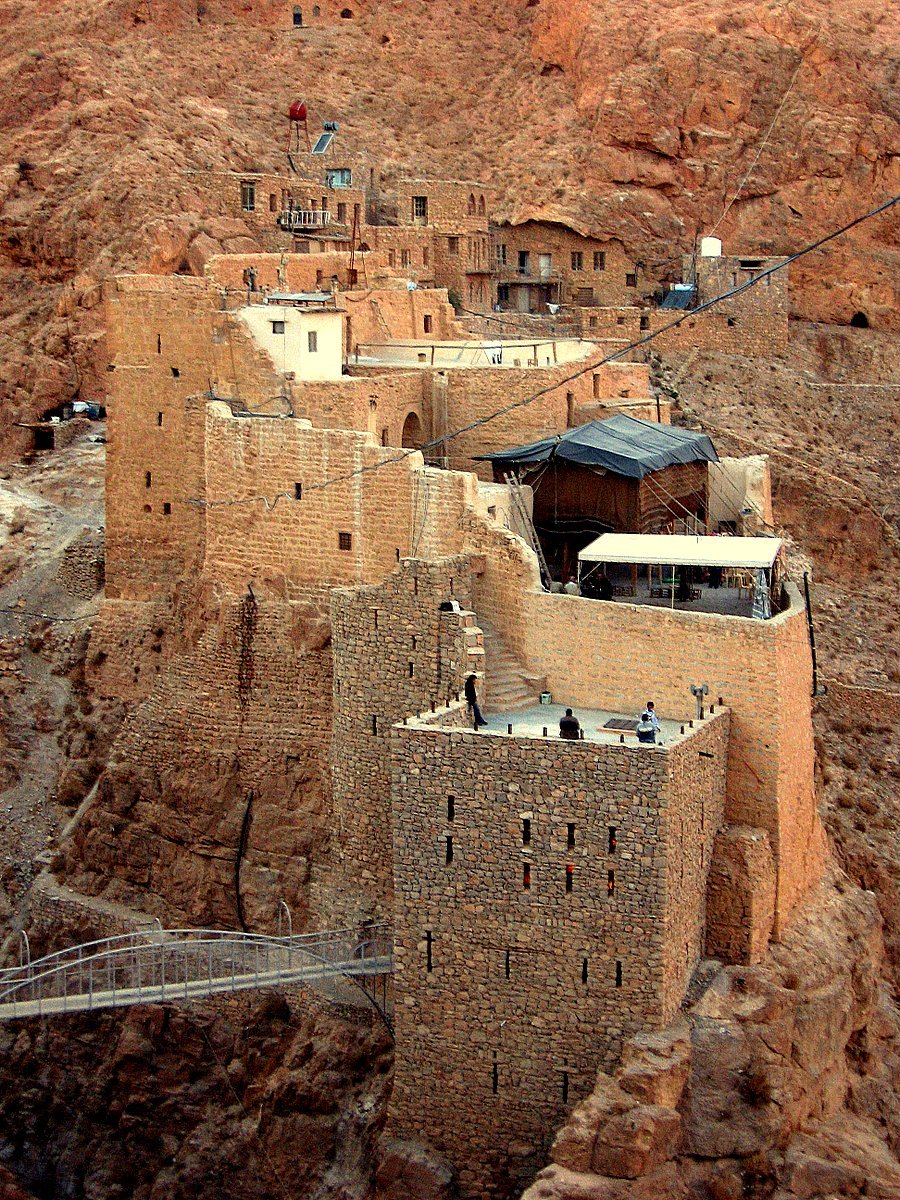
Syriac monastery in the Qalamoun mountains near Nabk, dating back to the 6th century, with 11th–12th-century frescoes and a centre for interfaith dialogue.
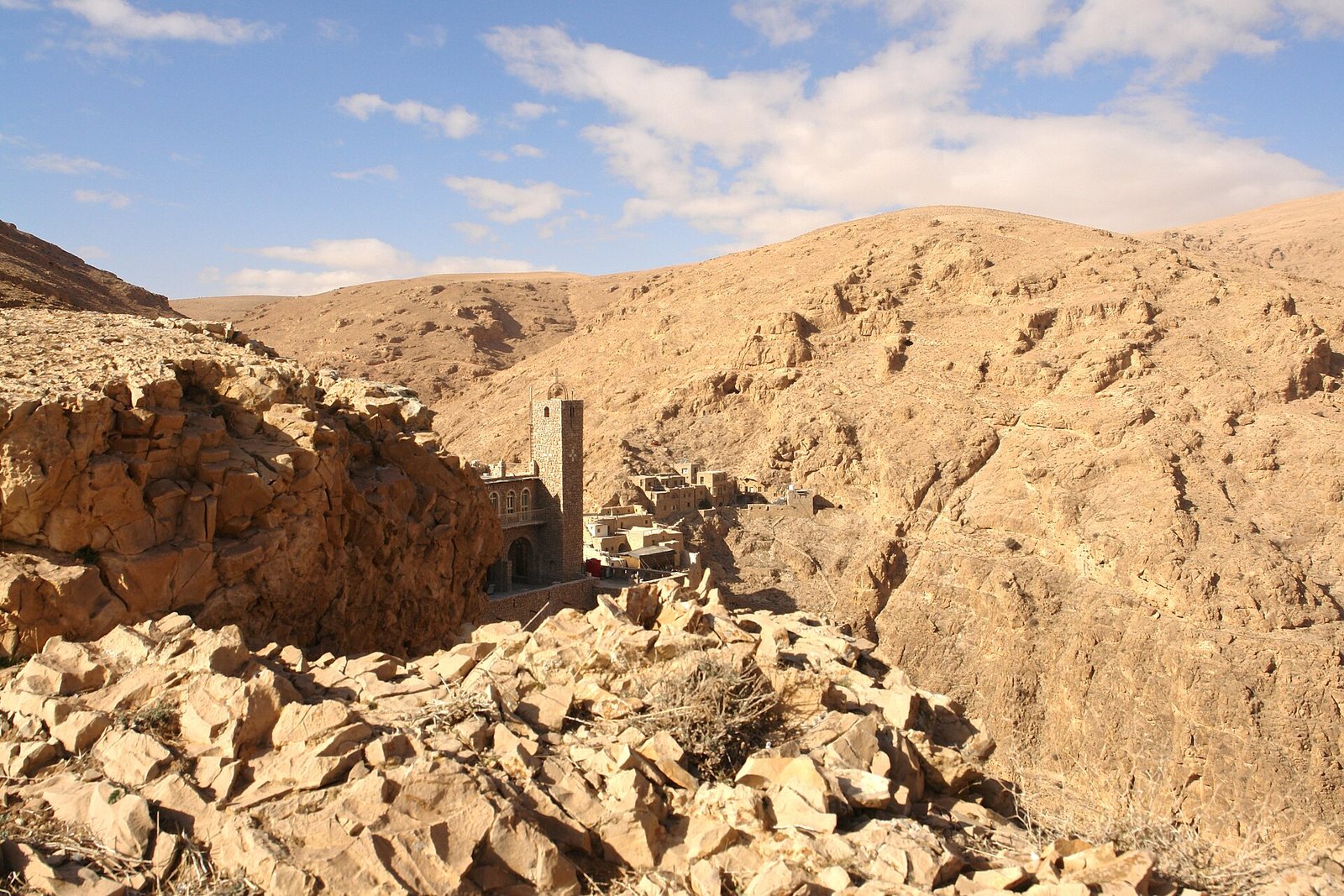
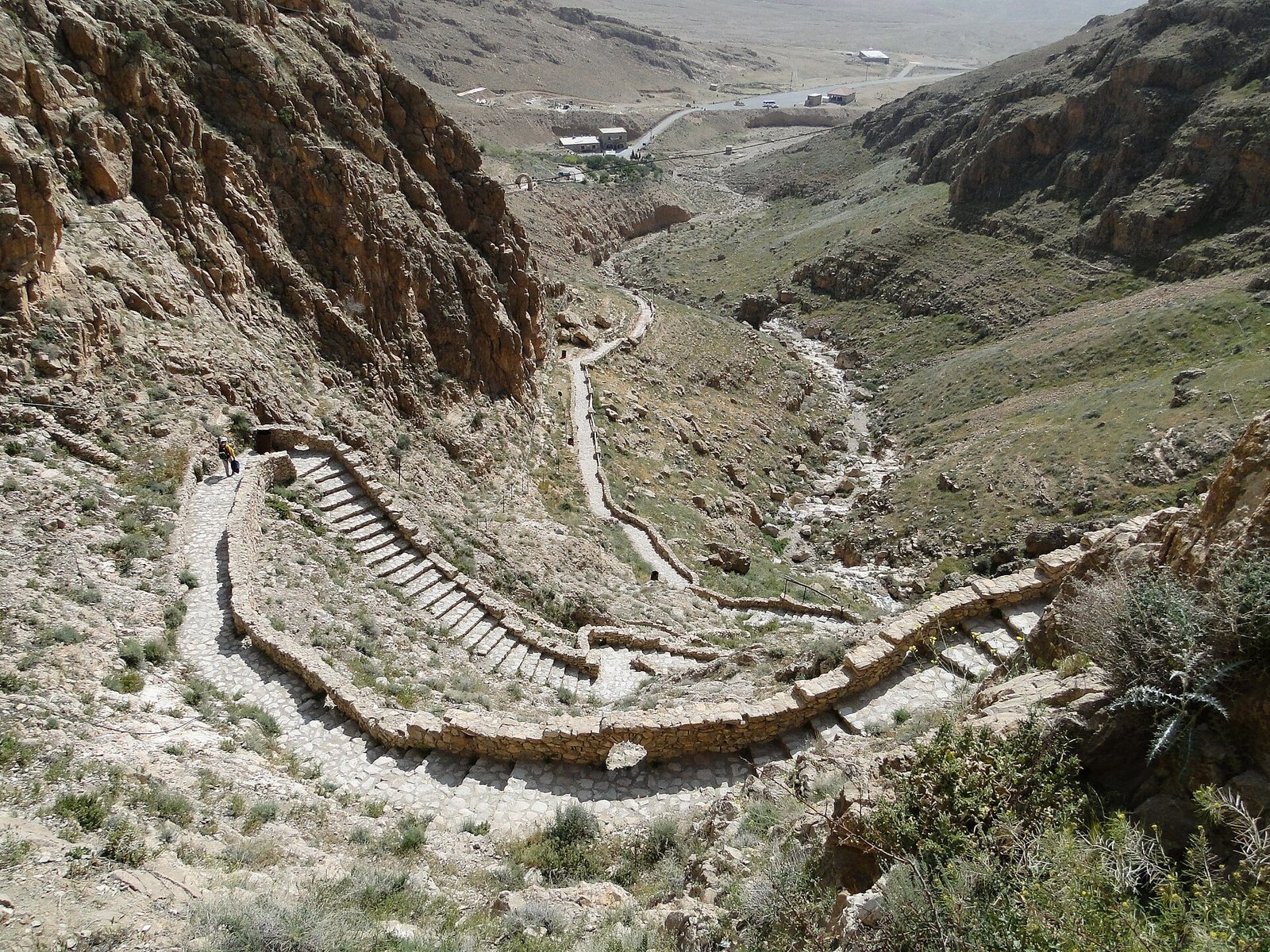
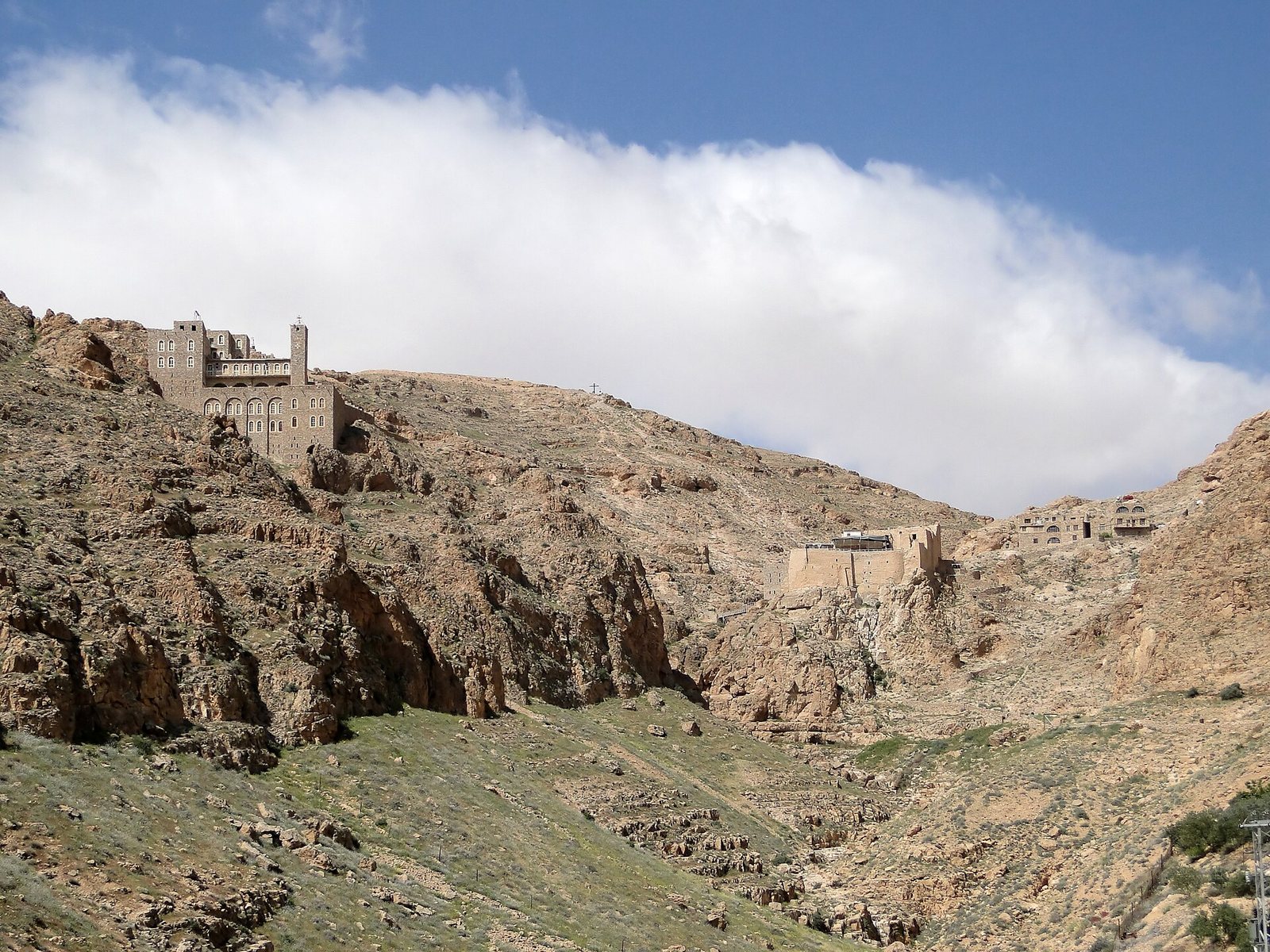
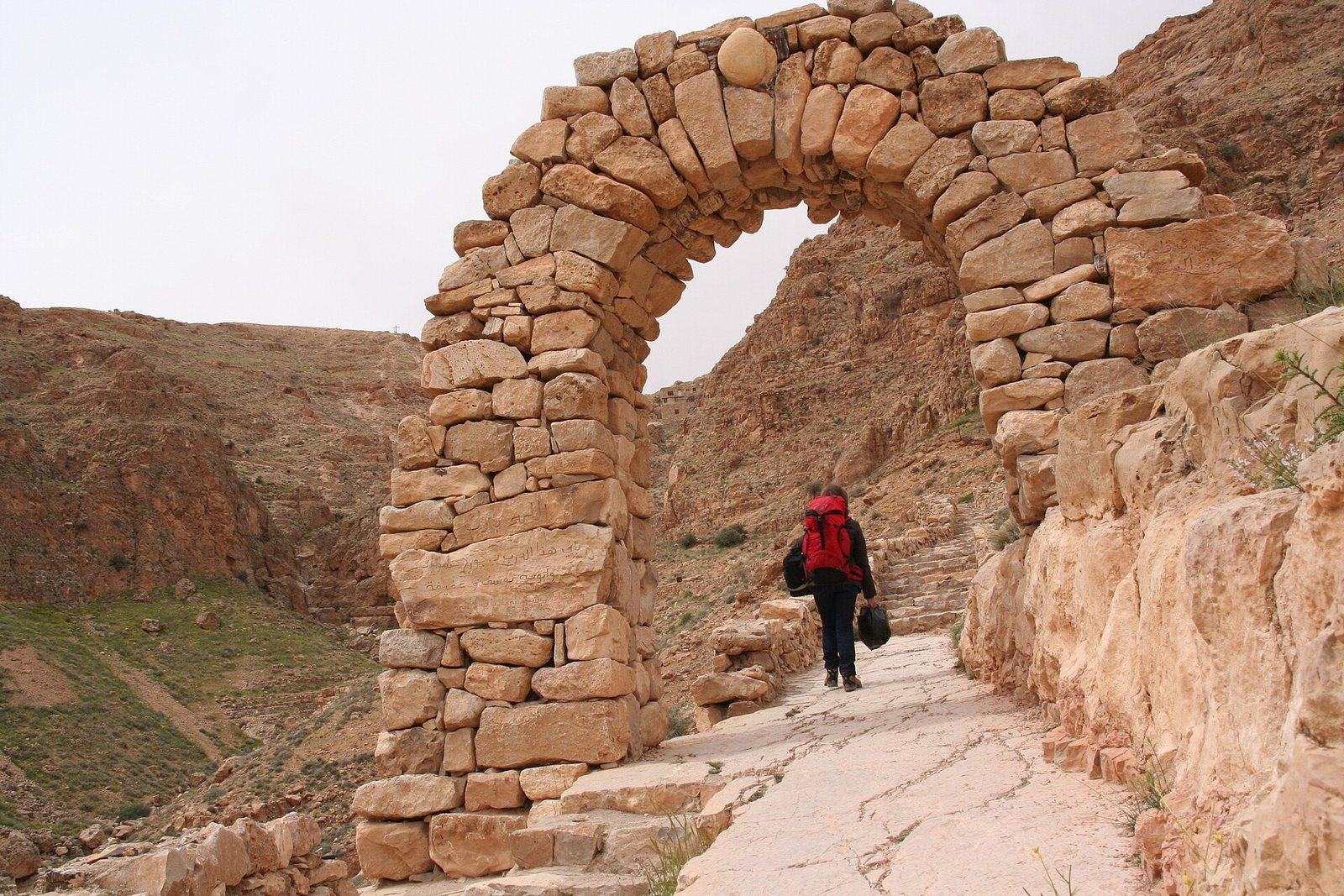
In the desert mountains of the Qalamoun, a few kilometres from Nabk, Deir Mar Musa clings to the side of a rocky valley, reached only by a long rock-cut stairway. It is named after St Moses the Abyssinian, said by tradition to have been an Ethiopian prince who became a hermit here.
Monastic life on the site goes back to around the 6th century. The small church holds a rare cycle of wall paintings from the 11th and 12th centuries, including a Last Judgement and saints — among the most important medieval Christian frescoes surviving in Syria.
The monastery stands about 80 km north of Damascus and 15 km from the town of Nebek, in the Qalamoun mountains at 1,320 metres above sea level. Inscriptions on its walls indicate that the present church dates to 1058, and it holds a library rich in Syriac manuscripts.
Long abandoned, the monastery was revived from the 1980s by the Italian Jesuit Fr Paolo Dall'Oglio with Syrian authorities and the Syriac Catholic Church, becoming a community devoted to prayer, hospitality and Christian–Muslim dialogue.
Note: photos may not reflect the site's current condition.
For the visitor
Location: 34.0217, 36.8423 · Open on the map
Photos
Photos: Franco Pecchio from Milano, Italy — via Wikimedia Commons (CC BY) · James Gordon from Los Angeles, California, USA — via Wikimedia Commons (CC BY) · Bernard Gagnon — via Wikimedia Commons (CC BY-SA) · Henri Pidoux — via Wikimedia Commons (CC BY-SA)
Syria Trails — An interactive geographic and heritage atlas of Syria: a map that walks down from the country to the district, landmarks with their story and era, curated trails and a passport for your visits.