Byzantine Cathedral of Bosra
الكاتدرائية البيزنطية في بصرى
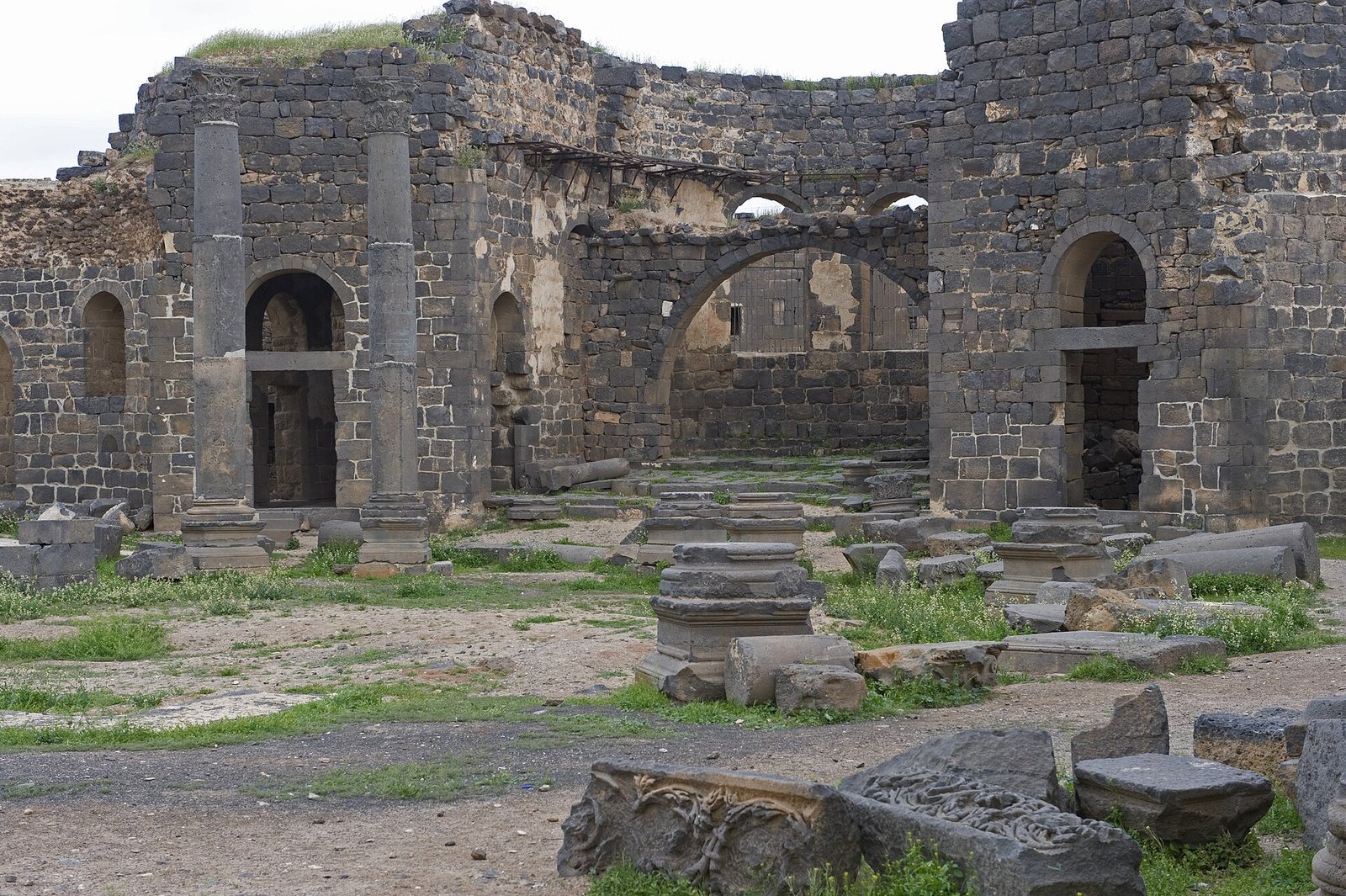
Bosra's early-6th-century cathedral with a centralized round plan, among the key early churches in the history of Christian architecture.
In old Bosra, east of the colonnaded street, stands the Byzantine cathedral built in the early 6th century, when Bosra was the seat of an important archbishopric.
Its centralised plan — a round hall within a square with four corner exedrae, once covered by a dome or large timber roof — makes it one of the earliest large central-plan churches known, studied as a key stage towards the great churches of Constantinople. Built of local black basalt, it survives as walls, arches and the apse.
In the Byzantine period, from the 5th century, Christianity became the dominant religion in Bosra, which was the seat of a metropolitan archbishop, and a large cathedral was built in the 6th century. Sasanian Persians took the city in the early 7th century and the Byzantines recaptured it. Bosra is tied to the story of the monk Bahira in the life of Muhammad, and Khalid ibn al-Walid took it in 634.
Bosra was a major Christian centre before Islam and is tied to the story of the monk Bahira, whose monastery is nearby. Part of the Ancient City of Bosra World Heritage site.
Note: photos may not reflect the site's current condition.
For the visitor
Location: 32.5204, 36.4844 · Open on the map
Photos: Dosseman — via Wikimedia Commons (CC BY-SA)
Syria Trails — An interactive geographic and heritage atlas of Syria: a map that walks down from the country to the district, landmarks with their story and era, curated trails and a passport for your visits.