Bosra
بصرى
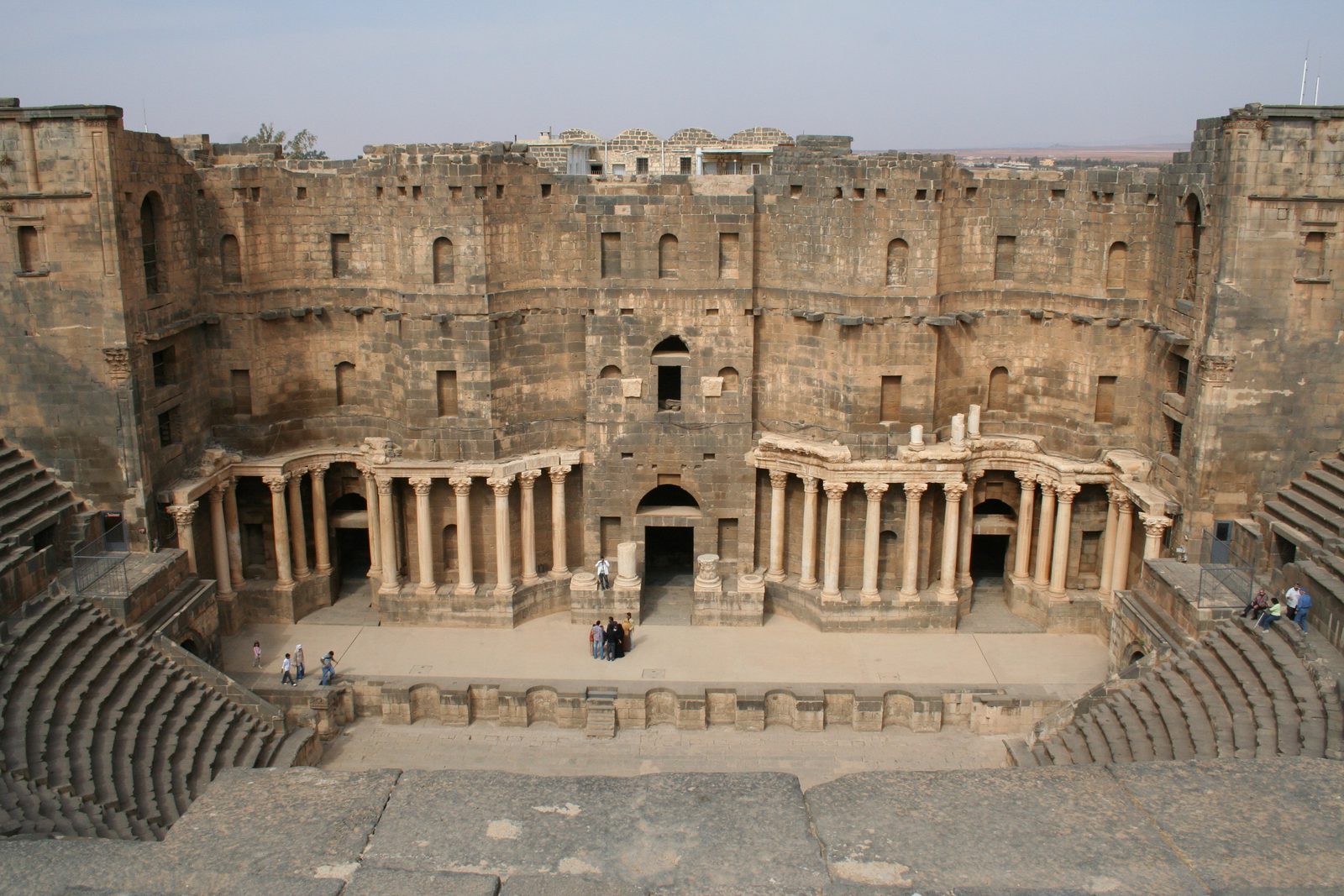
A Nabataean then Roman city that became the capital of the Roman province of Arabia, home to one of the best-preserved Roman theatres in the world, built entirely of black basalt.
Bosra is an ancient city in southern Syria that served as a capital of the Nabataean kingdom before Rome annexed it in 106 CE and made it the capital of the Roman province of Arabia, under the name Nova Traiana Bostra. Its famous Roman theatre, built entirely of black basalt, dates to the 2nd century CE.
The theatre at Bosra is considered one of the best-preserved Roman theatres in the world, largely because it was later enclosed within an Ayyubid-Mamluk citadel starting in the 12th century, which protected it from centuries of decay and looting. It originally seated around 15,000 spectators.
In the Byzantine period, Bosra became an early Christian center, and one of the earliest known cathedrals was built there in 512 CE. According to a widely cited Islamic tradition, the Prophet Muhammad passed through Bosra as a young man with a trade caravan and met the monk Bahira there. The city later prospered as a stop on the Hajj route between Damascus and Mecca, and is home today to the Al-Omari Mosque, considered one of the oldest mosques still in use.
Bosra appears in Egyptian sources of the 14th century BC and was the first Nabataean city in the 2nd century BC. Cornelius Palma, a general of Trajan, annexed the Nabataean kingdom in AD 106. Khalid ibn al-Walid took it in 634 and it remained the southernmost outpost of Bilad al-Sham and a stop for pilgrim caravans. With the Seljuks in 1076 attention turned to its defences and the Roman theatre was made a fortress; in 1147 King Baldwin III of Jerusalem led a Crusader force against the city, but the Damascene army under Mu'in ad-Din Unur garrisoned the citadel and the attempt failed. Bosra declined to a village under the Ottomans and revived in the 20th century with the Hijaz railway and growing archaeological interest.
The "Ancient City of Bosra" was inscribed as a UNESCO World Heritage Site in 1980.
Through the ages
Roman: The Romans rebuilt Bosra as the capital of the province of Arabia after annexing it in 106 CE, and built its basalt theatre in the 2nd century CE
Byzantine: One of the earliest known cathedrals was built in Bosra in 512 CE, during the Byzantine period
Umayyad: Bosra prospered as a stop on the Hajj route between Damascus and Mecca in the early Islamic period
For the visitor
Location: 32.5170, 36.4810 · Open on the map
Photos
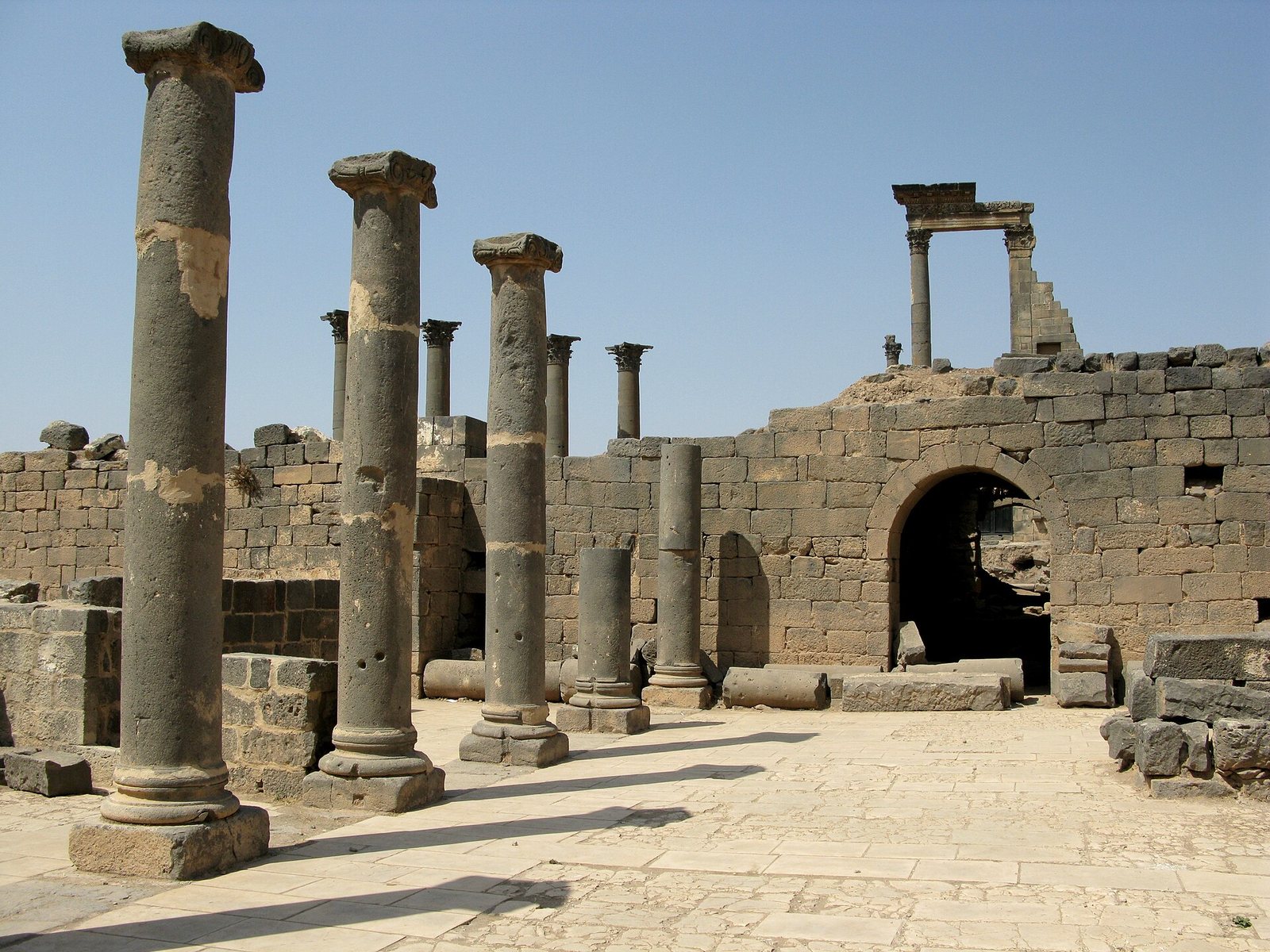
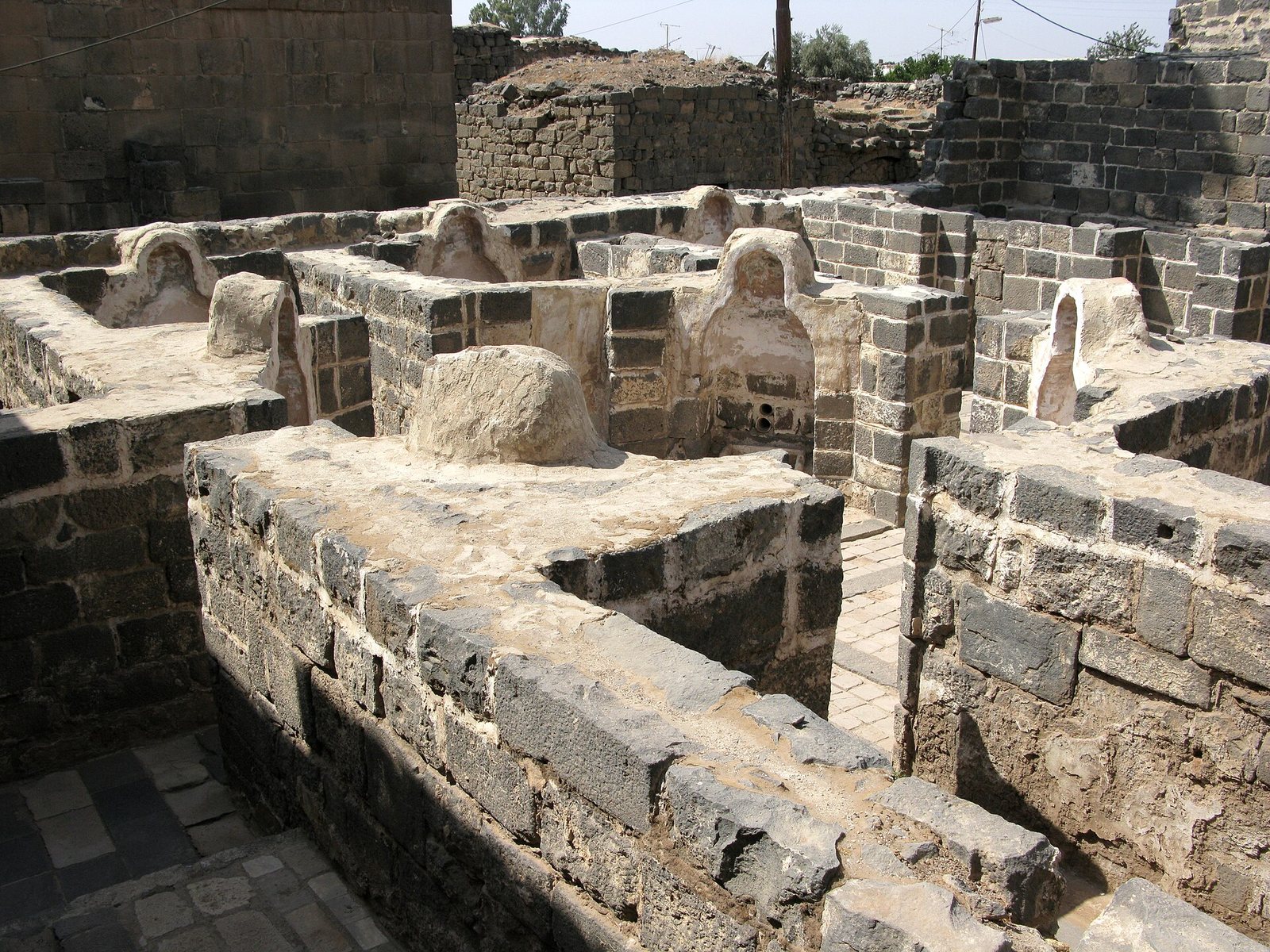
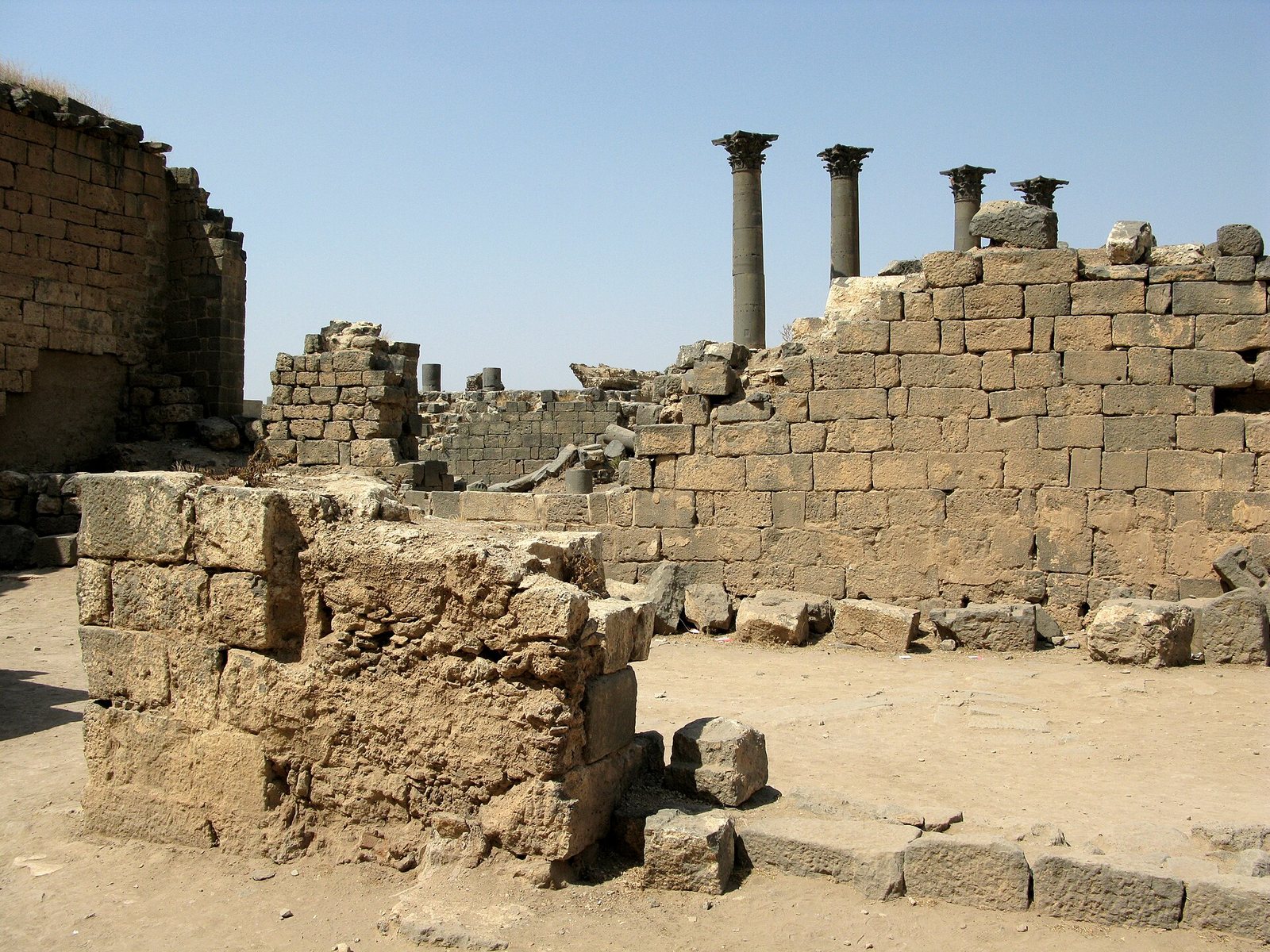
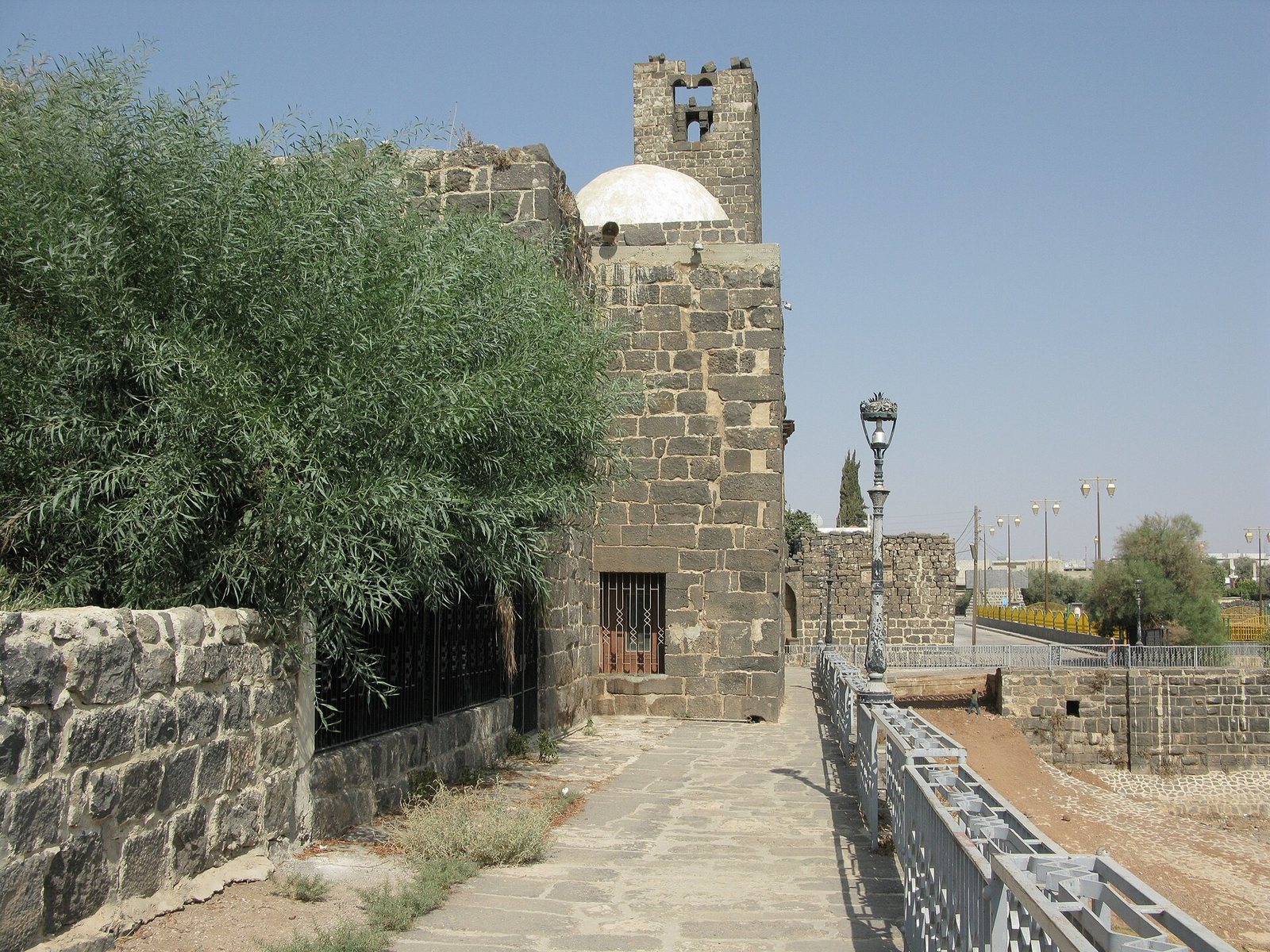
Photos: Wurzelgnohm — via Wikimedia Commons (CC0) · Vyacheslav Argenberg — via Wikimedia Commons (CC BY)
Syria Trails — An interactive geographic and heritage atlas of Syria: a map that walks down from the country to the district, landmarks with their story and era, curated trails and a passport for your visits.