Azm Palace
قصر العظم
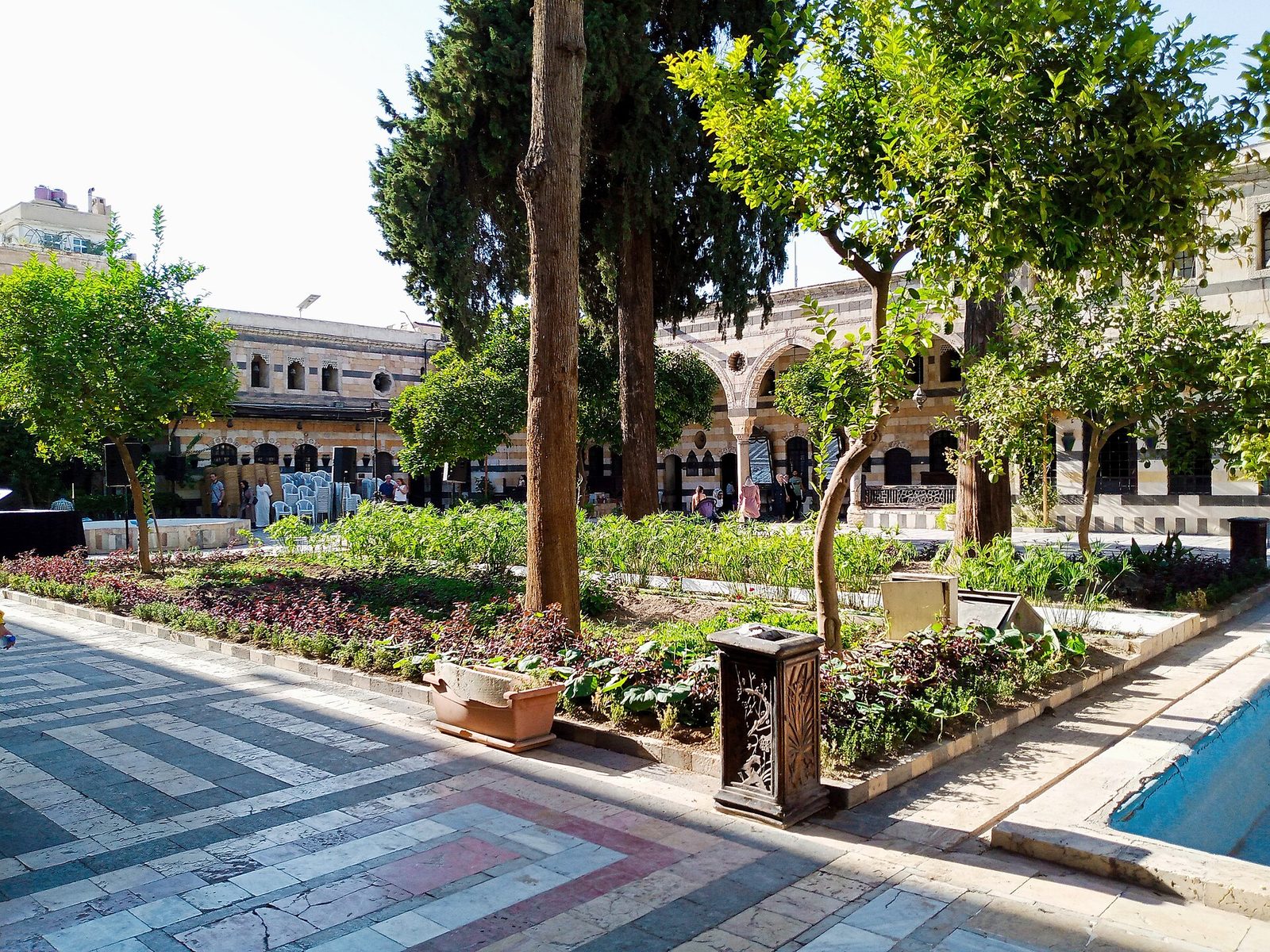
A grand mid-18th-century Ottoman palace built by Damascus governor As'ad Pasha al-Azm as his residence, now home to the Museum of Arts and Popular Traditions.
Azm Palace stands just south of the Umayyad Mosque, near Souq al-Buzuriyah, and was built in 1749 by Ottoman governor As'ad Pasha al-Azm as his private residence and the seat of the province's administration, using the finest craftsmen and builders Damascus had to offer.
The palace follows classic Damascene residential architecture, arranged around several interior courtyards lined with rooms decorated in colored marble, inlaid woodwork, and plaster ornamentation. Its layout is split between the "salamlik," reserved for receiving guests and male visitors, and the "haramlik," the family's private living quarters -- a division typical of grand Damascene houses of the period.
The palace was built over the site of a former Mamluk palace under Sultan Mahmud I as a joint residence and guesthouse, by 800 workers in three years, and was decorated with sophisticated and expensive elements. A Damascene barber, Shaikh Ahmad al-Budayri al-Hallaq, recorded in his diary how As'ad Pasha, whenever he heard of an antiquity or rare work of marble or porcelain, would send someone to get it, with or without the owner's consent. After his death it remained the home of his descendants; Emperor Wilhelm II of Germany visited it in 1898, and under the French Mandate it housed the French Institute. The Syrian government later bought the buildings from the Azm family and carried out extensive reconstruction.
The palace suffered severe damage during the Great Syrian Revolt of 1925, when French forces shelled it, but was later carefully restored to its original splendor. It houses the Museum of Arts and Popular Traditions, displaying a rich collection of traditional costumes, handicrafts, and staged scenes of everyday Damascene life, alongside centuries-old furniture and household objects.
Azm Palace remains one of the finest surviving examples of Ottoman residential architecture in Damascus, and a key destination for understanding daily life in the old city.
For the visitor
Location: 33.5107, 36.3068 · Open on the map
Photos
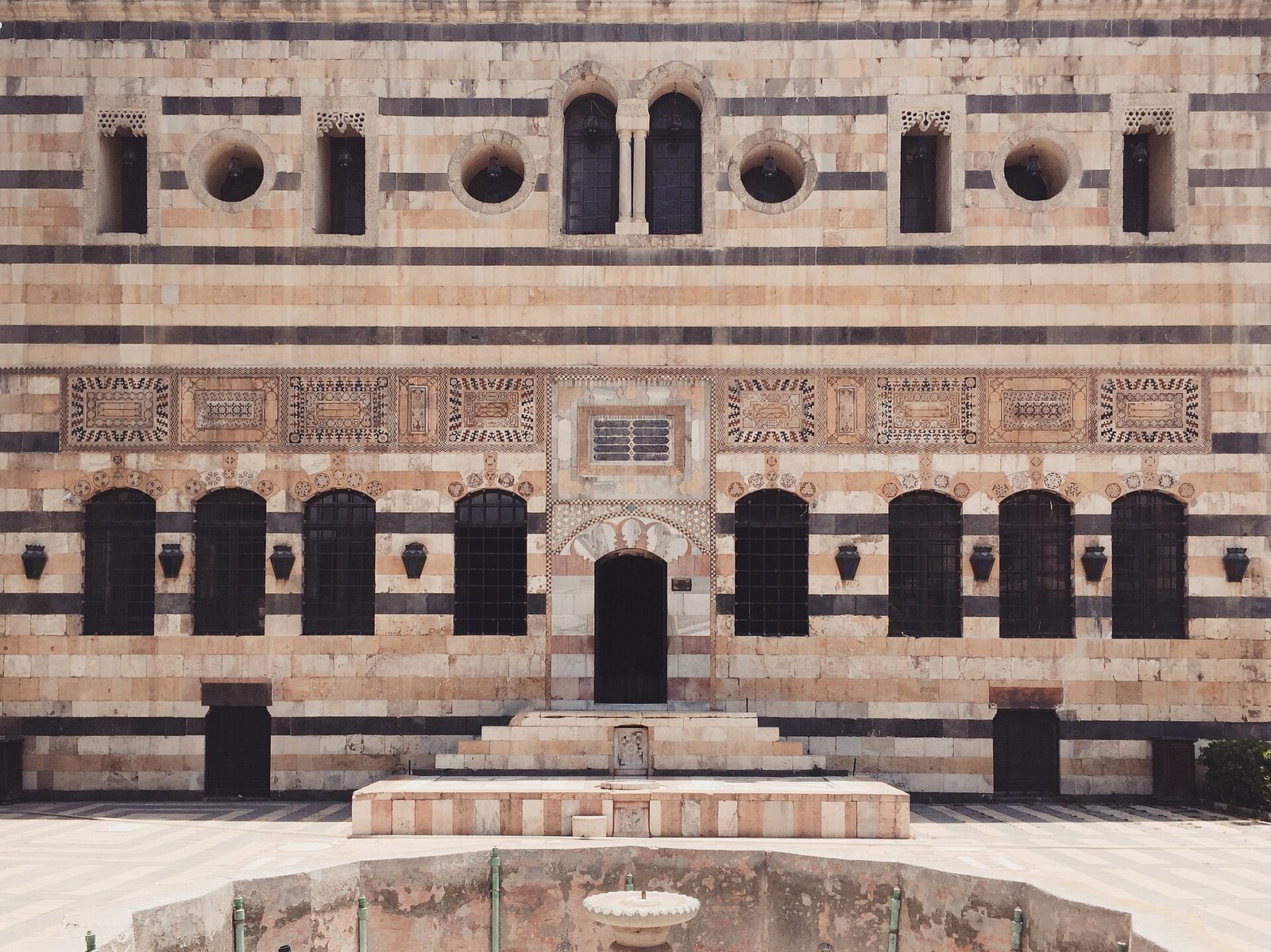
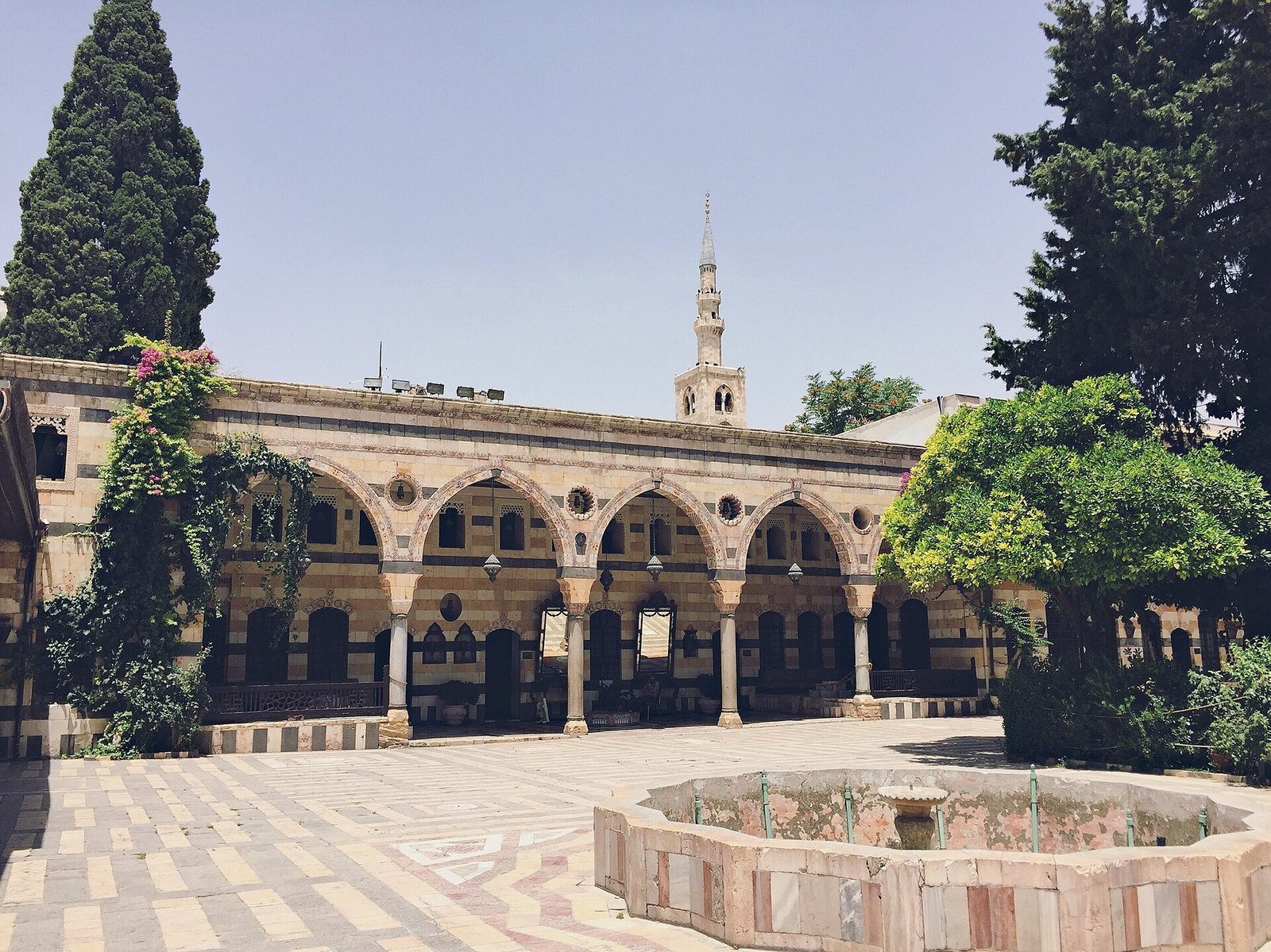
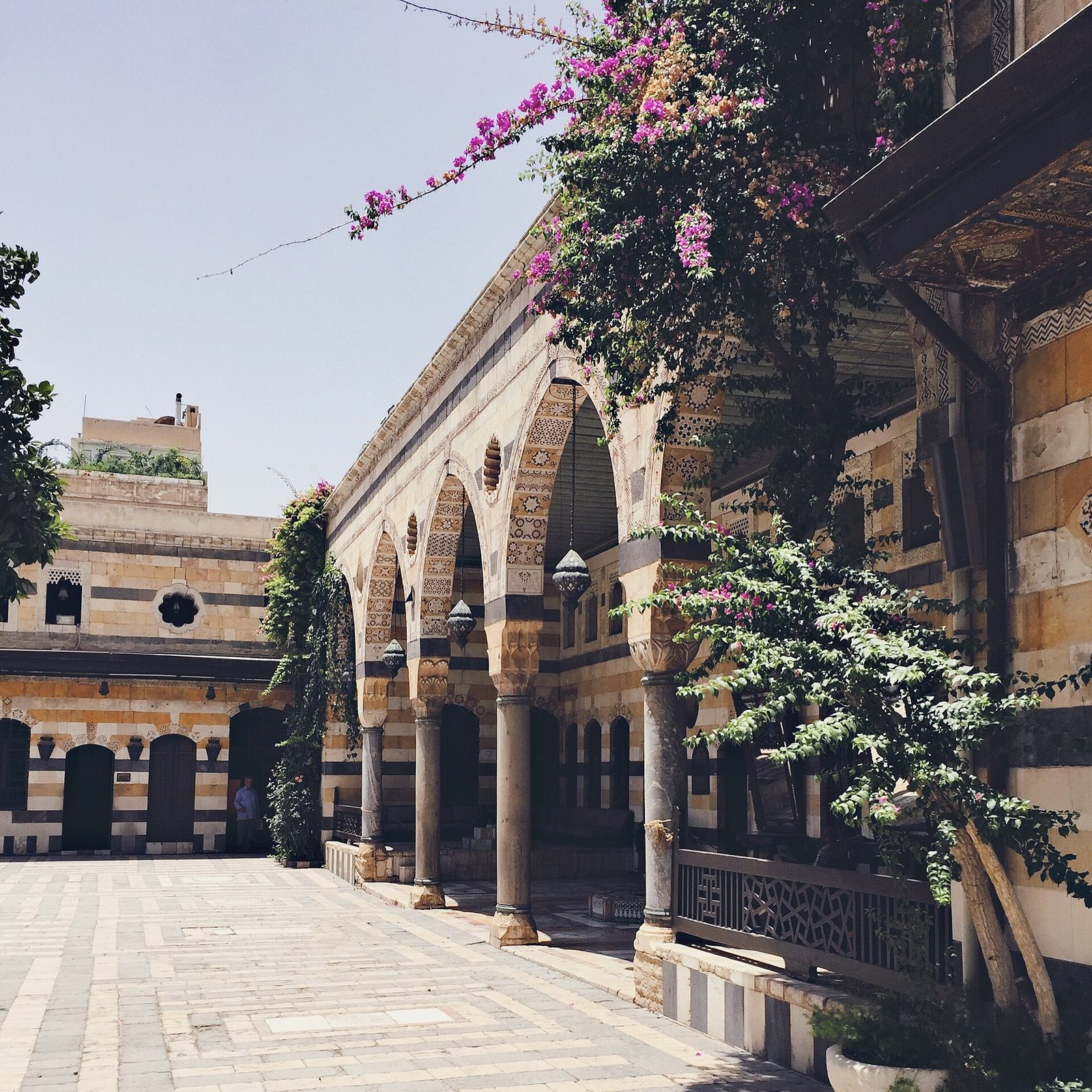
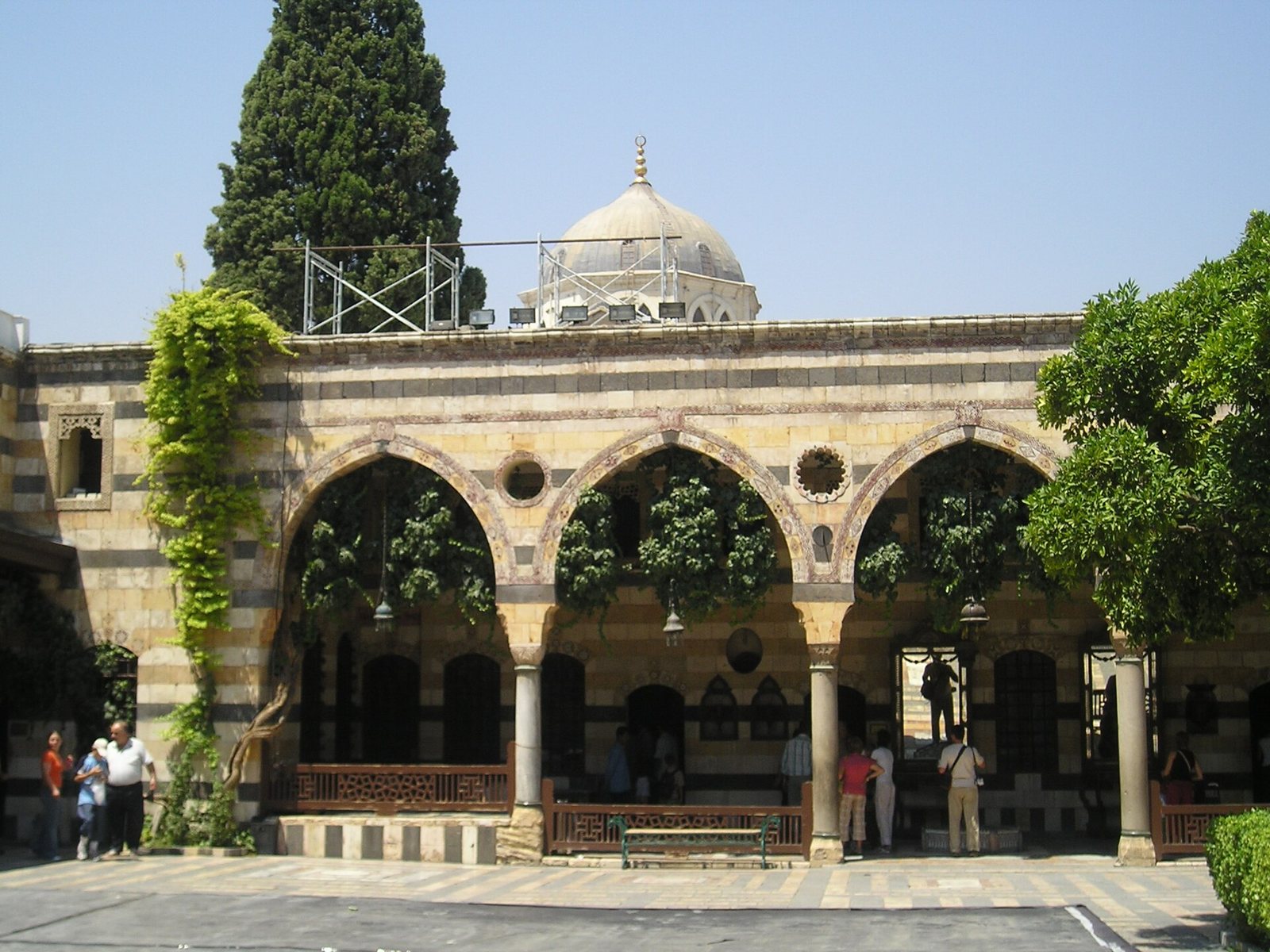
Photos: Abdullah Fetnah — via Wikimedia Commons (CC BY-SA) · Bassel Khabbaz — via Wikimedia Commons (CC BY-SA) · Wikimedia Commons contributor — via Wikimedia Commons (CC BY-SA)
Syria Trails — An interactive geographic and heritage atlas of Syria: a map that walks down from the country to the district, landmarks with their story and era, curated trails and a passport for your visits.