Al-Muhammadiyya Noria
ناعورة المحمدية
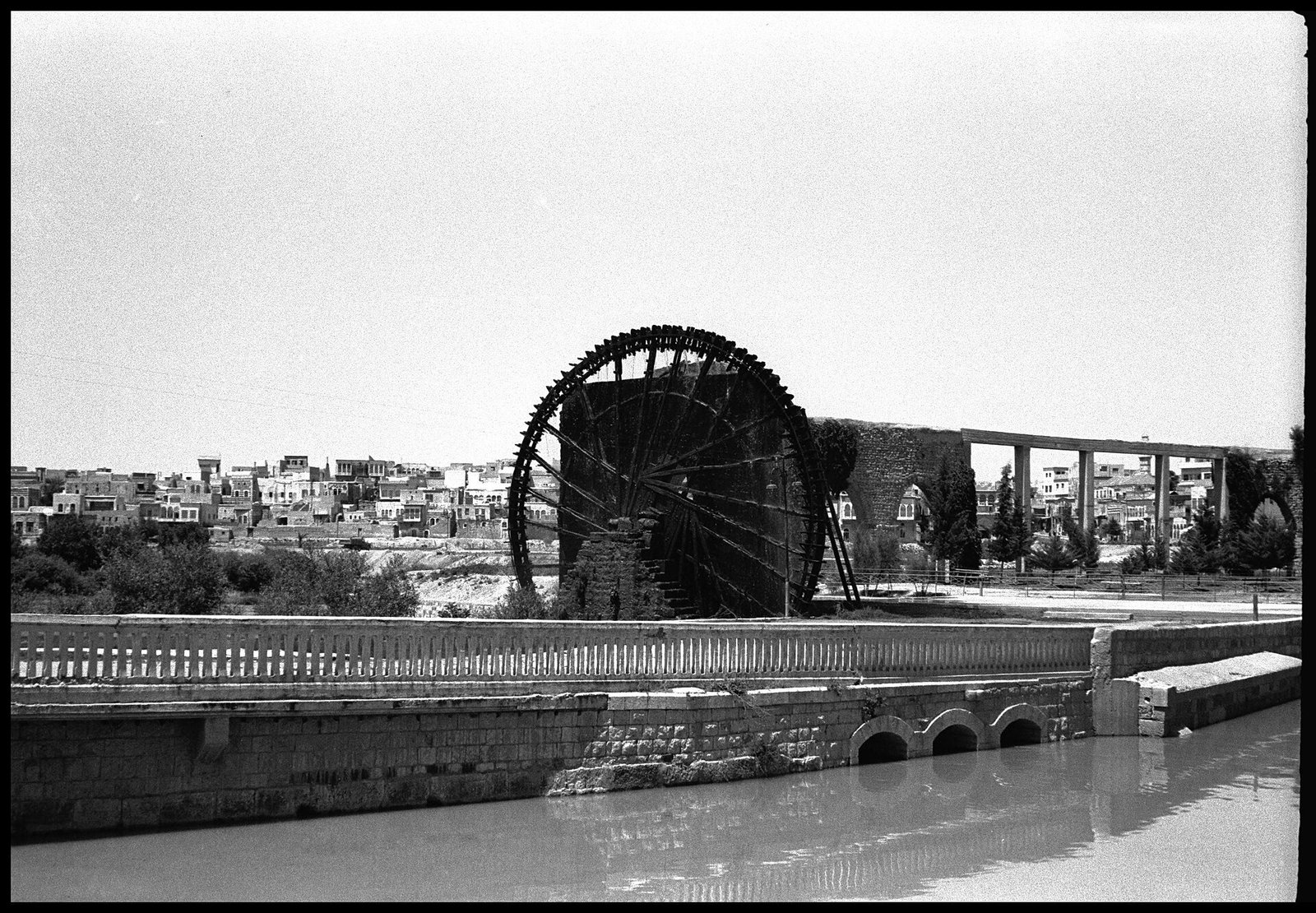
The largest of Hama's norias on the Orontes, built in the Mamluk period to supply the Great Mosque via an arched aqueduct.
On the Orontes in Hama, where giant wooden waterwheels have turned and groaned for centuries, the Muhammadiyya noria is the city's largest and most venerable. It was built in the Mamluk period, in the 14th century, as recorded by an old inscription.
A noria is a huge wheel driven by the river current; wooden boxes on its rim fill below and empty at the top into a stone channel. This one lifted water into an aqueduct carried on stone arches to Hama's Great Mosque and nearby quarters.
The norias are Hama's identity, sound and image; sources speak of dozens along the Orontes, made of walnut, mulberry and local woods and maintained by inherited craft. They sometimes stop when the river is low. The norias of Hama are on Syria's tentative list for UNESCO.
Note: photos may not reflect the site's current condition.
For the visitor
Location: 35.1348, 36.7554 · Open on the map
Photos: Institut Français Du Proche-Orient (ifpo) — via Wikimedia Commons (Licence Ouverte) (CC BY)
Syria Trails — An interactive geographic and heritage atlas of Syria: a map that walks down from the country to the district, landmarks with their story and era, curated trails and a passport for your visits.