Ain Dara Temple
معبد عين دارة
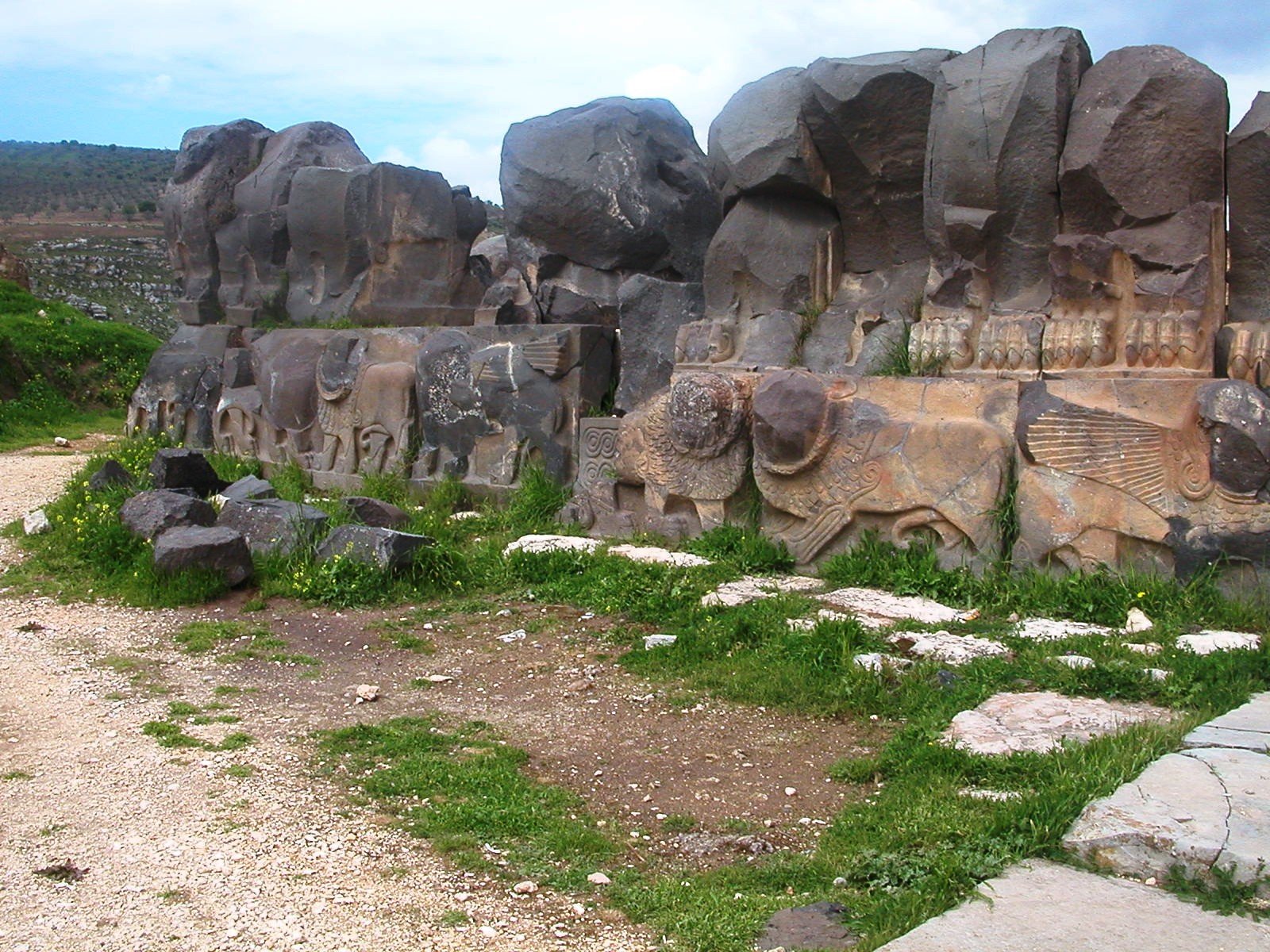
Iron Age Syro-Hittite temple near Afrin, famed for giant carved footprints at its threshold and basalt lions.
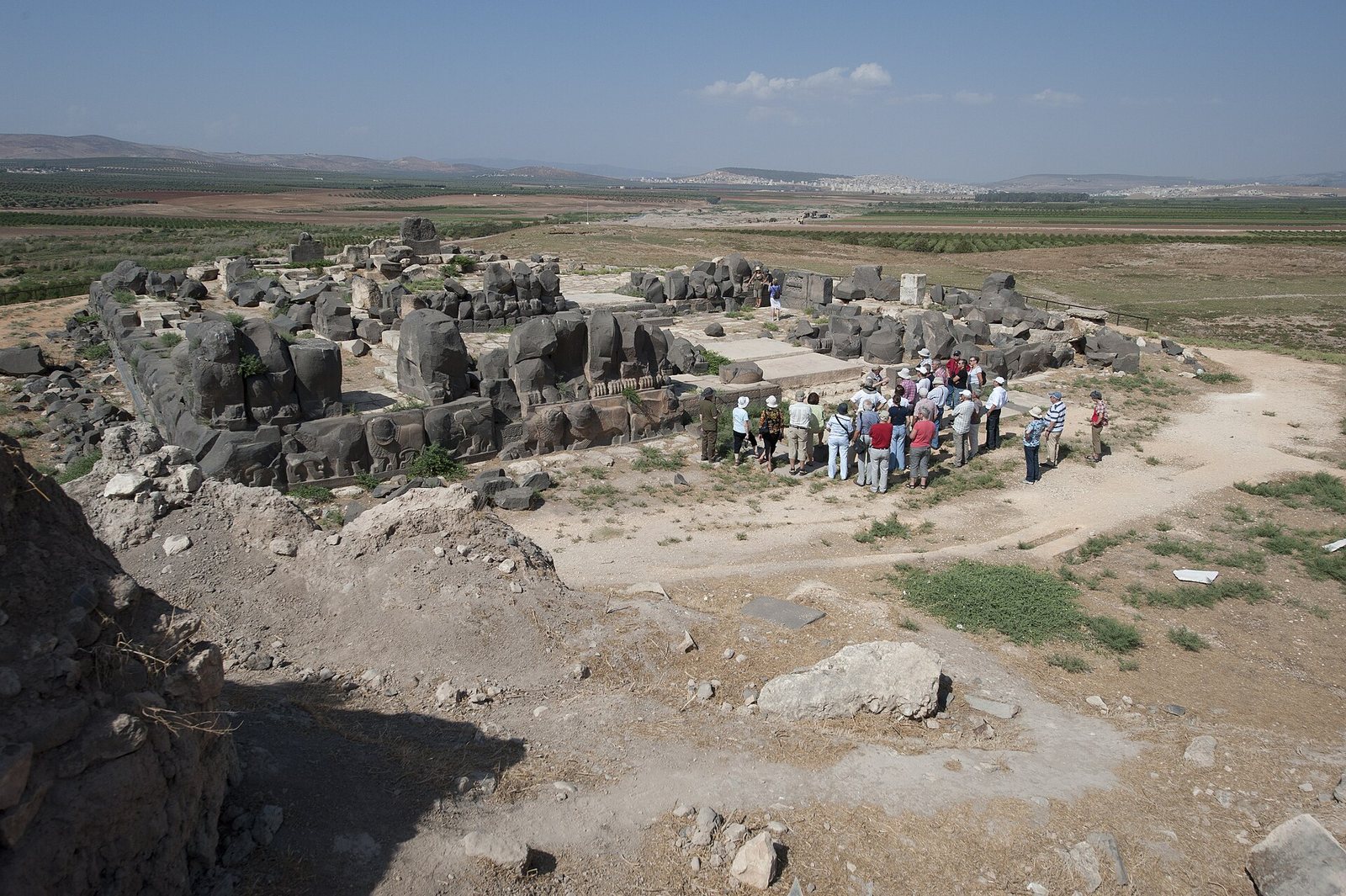
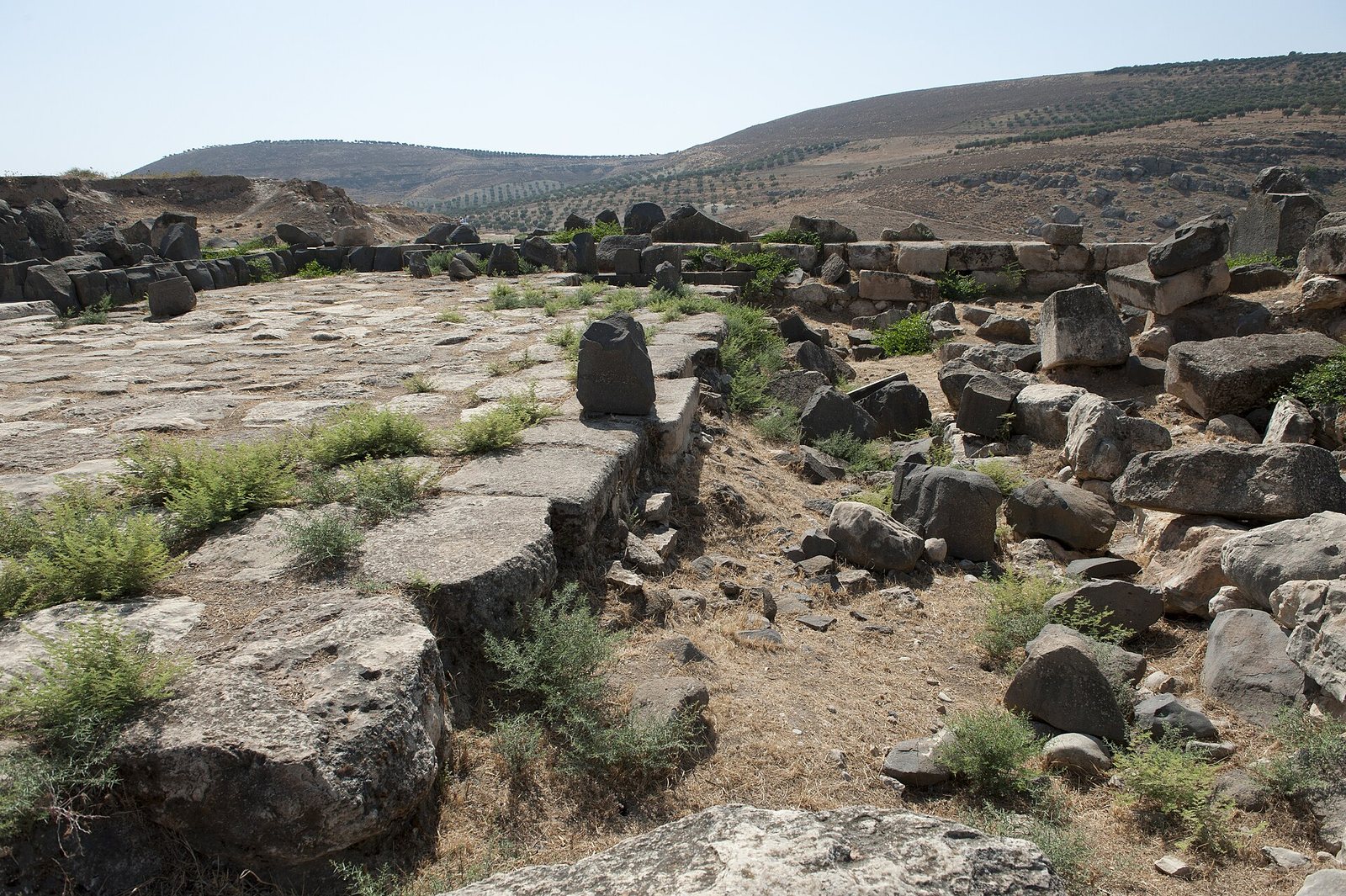
On a mound above the Afrin valley northwest of Aleppo stands Ain Dara, one of the key temples of the Syro-Hittite kingdoms of the Iron Age, built and remodelled roughly between the late second millennium and the 8th century BC.
Its most striking feature is a set of giant human footprints carved into the threshold stones, striding inward as if a colossal god had entered his house — a rare, almost unique image of divine presence in the region's temples.
According to the Syrian excavator Ali Abu Assaf, the temple existed from about 1300 to 740 BC and stayed almost unchanged before the building of Solomon's Temple (placed in about 1000–900 BC). The deity it was built for is uncertain: it has been suggested that it was Inanna or Ishtar, or the storm god Hadad, or that it served as an oracle on a major trade road. The site covers about 25 hectares and was inhabited from the fourth millennium BC to the Ottoman period.
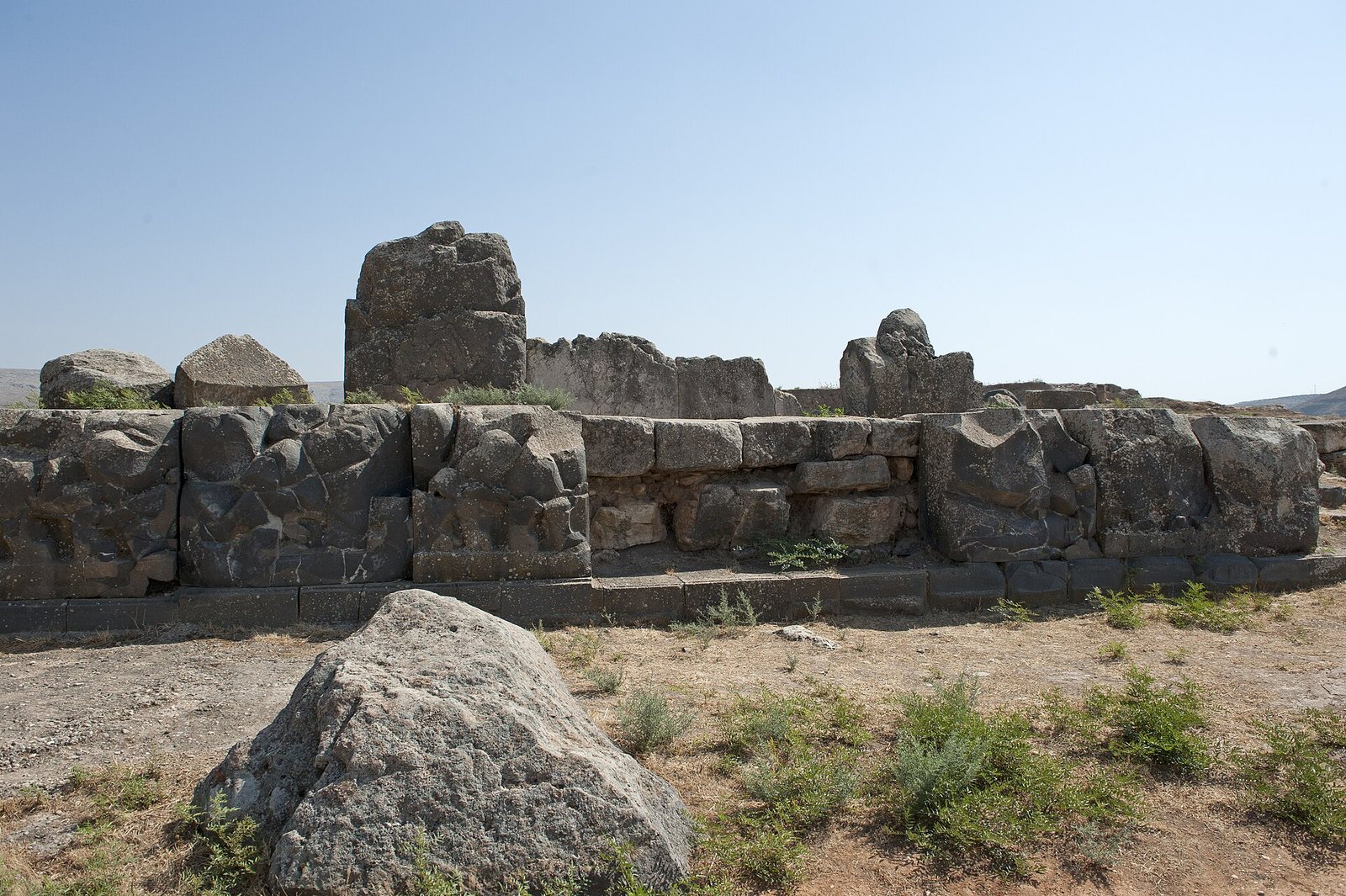
The walls and podium were lined with basalt reliefs of lions, sphinxes, composite creatures and mountain gods, mixing Hittite art with local Syrian traditions. Scholars often compare its plan with ancient descriptions of Solomon's Temple.
It remains a symbol of Iron Age art in Syria.
Note: photos may not reflect the site's current condition.
For the visitor
Location: 36.4594, 36.8521 · Open on the map
Photos
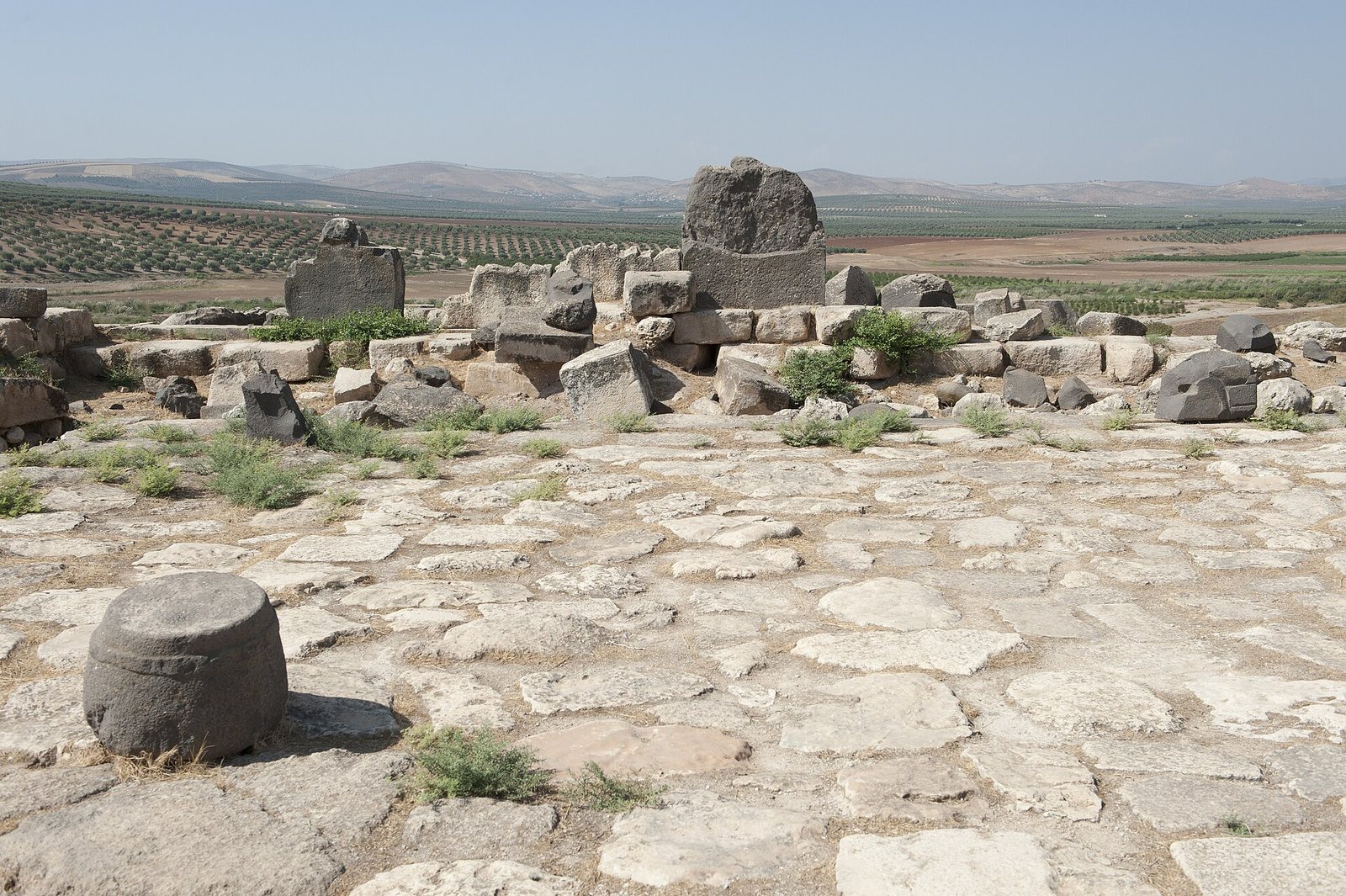
Photos: Odilia — via Wikimedia Commons (CC BY-SA) · Dosseman — via Wikimedia Commons (CC BY-SA)
Syria Trails — An interactive geographic and heritage atlas of Syria: a map that walks down from the country to the district, landmarks with their story and era, curated trails and a passport for your visits.